

 English
 العربية
 Español
 Русский
Industry News
Industry News

When a storm rolls in, the grid goes down, or a regional substation trips, every homeowner eventually asks the same question: how do I keep the lights on without disturbing the entire neighborhood? The answer for an increasing number of households around the world is a silent diesel generator for home use. Quiet enough to sit beside a garden wall, powerful enough to run an entire house, and engineered for years of automatic standby duty, the modern canopy diesel generator has become the backbone of residential backup power.
This guide explains exactly what a silent residential generator does, how to size one for your home, what noise levels to expect, which features actually matter, and where to find a reliable China diesel generator manufacturer that exports to over 30 countries. By the end, you will know which model fits your property, your climate, and your budget — and why canopy-style units from established source factories now rival anything built in Europe or North America.
Power outages are no longer rare events. Climate-driven heatwaves, winter storms, and aging distribution grids mean that even suburban neighborhoods in the UK, Australia, and the United States now lose electricity several times a year. For families that work from home, run medical equipment, or simply refuse to throw out a full freezer of food, a standby diesel generator is no longer a luxury — it is infrastructure.
Older open-frame diesel sets were cheap, but they produced 90–105 dB(A) of raw mechanical noise, which is roughly the volume of a chainsaw. In residential zones, this is unacceptable at any hour of the day. A canopy diesel generator solves the problem. Wrapped in a sound-attenuated enclosure with multilayer absorption material, residential canopy units now run at 65–75 dB(A) at 7 meters — about the noise level of a normal conversation or a passing dishwasher.
For homeowners in 2026, the typical reasons for choosing a silent diesel unit over a portable gas generator include:
Fuel stability — diesel does not vaporize or degrade in storage the way gasoline does, so a standby set can sit idle for months and still start reliably.
Load capacity — diesel engines handle sustained heavy loads better, which is critical if you need to run air conditioning, well pumps, or induction cooktops.
Longevity — a well-maintained residential diesel genset often runs 10,000–20,000 hours before a major overhaul, compared to 2,000–4,000 hours for a typical portable gas unit.
Automatic operation — paired with an ATS panel, a silent standby generator starts within seconds of a power failure, with no user action required.
Resale value — a properly installed standby system is considered a permanent home improvement, and a documented CE- and ISO-certified set adds tangible value to the property.
Browse a full catalog of residential, commercial, and industrial diesel gensets from Guangdong Longhong to compare canopy sizes, output ratings, and engine options in one place.
The word "silent" is marketing shorthand. No diesel engine is truly silent, but a well-designed canopy enclosure can cut perceived noise by 20–30 dB(A). Three engineering choices drive the result.
A residential canopy is not a metal box. It is a sandwich of galvanized steel, rock-wool or high-density fiberglass insulation, perforated inner lining, and vibration-damping mounts. The enclosure is typically rated IP23 for outdoor installation and includes louvered intake/exhaust panels that allow cooling airflow without becoming acoustic weak points. Quality manufacturers test each enclosure at 1 meter and at 7 meters to publish honest dB(A) figures.
Beyond the canopy, the exhaust path uses a residential-grade muffler plus, in premium units, an additional resonator. Together they reduce exhaust noise by another 12–18 dB(A). For a typical 20kW silent unit, the end result is a standby set that you can stand next to and hold a phone conversation over.
Not every diesel engine is suitable for a canopy. The best residential canopy units use engines from brands such as Cummins, Perkins, Volvo, Weichai, Yuchai, and Yunnei, mounted on anti-vibration rubber isolators. A balanced crankshaft, helical gears in the timing case, and precision-balanced fans all reduce structure-borne noise that would otherwise escape through the frame.
A good visual reference is the 20kW silent diesel generator page, which shows the full canopy layout, control panel position, and base fuel tank of a typical residential unit.
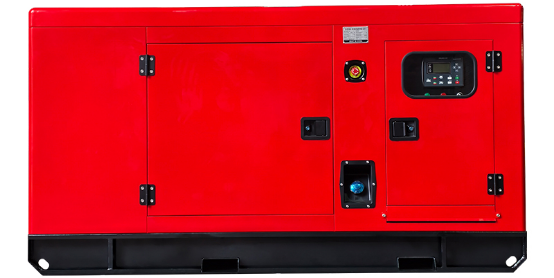
Figure 1: An 80kW silent canopy diesel generator combines a sound-attenuated enclosure with an industrial muffler for residential-friendly operation.
The most common mistake homeowners make is oversizing — buying a 50kW unit when a 16kW unit would do. Oversized sets run cool and rich, which causes wet-stacking, glazing, and premature engine wear. Undersized sets trip on overload, shorten alternator life, and cannot run the loads you actually need. Sizing correctly is the single most important decision in the entire purchase.
Walk through the house and identify what must keep running during an outage. For most homes this means the refrigerator, freezer, internet router, lighting circuits, well pump or sump pump, and at least one small air conditioner or a few space heaters. Add any medical equipment — CPAP, oxygen concentrator, home dialysis — to the top of the list.
Diesel generator output is rated in kVA. Use the formula kVA = (Running Watts × 1.25) ÷ 1000 ÷ Power Factor, where the 1.25 multiplier covers motor starting surges. For a typical 4-bedroom suburban home with central air, the realistic essential load sits between 8 kW and 18 kW, which corresponds to a 10–25 kVA standby set.
Most North American homes use split-phase 120/240V. Most of Europe, Africa, the Middle East, and Southeast Asia use single-phase 220V or three-phase 380V. Before you order a China diesel generator supplier, confirm the local mains voltage, frequency (50 Hz or 60 Hz), and whether your distribution board is single-phase or three-phase. The good news: reputable factories such as Guangdong Longhong build each unit to the buyer's exact electrical specification, including custom AVR settings and socket configurations.
For smaller homes, apartments, and workshops, a compact option such as the 16kW compact silent diesel generator is a popular middle ground. Smaller still, the 10–14kW silent generator covers cabins, small offices, and single-family homes where only the essentials must run.
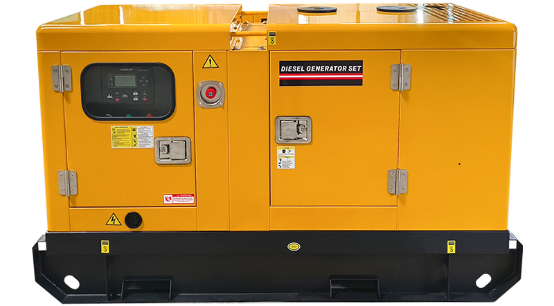
Figure 2: A 10–14kW compact silent diesel generator is the sweet spot for small homes, cabins, and essential-load backup.
Single-phase diesel generators are simpler, cheaper, and ideal for homes under 25 kW. Three-phase sets are required if your home receives three-phase utility power or if you operate heavier equipment such as a workshop lathe, large workshop welder, or pool filtration system. If unsure, ask the installer to measure the incoming mains — guessing wrong can damage appliances or void warranties.
Two silent diesel generators of the same kilowatt rating can differ dramatically in quality. Before signing a purchase order, verify that the unit includes the following features.
An auto-start diesel generator is only as good as its transfer switch. The ATS senses grid failure, signals the generator to start, transfers the home's load to the generator, and — when grid power returns — cools the engine down and switches back. Without an ATS, you are standing in the rain with a flashlight. Look for a controller that supports both single-phase and three-phase ATS, with adjustable start delay and cool-down timers.
Modern residential canopy units use LCD controllers such as the Deepsea DSE6120, ComAp AMF 9, or Smartgen HGM6120. These panels display voltage, frequency, oil pressure, coolant temperature, runtime hours, and fault history. Remote monitoring via RS485, Ethernet, or 4G module is now standard on mid-range sets, allowing the homeowner to check the generator from a smartphone.
An 8–24 hour base tank is standard. For whole-home standby, many buyers upgrade to a 1000L external day tank plumbed with an automatic transfer pump. This lets the generator run through a multi-day outage without manual refueling.
Engine brand is the single most important reliability factor. China source factory units pairing a Cummins, Perkins, or Volvo engine with a Stamford, Leroy-Somer, or reputable Chinese alternator deliver the same long-term reliability as European-brand sets, at a fraction of the price. The same applies to Weichai, Yuchai, and Yunnei engines, which dominate the domestic Chinese market and are now widely exported.
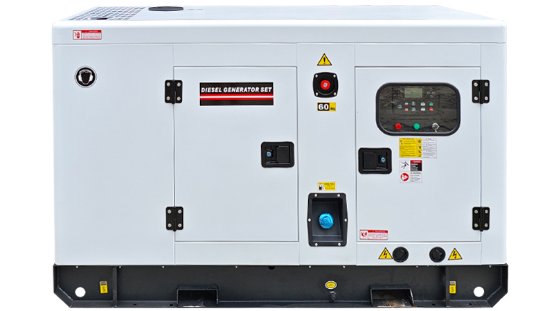
Figure 3: A 32kW silent canopy unit, the most popular size for medium-sized homes and small clinics.
Even the best generator needs filters, belts, coolant, and occasional sensors. Choose a manufacturer that holds 200+ units of permanent stock and ships spare parts within 48 hours. Guangdong Longhong, for example, ships 95% of spare-parts orders within two business days worldwide, supported by a documented CE and ISO certification package.
Even a perfectly specified silent diesel generator will underperform if installed poorly. Three rules protect both the unit and the household.
Place the canopy at least 1.5 meters from any wall, fence, or window. Maintain 1 meter of clearance on the radiator side for cooling airflow. This also leaves room for the homeowner to walk around the unit for daily visual checks.
Even with rubber engine mounts, a 30kW+ unit can transmit low-frequency vibration into a wooden frame house. A poured concrete pad with cork or rubber isolation strips eliminates this. Never mount a standby generator on a wooden deck or directly on soil.
Diesel exhaust contains carbon monoxide. The canopy's integrated exhaust discharges upward and away from windows, doors, and air intakes. For extra safety, install a CO detector inside the home near bedrooms — a standard item in any home with combustion appliances.
The Automatic Transfer Switch sits between the utility meter and the home's distribution board. It is sized to the generator's full-load current. A qualified electrician — required by code in most jurisdictions — completes the final wiring, grounding, and commissioning. A typical residential installation takes one to two working days.
A standby diesel generator that runs 50 hours a year is mechanically easy to live with. The maintenance schedule is simple, but it must be consistent.
Most modern controllers include an automatic weekly exercise cycle. The unit starts, runs unloaded for 10–15 minutes, and shuts down. This keeps oil on the cylinder walls, charges the starting battery, and burns off moisture in the exhaust.
Check oil level, coolant level, fuel level, belt tension, battery voltage, and look for leaks or rodent damage. Replace the fuel filter and oil filter every 250 running hours or once a year, whichever comes first. Replace coolant every two years.
An annual service by a qualified technician includes oil and filter change, coolant test, valve clearance check on engines that require it, alternator insulation test, and a full load-bank test if the unit is critical. Homeowners with medical or business-critical loads should add a quarterly load-bank test.
Diesel fuel has a shelf life of 6–12 months without treatment. For a standby set that runs infrequently, add a biocide and a fuel stabilizer, and circulate the tank every six months. Neglected fuel is the single most common cause of residential generator failure during the first real outage.
Buying a China diesel generator manufacturer is not the gamble it once was. The country has produced diesel gensets for global markets for over 30 years, and the best factories match European quality at 40–60% of the price. The key is to vet the supplier properly.
A serious China diesel generator factory runs multiple production lines, holds 200+ units of finished stock, and can build a custom unit in 15–25 days. Guangdong Longhong Electromechanical Equipment Co., Ltd., founded in 2010 with 20+ years of senior engineering experience, fits this profile and exports regularly to Cambodia, Vietnam, Myanmar, Tanzania, Libya, and beyond.
Look for CE, ISO 9001, and for some markets, SONCAP, SASO, or UL listings. These certifications mean an independent body has audited the production process and the finished product. Without them, customs clearance can stall and insurance may refuse a claim.
Before you order, request the following documents: test report, circuit diagram, parts catalog, operation manual, and warranty terms. A professional factory provides these within 24 hours. The About Longhong page outlines the company's documentation and after-sales process.
Standard warranty on a residential silent diesel generator is 12 months or 1000 running hours, whichever comes first, on the entire unit, and 24 months on the engine for major components. Engine brands such as Cummins, Perkins, and Volvo offer their own international warranty through authorized service centers, which adds an extra layer of protection for buyers in Africa, the Middle East, and Southeast Asia.
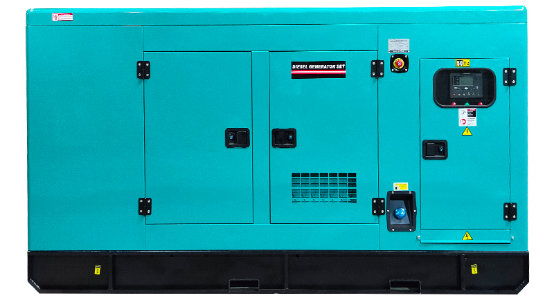
Figure 4: A 100kW silent canopy unit — a step up for larger residences, estates, and small commercial facilities.
Most residential canopy units run at 65–75 dB(A) measured at 7 meters. For comparison, a normal conversation is about 60 dB(A), and a dishwasher is about 70 dB(A). The unit is audible in the immediate garden but does not disturb neighbors at normal property-line distances.
Yes. With a properly sized base tank (8–24 hours) or an external day tank, a residential standby set can run continuously through multi-day outages. The integrated controller manages cool-down, warm-up, and load transfer automatically.
A canopy is a compact acoustic enclosure for residential and light commercial use, typically up to 500 kVA. A containerized diesel generator uses a full ISO 20ft or 40ft container for high-power industrial applications from 500 kVA to 3000 kVA. Both use the same noise-reduction principles; the container simply provides more internal volume for larger engines, switchgear, and fuel tanks.
Choose the phase that matches your incoming utility supply. Most suburban homes are single-phase. Rural properties, larger homes with three-phase utility power, and any home with a workshop welder, large air-conditioning chiller, or pool filtration system need a three-phase set. The 100kW three-phase diesel generator and similar industrial units illustrate the difference in terminal box layout.
Yes — but include the air conditioner's locked-rotor starting current in your sizing calculation. A typical 3-ton (36,000 BTU) split system needs 8–12 kW running and a 25–35 kW surge for the first second of compressor startup. A correctly sized 20kW+ standby set handles this comfortably.
With annual servicing, a well-built residential diesel genset lasts 10,000–20,000 running hours. A unit that exercises weekly and runs only during outages will easily provide 20+ years of service before a major engine overhaul.
A silent diesel generator for home use is one of the most reliable pieces of infrastructure a household can install. Modern canopy enclosures bring noise down to conversational levels, automatic transfer switches start the unit within seconds of a grid failure, and engines from Cummins, Perkins, Volvo, Weichai, Yuchai, and Yunnei deliver decades of service when properly maintained.
The path to the right unit is straightforward. List your essential loads. Size for the running wattage plus a 25% surge allowance. Match the voltage and phase to your utility supply. Choose a canopy with proper acoustic engineering, a digital controller, and an integrated ATS. Buy from a documented China diesel generator manufacturer with permanent stock, CE/ISO certification, and a real warranty.
For a residential property, the most popular sizes are 10–14 kW for small homes, 16–24 kW for medium homes, and 30–50 kW for larger homes with central air conditioning. Browse 24kW silent diesel, 30kW silent, or 32kW silent units to compare specifications and request a quotation.


