

 English
 العربية
 Español
 Русский
Industry News
Industry News

When facility managers, procurement teams, and project owners evaluate backup or prime power options, one question always rises to the top: should I choose a diesel generator set or a gas generator? Both technologies convert fuel into electricity, yet their operating economics, reliability profiles, and maintenance demands differ significantly. For buyers sourcing industrial-grade power generators from a China diesel generator manufacturer, understanding these differences can prevent expensive mis-specification and ensure the chosen unit delivers dependable kWh over its lifetime.
This guide compares diesel and gas generators side by side, focusing on fuel efficiency, total cost of ownership, runtime reliability, and application fit. We also explain why Guangdong Longhong Electromechanical Equipment Co., Ltd. recommends diesel gensets for construction sites, mining operations, hospitals, hotels, and shopping malls that cannot afford unplanned downtime.
A diesel generator set combines a diesel internal-combustion engine with an alternator. Air is compressed inside the cylinder, diesel fuel is injected at high pressure, and the heat of compression ignites the mixture. Because diesel engines operate at higher compression ratios than spark-ignited gas engines, they extract more mechanical energy per unit of fuel. This thermodynamic advantage is the primary reason diesel gensets dominate heavy-duty, continuous, and emergency power applications worldwide.
Longhong Power builds silent canopy diesel generators, open-frame units, trailer-type construction site generators, and containerized diesel power plants rated from 3KVA to 3000KVA. Engine brands include Cummins, Weichai, Yuchai, Perkins, Volvo, and Yunnei, giving buyers flexibility across performance tiers and budget ranges.
Gas generators use spark ignition to burn natural gas, propane, or biogas. They are quieter at startup and produce fewer particulate emissions than diesel units, which makes them attractive for residential micro-grids or facilities with steady pipeline gas supply. However, gas engines typically have lower compression ratios and cannot match the torque response of a diesel engine under sudden load steps. For critical loads such as hospital operating theaters or large hotel chillers, that slower load acceptance can be a deal-breaker.
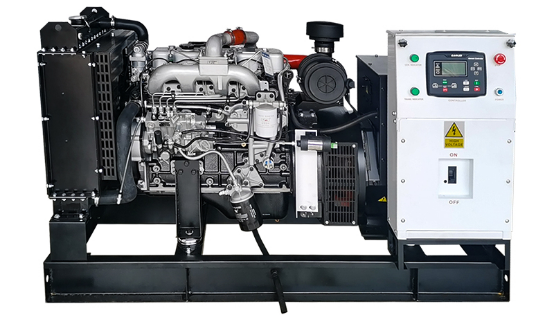
Open-frame diesel generator set — robust prime power for construction, mining, and industrial sites.
Fuel efficiency is best measured by brake specific fuel consumption (BSFC) — the grams of fuel consumed per kWh produced. Modern diesel engines used in industrial diesel power generators routinely achieve BSFC values between 190 and 220 g/kWh. Equivalent gas engines usually fall in the 240 to 300 g/kWh range when converted to diesel-equivalent energy content. In other words, a diesel genset can deliver the same electrical output while burning 15–30% less fuel by energy content.
This efficiency gap widens at partial load. Diesel engines maintain respectable combustion efficiency even when running at 50–75% of rated capacity, whereas gas engines become increasingly inefficient below their optimal load band. For facilities that operate standby diesel generators for extended grid outages, or prime power units for seasonal peak shaving, diesel's partial-load thrift translates directly into lower fuel bills.
Consider a 100kW application. A diesel generator set might consume roughly 20–26 liters of diesel per hour at full load, while a comparable gas unit could require the energy equivalent of 28–36 liters of fuel. Over 1,000 runtime hours, the diesel unit saves hundreds of liters in fuel volume alone. When fuel logistics are difficult — such as on remote engineering projects or quarry sites — the lower fuel volume of a portable diesel generator also reduces transportation and storage costs.
| Metric | Diesel Generator Set | Gas Generator |
|---|---|---|
| Typical BSFC | 190–220 g/kWh | 240–300 g/kWh |
| Full-load fuel use (100kW) | ~20–26 L/hr diesel | ~28–36 L equivalent |
| Partial-load efficiency | High retention | Noticeable drop |
| Fuel storage | On-site diesel tank | Pipeline/LPG/biogas |
| Load acceptance | Excellent | Moderate |
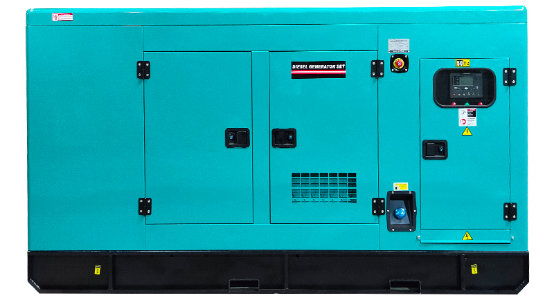
100kW silent diesel generator — high fuel efficiency and low noise for hotels, schools, and commercial buildings.
Gas generators often carry a lower sticker price for small residential units, but in the industrial range the gap narrows or reverses. A China diesel generator manufacturer such as Longhong Power can offer CE and ISO certified auto-start diesel generators at competitive factory pricing because diesel engine supply chains are mature and high-volume. For international buyers, diesel also avoids the regional gas-pressure or gas-quality compatibility issues that can complicate gas generator commissioning.
Diesel engines are built to withstand higher cylinder pressures, which generally means longer intervals between major overhauls. Routine maintenance includes oil changes, fuel filter replacement, coolant checks, and alternator inspection. Gas engines may have shorter spark-plug and ignition-component replacement cycles, and their exhaust systems can be sensitive to fuel impurities. In remote regions where skilled gas-engine technicians are scarce, the simpler mechanical nature of a diesel genset reduces lifetime service risk.
Well-maintained industrial diesel engines routinely exceed 15,000–20,000 hours before major overhaul, with some premium brands reaching 30,000 hours. Gas engines in the same power class often require top-end work earlier. Resale markets for used diesel generator sets are also deeper globally, especially for recognized engine brands. Buyers who plan to deploy a unit for five to ten years should weigh this longevity advantage against any short-term fuel-price difference.
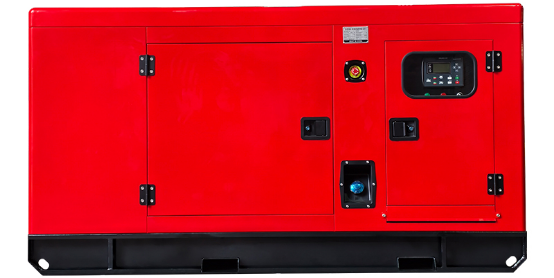
80kW silent canopy diesel generator — compact footprint, long service life, and easy maintenance access.
Construction sites, mining areas, and quarries subject generators to dust, vibration, temperature swings, and irregular loads. A construction site diesel generator set is engineered for these conditions. Diesel fuel is less flammable than gasoline and more stable than pipeline gas during transport, which improves site safety. The high torque of a diesel engine also handles motor-starting inrushes from pumps, compressors, and cranes better than most gas engines.
Longhong Power's Weichai generator in a high-altitude mining area demonstrates this reliability: the unit delivers stable output at 5,300 meters above sea level, where thin air and low temperatures punish lesser machines.
Hospitals, hotels, shopping malls, and data centers need emergency diesel generators that start within seconds and accept full load immediately. Diesel engines start reliably in cold weather, store fuel on-site, and do not depend on uninterrupted gas utility service. During grid failures caused by storms, earthquakes, or infrastructure maintenance, an on-site diesel fuel tank guarantees autonomy measured in hours or days rather than minutes.
For critical facilities, Longhong Power offers school 500KVA silent generator configurations and similar automatic transfer switch (ATS) packages that restore power without manual intervention.
Gas generators emit less nitrogen oxide (NOx) and virtually no soot, which is advantageous in urban areas with strict air-quality regulations. Modern diesel engines, however, have closed much of the gap through turbocharging, common-rail injection, exhaust gas recirculation (EGR), and selective catalytic reduction (SCR). Longhong Power can equip units to meet regional emission standards, and the company's qualifications include CE and ISO certifications that support export to Europe, Africa, and Southeast Asia.
Diesel fuel is liquid at ambient temperature and can be stored in standard above-ground or underground tanks with basic containment. Natural gas requires pipeline connection or compressed storage, while LPG requires pressure vessels. For remote engineering projects, mining camps, or island resorts, diesel's simpler logistics often make it the only practical choice. A trailer type construction site generator can be refueled quickly and relocated as the workfront moves.
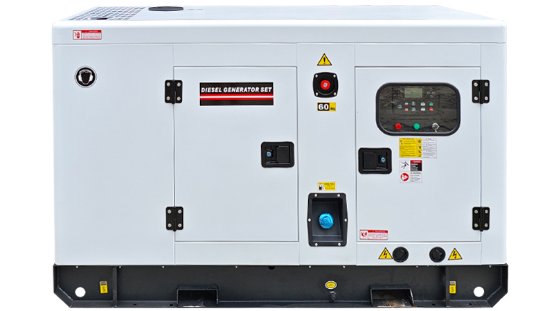
32kW silent diesel generator — reliable backup for small hotels, farms, and remote workshops.
Fuel efficiency and low partial-load consumption are priorities.
The site needs prime power for more than 500 hours per year.
Load steps are large or sudden, such as motor starting.
Fuel logistics favor on-site liquid storage.
Ambient conditions are harsh — dust, altitude, heat, or cold.
Long engine life and global parts availability matter.
Cheap pipeline natural gas is available year-round.
Local emissions regulations strongly favor gas.
The unit runs at steady load with minimal transient demand.
Site operators have gas-engine service expertise.
Combined heat and power (CHP) recovery is part of the business case.
For most procurement managers evaluating industrial emergency diesel generators, the diesel option wins on reliability, efficiency, and lifecycle value. Gas remains a niche choice where fuel price or emissions policy creates a compelling local advantage.
Guangdong Longhong Electromechanical Equipment Co., Ltd. has manufactured diesel generator sets since 2010 and brings more than 20 years of industry experience to every project. The product range spans 3KVA to 3000KVA and includes open-frame, silent/canopy, mobile trailer, and containerized configurations. Engine options from Cummins, Weichai, Yuchai, Perkins, Volvo, and Yunnei let buyers balance initial cost, fuel efficiency, and brand preference.
Popular models for fuel-conscious customers include:
100kW diesel generator — efficient prime or standby power for mid-size facilities.
80kW silent diesel generator — low-noise enclosure with easy service access.
64kW automatic generator — ATS-ready for seamless grid-to-generator transfer.
40kW export diesel generator — compact and transportable for international projects.
32kW silent generator — economical backup for small commercial sites.
Longhong Power maintains 200+ units in permanent stock and exports to Cambodia, Vietnam, Myanmar, Tanzania, Libya, and other markets. The company's Tanzania 100KVA Cummins export and Libya 750KVA Cummins export case studies show proven packaging, documentation, and after-sales support for international buyers. Sourcing directly from the factory removes distributor margins while preserving CE and ISO quality assurance.
Diesel generator sets remain the dominant choice for buyers who prioritize fuel efficiency, load response, durability, and fuel logistics flexibility. While gas generators have a place in clean-grid or CHP applications, diesel technology delivers lower total cost of ownership across the heavy-duty and emergency-power use cases that define industrial procurement.
Whether you need a standby diesel generator for a hotel, a power generator for a factory, or a portable diesel generator for an export project, Longhong Power offers China-manufactured solutions from 3KVA to 3000KVA. Contact the team to compare fuel consumption curves, request a quotation, and select the engine brand that best fits your operational profile.
About Guangdong Longhong Electromechanical Equipment Co., Ltd.
Established in 2010 in Guangdong, China, Longhong Power is a leading diesel generator manufacturer with more than 20 years of industry experience. The company produces 3KVA–3000KVA diesel generator sets powered by Cummins, Weichai, Yuchai, Perkins, Volvo, and Yunnei engines. Product lines include open-frame, silent/canopy, trailer, and containerized units, all backed by CE and ISO certification. With 200+ units in permanent stock and successful exports across Africa, Southeast Asia, and the Middle East, Longhong Power is a reliable diesel genset supplier for buyers worldwide. Visit the qualifications page to view certifications and case studies.


