

 English
 العربية
 Español
 Русский
Industry News
Industry News

Buying an undersized standby diesel generator leaves critical loads without power during an outage. Buying an oversized unit wastes capital, fuel, and floor space. For facility managers, procurement officers, and project engineers, correct sizing is one of the most important decisions in backup power planning. This guide explains how to calculate electrical load, account for motor starting currents, and choose a China diesel generator manufacturer that can deliver a properly matched diesel generator set.
Whether you are protecting a hospital, hotel, shopping mall, construction site, or manufacturing plant, the same fundamental steps apply. We will walk through real-world load estimation, power factor considerations, voltage selection, and future expansion planning so you can specify a diesel generator set with confidence.
A standby diesel generator is an insurance policy. When the grid fails, it must start quickly, accept full rated load, and run continuously until utility power returns. If the unit is too small, voltage sag and frequency dip can trip breakers, damage motors, and shut down essential equipment. If the unit is too large, it runs at light load, which increases fuel consumption, promotes cylinder glazing, and accelerates carbon buildup.
The goal is to size the diesel genset so that normal operating load falls between 60% and 80% of rated capacity. This band provides enough headroom for motor-starting inrush while keeping the engine warm and efficient. A reputable diesel generator manufacturer will help you verify these calculations against site-specific conditions such as altitude, ambient temperature, and fuel quality.
Start by separating essential loads from non-essential loads. In a hospital, essential loads include operating theaters, ICU equipment, refrigeration for medicine, and emergency lighting. In a hotel, they include fire pumps, elevators, kitchen refrigeration, and guest-room lighting circuits. In a shopping mall, priority loads cover security systems, emergency exits, payment systems, and climate control for sensitive inventory.
For each load, record:
Rated voltage (230V, 400V, 480V, etc.)
Running current in amps, or running kW if shown on the nameplate
Starting method: direct-on-line (DOL), star-delta, soft starter, or variable frequency drive (VFD)
Motor horsepower or kW, if applicable
Simultaneity factor — will all loads run at the same time?
Most generator manufacturers rate units in kVA, while many electrical loads are marked in kW or amps. Use the formula:
kVA = kW / Power Factor
For resistive loads such as heaters and incandescent lighting, the power factor is close to 1.0. For motors, it is typically 0.75 to 0.85. When in doubt, use 0.8 as a conservative planning factor. Add 10–15% to the total to cover measurement uncertainty and aging equipment.
Electric motors draw five to seven times their normal running current during startup. A 15kW compressor might run at 28 amps but pull 150 amps or more for the first few seconds. If the emergency diesel generator cannot supply this temporary surge, the compressor will fail to start and the generator voltage will collapse.
There are three ways to manage starting current:
Oversize the generator to cover the largest motor's starting kVA.
Use reduced-voltage starters such as star-delta, autotransformer, or soft starters.
Stagger motor starts so large motors do not start simultaneously.
Not all diesel generator sets offer the same transient response. A unit with a heavier alternator and better voltage regulation can absorb larger starting surges without excessive voltage dip. When comparing quotes, ask the diesel generator supplier for the alternator's sub-transient reactance and the generator's ability to start a given motor kW. These numbers matter more than the sticker price.
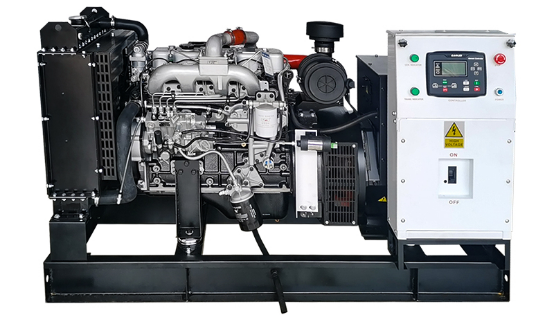
Open-frame diesel generator set — engineered for high motor-starting capacity and continuous standby duty.
Generators are rated in kVA because they must supply both real power (kW) and reactive power (kVAR). Real power does useful work: turning motors, heating elements, and lighting. Reactive power supports magnetic fields in motors and transformers. The power factor describes the ratio between real power and apparent power.
A facility with many motors and fluorescent or LED drivers will have a lower power factor than a facility with mostly resistive loads. Specifying a diesel power generator based only on running kW while ignoring power factor is a common and costly mistake. Always size in kVA, then confirm that real-power capacity covers your kW demand.
If your facility has a poor power factor, adding power-factor correction capacitors can reduce the kVA requirement of the generator. However, capacitors must be sized and switched carefully to avoid over-correction, harmonic resonance, or generator self-excitation problems. An experienced diesel generator manufacturer can recommend whether correction is appropriate for your standby system.
Single-phase diesel generators are common for small facilities, rural homes, farms, and light commercial sites. They typically deliver 230V and are available in compact, portable packages. If your total essential load is below roughly 10–15kW and you do not have three-phase motors, a single-phase unit can be the most economical choice.
Most industrial and commercial buildings use 400V/415V three-phase power. Three-phase motors are smaller, more efficient, and smoother-running than equivalent single-phase motors. A three-phase diesel generator is therefore the right choice for factories, hospitals, hotels, shopping malls, and construction sites with heavy motor loads. Longhong Power manufactures three-phase diesel generator sets from 20kW to well above 1,000kW to match these demands.
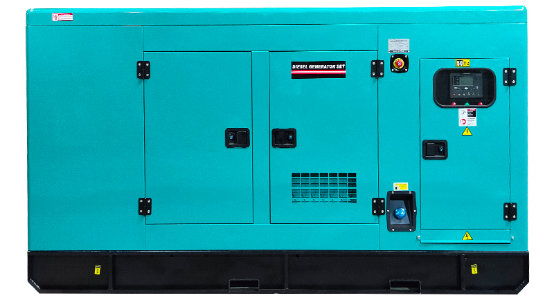
100kW silent diesel generator — three-phase standby power for hotels, schools, and commercial facilities.
Facilities grow. New HVAC units, production lines, kitchen equipment, and IT infrastructure are added over time. A standby generator purchased today should still be adequate ten years from now. Most engineers recommend adding a 20–25% future-growth margin to the calculated load. This margin also provides a buffer for temporary loads, measurement errors, and load diversity assumptions that may be optimistic.
While margin is important, oversizing by 100% or more creates its own problems. Diesel engines prefer to run under meaningful load. Long periods below 30% of rated capacity can cause wet stacking, incomplete combustion, and carbon deposits in the exhaust system. The best sizing strategy targets 70–80% of rated load during normal operation, leaving room for motor starting and future growth without pushing the unit into chronic light-loading territory.
Hotels need hotel diesel backup power generation equipment that covers elevators, fire pumps, kitchen refrigeration, emergency lighting, and guest-room power. Typical sizes range from 80kW for boutique hotels to 500kW or more for large resorts. A school 500KVA silent generator configuration from Longhong Power demonstrates how larger hospitality and institutional sites can be protected quietly and reliably.
Healthcare facilities classify loads as life-safety, critical, and equipment systems. Generator sizing must meet the total of all loads that cannot be shed, plus the largest motor-starting surge — often a chiller or fire pump. Redundancy is also common: two generators each sized to carry the full critical load. Longhong Power's range of industrial emergency diesel generators supports N+1 configurations for hospitals.
A shopping mall backup diesel genset must cover escalators, smoke-extraction fans, refrigeration for food courts, security systems, and partial general lighting. Sizing usually starts at 200kW and can exceed 1,000kW for major retail complexes. Because malls have many small motors distributed across large areas, load diversity and simultaneity factors are especially important.
Construction sites and quarries need construction site diesel generator sets that can power welders, compressors, cranes, and batching plants. These loads are mobile, variable, and often started directly on-line. A Weichai generator operating in a mining area at 5,300 meters altitude shows how properly sized units perform in extreme environments. For these applications, altitude de-rating is essential: generator output drops roughly 1% for every 100 meters above 1,000 meters.
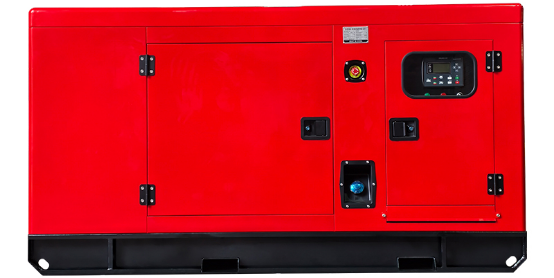
80kW silent canopy diesel generator — compact and quiet standby power for hotels and commercial facilities.
Guangdong Longhong Electromechanical Equipment Co., Ltd. is a Guangdong-based diesel generator manufacturer with more than 20 years of industry experience. The company produces diesel generator sets from 3KVA to 3000KVA, powered by Cummins, Weichai, Yuchai, Perkins, Volvo, and Yunnei engines. Product configurations include open-frame, silent/canopy, mobile trailer, and containerized diesel power plants.
For standby and emergency power, popular models include:
100kW diesel generator — mid-size standby power for factories, hotels, and schools.
80kW silent diesel generator — low-noise enclosure ideal for urban and hospitality sites.
64kW automatic generator — ATS-ready for instant power restoration.
32kW silent generator — compact backup for small commercial and residential complexes.
20kW silent diesel generator — economical standby for homes, farms, and small offices.
Longhong Power maintains 200+ units in permanent stock and exports to Cambodia, Vietnam, Myanmar, Tanzania, Libya, and beyond. The company holds CE and ISO certifications, which are listed on its qualifications page. Export case studies such as the Tanzania 100KVA Cummins export and the Libya 750KVA Cummins export demonstrate proven packaging, documentation, and logistics support for international buyers.
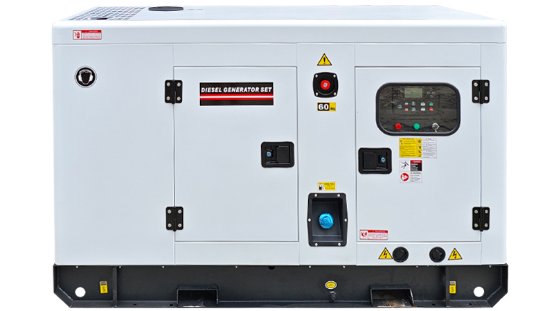
32kW silent diesel generator — right-sized backup for small hotels, farms, and remote workshops.
Sizing a standby diesel generator is not guesswork. It begins with a complete load inventory, continues with careful conversion between kW and kVA, and ends with a unit sized for motor starting, power factor, altitude, and future growth. The right size protects your facility without wasting capital or fuel.
If you are evaluating a standby diesel generator for a hotel, hospital, shopping mall, quarry, or factory, contact Longhong Power. As an experienced China diesel generator manufacturer, the team can review your load list, recommend the correct kVA rating, and configure a diesel generator set with the engine brand, enclosure, and control system your project requires.
About Guangdong Longhong Electromechanical Equipment Co., Ltd.
Established in 2010 in Guangdong, China, Longhong Power is a leading diesel generator manufacturer with more than 20 years of industry experience. The company produces 3KVA–3000KVA diesel generator sets powered by Cummins, Weichai, Yuchai, Perkins, Volvo, and Yunnei engines. Product lines include open-frame, silent/canopy, trailer, and containerized units, all backed by CE and ISO certification. With 200+ units in permanent stock and successful exports across Africa, Southeast Asia, and the Middle East, Longhong Power is a reliable diesel genset supplier for buyers worldwide. Visit the qualifications page to view certifications and case studies.


