

 English
 العربية
 Español
 Русский
Industry News
Industry News

A power failure at an event is not a quiet inconvenience — it is a dark stage in front of two thousand guests, a silent PA system during first dances, and a refund you cannot afford. Outdoor venues rarely have grid connections that match event loads, and even venues with mains power discover its limits the moment catering, climate control, and production equipment plug in at once. This guide is written for event planners, rental companies, festival organizers, and venue owners who need to specify an event diesel generator correctly in 2026: what your show actually draws, how to size the set, which enclosure keeps guests comfortable, how much fuel to plan, and what to check when buying a portable diesel generator from a China manufacturer.
Every wedding in a vineyard, every concert in a park, every food festival in a closed street shares one condition: there is no usable grid connection where the load sits. A diesel generator set is the only practical way to deliver stable 230V/400V power to a field, a marquee, or a plaza. Diesel is chosen over gasoline for the same reasons rental fleets worldwide standardized on it — a diesel power generator delivers far more hours per liter of fuel, tolerates long running periods at high load, and handles the motor inrush of compressors and pumps that gasoline units struggle with.
Diesel also wins on the two failure modes that matter most at events. First, fuel logistics: one 200-liter drum runs a 32kW set through an entire wedding day, while a gasoline fleet needs constant refills. Second, durability: a quality diesel genset runs ten to twelve hours a day across a multi-day festival without the overheating and brush wear that lighter machines suffer. And when the venue does have a grid connection, a power outage backup power generator on standby protects the show from the one risk the organizer cannot negotiate with — the utility failing mid-event, which is why hotels and resort venues increasingly specify 64kW auto-start diesel generators that transfer without human intervention.
The fastest way to buy the wrong generator is to size it from guesswork. Walk the site plan and list every load group before requesting a single quotation. Modern LED technology has cut lighting loads dramatically, but sound, video walls, and catering still dominate. Use this breakdown as a starting checklist:
| Load Group | Typical Draw | Notes for Event Planners |
|---|---|---|
| Lighting (festoon, uplighting, stage wash) | 3–10 kW | LED-heavy; low steady draw, minimal inrush |
| PA and sound system | 5–25 kW | Amplifier racks at high duty cycle; most sensitive load |
| LED video wall | 8–15 kW | High inrush at power-up; switch on in sections |
| Catering (ovens, coffee machines, refrigeration) | 5–15 kW | Resistive but peaky during service hours |
| Marquee HVAC or fans | 5–20 kW | Compressor motors; needs surge capacity |
| FOH and production offices | 2–5 kW | Mixing consoles, comms, radios charging |
Three rules keep the assessment honest. First, ask the production supplier for nameplate ratings, not estimates — a "small" line array can hide 15kW of amplification. Second, note which loads run simultaneously: catering peaks exactly when the dance floor lights up. Third, identify motor loads (air conditioners, pumps, refrigeration) separately, because they determine the surge capacity the generator must carry — and surge rating, not average load, is what sizing decisions are built on.
Event sizing follows the same discipline as any standby installation: add the connected load, apply a diversity factor, then leave headroom. In practice:
Festoon and marquee lighting 6kW, PA 5kW, catering 7kW, misc 2kW: 20kW connected. Diversity at 0.75 gives 15kW average; headroom brings the requirement to roughly 20–24kW. A 32kW silent generator is the correct answer here — and because a wedding runs lighting and small catering equipment on household-type circuits, a single-phase diesel generator configuration at 230V is exactly what the electrician wants on site.
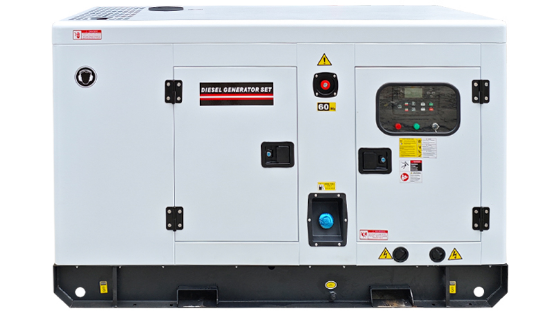
A 32kW silent canopy diesel generator covers wedding loads of 120–200 guests with room for catering surges.
PA 25kW, stage lighting 20kW, LED wall 12kW, backline 8kW, FOH 3kW, catering 10kW: 78kW connected. Diversity 0.8 gives 62kW; headroom pushes the requirement toward 80kW. This is three-phase diesel generator territory — distribution boards, camera fleets, and dimmer racks all expect 400V — and a 100kW diesel generator carries the show in its efficient load band with surge capacity to spare for the video wall's power-up sequence.
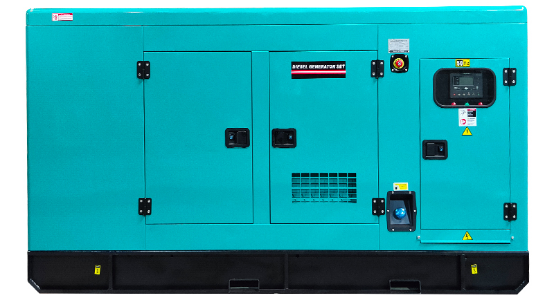
A 100kW silent diesel generator is the workhorse rating for mid-scale concerts and festival stages.
One sizing warning specific to events: resist the temptation to downsize because "the show is only four hours." Generators are sized for their worst hour, not their average one — the moment a compressor, the wall, and the PA ramp together is the moment an undersized set either trips or delivers dirty voltage to the most expensive equipment on site.
Food festivals, artisan markets, DJ evenings, and film sets rarely exceed 10kW of real demand. A 10–14kW silent diesel generator is the portable diesel generator class for this work — light enough for a crew of two to position, quiet enough to sit 15 meters from a dining area, and frugal enough that a single tank covers a full market day.
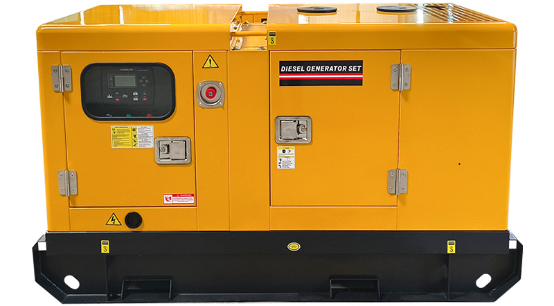
10–14kW compact silent diesel generators serve markets, DJ events and film crews where noise rules are strict.
The canopy diesel generator is the default event machine worldwide. A weatherproof, sound-attenuated enclosure protects the set from rain, cuts noise to guest-friendly levels, and deters tampering in public areas. Mid-size shows typically run an 80kW silent diesel generator, which splits the difference between the concert example above and smaller stage-and-marquee combinations.
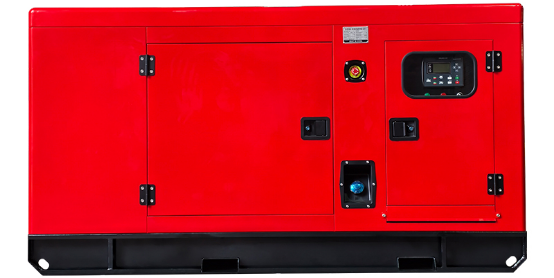
80kW silent canopy diesel generators handle combined stage, lighting and catering loads at mid-scale shows.
Rental companies that serve several events per week standardize on the mobile trailer diesel generator: a canopy set mounted on a road-legal trailer with lights, brakes, and a tow hitch. The economics are simple — one crew, one towing vehicle, and the generator moves between Friday's market, Saturday's wedding, and Sunday's charity run without crane trucks or loading ramps. Trailer-mounted sets also sit higher, keeping electronics above wet grass and mud.
Wedding estates, amphitheaters, exhibition grounds, and vineyard venues that host events every weekend install a fixed standby diesel generator with an automatic transfer switch instead of renting for every occasion. A 30kW silent generator suits rural venues drawing single-phase loads, while larger hospitality venues pair the generator with the same architecture used for hotel diesel backup power generation equipment — auto-start within seconds of a mains failure, so the event never notices the utility outage. High-profile shows add redundancy: two sets in N+1, or the large-frame silent units in the 400KW/500KVA class used for major venue infrastructure.
Noise is the single most common event-generator complaint, and it is entirely manageable with three decisions. First, the enclosure: a quality silent canopy runs around 65–75 dB(A) at 7 meters, while ordinary open-frame sets exceed 85–90 dB(A) — an open frame has no place near a dining area, whatever the rental price. Second, distance: sound drops roughly 6 dB with every doubling of distance, so placing the set 40 meters from guests instead of 20 gains you another 6 dB for free. Third, orientation and barriers: point the exhaust away from seating, and place the set behind a stage riser, hedge, or fencing panel — a simple barrier buys several more decibels of comfort.
Two further habits separate professional crews from amateurs. Run the generator up before doors open, so any mechanical noise is discovered while it can still be fixed. And check the local permit: many city events cap noise at the property line (often 65–70 dB(A) during the day, less at night), which is why "super silent" configurations and longer cable runs to distant, shielded generator positions are increasingly standard in the UK diesel genset rental market and across European city festivals.
Fuel math for events is straightforward once you know the consumption curve. A good planning figure is 0.25–0.3 liters per kWh produced at realistic event loads. A 32kW set running at 75% load therefore consumes roughly 6–7 liters per hour — a 10-hour wedding needs about 70 liters, so a 100-liter internal tank plus a reserve drum closes the day without refueling. A 100kW set at 70% load burns around 18–20 liters per hour, which means a two-day festival requires either a bulk day tank or a scheduled refueling contract.
Four planning rules prevent fuel becoming the story of the event:
For a one-off event, renting wins — someone else owns the maintenance, the transport, and the spare parts. The economics flip for event companies and venues: a rental company running 30+ events per year typically pays back the purchase of a quality portable diesel generator or trailer set within one to two seasons, after which every event is margin instead of a rental invoice. Venues that host weekly events reach the same conclusion even faster.
When buying, China remains the dominant sourcing destination, and the difference between a machine that lasts a decade and one that dies mid-season comes down to what is inside the canopy. Buyers in Latin America searching for a generator electrico and UK event fleets specifying a 50Hz, 230/400V UK diesel genset configuration should apply the same checklist before wiring any deposit:
Guangdong Longhong Electromechanical Equipment Co., Ltd. has built diesel generator sets for exactly this market since 2010 — silent canopy units from 10kW to festival scale, trailer-mounted sets for rental fleets, and auto-start standby configurations for venues, every one load-tested before dispatch and backed by engines from Cummins, Weichai, Yuchai, Perkins, Volvo, and Yunnei.
Event power rewards preparation and punishes guesswork. List the loads by nameplate, apply diversity and 25–30% headroom, choose a silent canopy at the rating the math demands — 10–14kW for markets, 32kW for weddings, 80–100kW for concerts — place it for distance and direction, and plan fuel for the longest day plus a margin. For event companies and venues that power shows every week, owning a tested, genuinely built emergency diesel generator fleet converts every event from a rental cost into an asset. Buy from a manufacturer who shows you the engine nameplate, the load-test report, and the certificates before you pay — and the loudest thing about your generator will be how quietly it did its job.


