

 English
 العربية
 Español
 Русский
Industry News
Industry News

A standby diesel generator that is perfectly sized but badly installed will still fail on the night you need it. After delivery, the machine's reliability is decided by the ground it sits on, the air it breathes, the exhaust it vents, and the way it is wired into your building. Industry service data consistently shows that a large share of premature generator failures trace back to installation errors rather than to the engine itself — undersized ventilation openings, excessive exhaust back pressure, contaminated fuel, and skipped commissioning tests top the list. This guide is written for facility managers, contractors, and procurement teams preparing to install a diesel generator set in 2026. It covers site selection, foundations, ventilation, exhaust and fuel systems, electrical connections, commissioning, and the installation support you should demand when buying from a China manufacturer.
A diesel power generator is a machine that converts diesel fuel, cooling air, and combustion air into electricity — and it demands all three in generous quantities. Restrict any one of them and the set derates, overheats, or shuts down under load. Unlike most factory equipment, a genset also has to start instantly after years of standby idleness, which is why installation details that look minor on drawings — a ventilation louver blocked by a wall, a fuel pipe without a water separator, a battery cable run 20 meters longer than specified — become the exact points of failure during an outage.
Installation quality also has contractual consequences. Most engine and alternator warranties cover manufacturing defects, not site errors: an overheated engine caused by a recirculating exhaust plume or a seized fuel pump fed by tank sludge will usually be excluded from warranty claims. For buyers of an industrial emergency diesel generator, the practical conclusion is simple — treat installation as a formal engineering project with drawings, responsibilities, and acceptance tests, not as a delivery afterthought handled by whoever is available on site.
The first decision shapes everything that follows. An outdoor installation on a concrete pad, using a sound-attenuated canopy diesel generator, is the fastest and usually the most economical route: the enclosure handles weather protection and noise, ventilation is simpler, and no plant room must be built. An indoor installation in a dedicated plant room — typically an open-frame set — offers better security, easier service access in bad weather, and lower audible noise outside the building, but it demands a properly engineered ventilation path and compliance with local fire regulations for fuel storage.
For most commercial buildings, schools, hotels, and small factories, a canopy set on an outdoor pad wins on total cost. Larger facilities with existing plant rooms, or installations in extreme climates, justify the indoor approach. Whichever route you choose, confirm the choice before ordering, because enclosure type, airflow figures, and foundation loads all differ.
Walk the proposed location and verify five conditions before pouring anything. First, airflow: the cooling air inlet and hot air discharge need open space, and the discharge must not face walls, windows, or neighboring air intakes. Second, service access: technicians need room to open enclosure doors, remove injectors, and pull the alternator if ever required — plan at least one meter of clear access around the set. Third, flood and drainage risk: site the pad above known water levels and grade the surroundings so storm water flows away. Fourth, noise sensitivity: point the exhaust discharge away from bedrooms, offices, classrooms, and property lines; a modern silent canopy keeps noise low, but orientation still matters. Fifth, fuel delivery access: a tanker truck must be able to reach the fill point without crossing pedestrian areas.
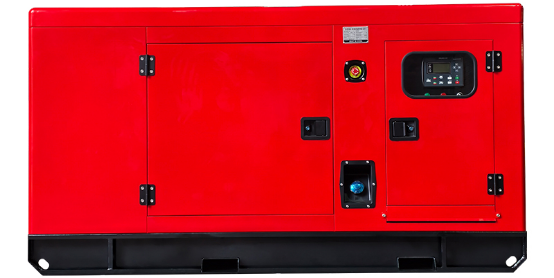
For a worked example of how these site constraints come together on a real project, a school 500KVA silent generator installation shows how a large canopy set was placed to balance noise limits, ventilation clearance, and fuel access on a busy campus.
A diesel genset transmits vibration into everything it touches, so the foundation does two jobs: carries the weight and isolates the movement. Standard practice is a reinforced concrete pad that extends at least 150–300 millimeters beyond the base frame on every side, with thickness determined by the set's weight and the soil bearing capacity — small single-phase sets under 20kW can sit on a 150mm slab, while a 500KVA-class machine needs an engineered design from a structural engineer. The pad must be level, cured, and set on compacted ground; settling foundations twist base frames and misalign flexible connections.
Quality gensets ship with anti-vibration mounts built into the base frame, so the pad itself does not need separate isolators in most cases. What the installation must add is flexibility at every connection point: a flexible exhaust bellows, flexible fuel lines, and a flexible radiator duct joint, so the engine can move on its mounts without cracking rigid pipework. Anchor the base frame to the pad with the manufacturer's fixing points, and never rigidly bond exhaust or fuel piping directly to the engine.
Ventilation failures are the single most common installation defect found during site inspections. A generator rejects roughly as much heat into cooling air as it delivers as electricity, so the airflow requirement is enormous — every kilowatt of output demands several cubic meters of cooling air per minute. The plant room or canopy airflow path must satisfy three rules: total inlet opening area matched to the radiator airflow (undersized louvers choke the set and cause derating), inlet low and outlet high so air sweeps the whole room, and inlet and discharge positioned so hot exhaust air cannot recirculate back into the intake.
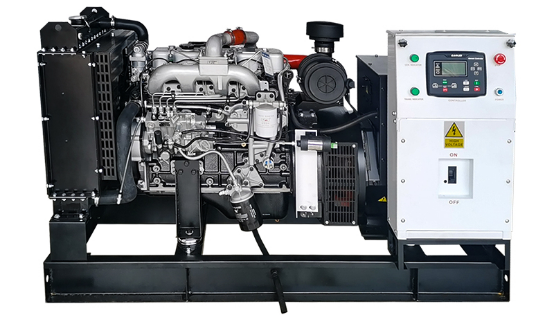
Where the radiator discharges into a duct, connect it through a canvas expansion joint and match the duct cross-section to the radiator, not to whatever opening happens to exist in the wall. Motorized or gravity louvers should open automatically when the set starts. Finally, check the climate: in hot regions and at altitude, both engine and alternator derate, and ventilation openings must be sized for the worst summer afternoon, not the average day. High-altitude projects — such as a Weichai generator running at 5,300 meters in a mining area — demonstrate why derating and cooling design must be calculated for the actual site, not assumed from a datasheet written for sea level.
Exhaust design is a discipline of restraint: keep the run as short as possible, use gentle bends instead of sharp elbows, and size the pipe diameter so back pressure stays within the engine manufacturer's limit. Excessive back pressure is a silent killer — it raises exhaust temperatures, pushes piston crowns and turbochargers beyond design limits, and shows up months later as reduced engine life rather than as an immediate fault. Install a flexible bellows section between engine and rigid pipe to absorb vibration, slope the pipe so condensate drains away from the engine, and terminate with a rain cap that excludes weather without restricting flow.
Select the silencer grade to match the environment: industrial-grade silencers suit factory zones, while residential-grade units are expected for hotels, hospitals, schools, and any installation near housing. A canopy genset already carries its own internal silencer, but the external exhaust run and its termination still shape the final noise signature at the property line.
Fuel system installation decides whether your engine receives clean diesel during the one event that matters. Three storage patterns dominate: base-frame tanks built into the genset (typically 8–12 hours of standby fuel), separate day tanks, and bulk storage tanks refilled by tanker. Whatever the pattern, follow four rules. Use black iron or approved piping — never garden-hose equivalents — with metallic connections near the engine. Fit a water separator and fuel filter on the supply line, because condensation in tanks is inevitable and water in the injection system is the most common cause of no-start conditions in standby sets. Provide a bunded containment area or double-walled tank sized to local fire code. And plan for fuel quality maintenance: standby diesel ages, so either size consumption to rotate stock or schedule periodic fuel polishing.
Electrical installation begins with cable sizing: conductors must carry the full generator output at your run length without excessive voltage drop, and the recommendation for a three-phase diesel generator is to keep voltage drop under roughly 3–5% between genset and main distribution. Grounding is not optional decoration — the generator frame, neutral (per your local code), and ATS enclosure must be bonded to the building earthing system, because a floating standby system protects neither equipment nor people. Circuit protection between generator, ATS, and loads must be coordinated so that a downstream fault trips the nearest breaker instead of the generator breaker.
For unattended power outage backup power generator service, an auto-start genset paired with an automatic transfer switch is the standard architecture. The mains monitoring controller watches utility voltage and frequency; when either falls outside limits, it cranks the engine, confirms stable output, and commands the ATS to transfer — typically within seconds. The wiring discipline that matters most is the mains/generator interlock: it must be physically and electrically impossible for both sources to connect to the load simultaneously, or the generator will back-feed into a dead grid and endanger utility workers. A dedicated 64kW auto-start diesel generator with an integrated AMF controller is the class of equipment most facilities choose for this duty, since the transfer logic is pre-engineered and tested at the factory.
Never accept an installation that has only been run empty. Proper commissioning follows a sequence: verify all mechanical systems (oil, coolant, fuel, batteries), start the set and check voltage, frequency, and rotation, then apply load — ideally in steps — using a load bank or the building's own staged loads. The acceptance test must include at least one full automatic transfer cycle with the mains deliberately disconnected, observed end to end. Record oil pressure, coolant temperature, voltages on all phases, frequency, and battery charging, and file the results: this baseline is the reference for every future service check. A documented commissioning test is also what separates a warranty-supported installation from a dispute waiting to happen.
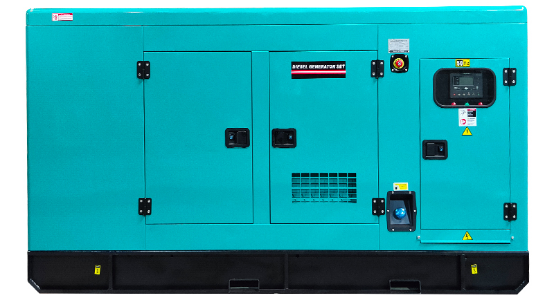
For larger plants, factory-side support shortens commissioning dramatically. A 400KW/500KVA Yuchai silent generator supplied for an industrial facility illustrates the scale at which factory test records, wiring schematics, and pre-shipment load testing translate into a fast, predictable site acceptance.
Across hundreds of site inspections, the same defects reappear. Use this list as a final checklist before handover:
| Mistake | Consequence | Prevention |
|---|---|---|
| Ventilation openings undersized or blocked | Overheating, derating, shutdowns under load | Size openings to radiator airflow; verify on hottest day |
| Exhaust run long, narrow, or sharp-bent | Excessive back pressure; shortened engine life | Short runs, correct diameter, gentle bends, back-pressure check |
| No water separator; contaminated tank | No-start events; injection pump damage | Water separator on supply line; clean, bundled fuel storage |
| Cables undersized for run length | Voltage drop; ATS and motor malfunctions | Calculate drop at full load; upsize conductors |
| Missing mains/generator interlock | Back-feed risk to grid; safety hazard | Proper ATS with verified mechanical and electrical interlock |
| Rigid piping without flex connections | Cracked fittings; fuel and exhaust leaks | Flexible bellows and fuel hose at every junction |
| Pad too small or on uncompacted soil | Settling; frame twist; alignment failures | Pad extended past frame; engineered for set weight |
| No load test at commissioning | Latent faults discovered during real outage | Documented step-load and transfer acceptance test |
Even compact sets suffer the same failure modes. A 32kW silent diesel generator installed for a small workshop or shopfront needs the identical discipline — ventilation, clean fuel, correct cabling, and a transfer test — just at smaller numbers. The mistake is assuming that smaller gensets forgive sloppy installation; they do not, they simply fail on a smaller stage.
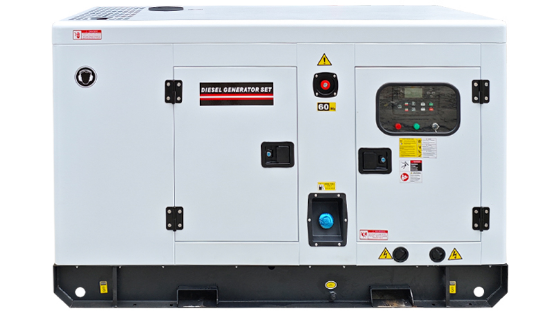
Hardware quality is only half of what a supplier delivers; the other half is the engineering data your installers need. When evaluating a China diesel generator manufacturer, require these deliverables with the quotation, not after the order: foundation load drawings and pad dimensions, radiator airflow and ventilation opening requirements, exhaust back pressure limits, wiring schematics including ATS connections, dimensioned general-arrangement drawings, and a commissioning checklist in English. A source factory that produces its own canopy sets and controller wiring will supply this package without hesitation; traders assembling boxes from multiple suppliers often cannot.
Verify manufacturing substance directly. A factory holding CE and ISO certifications, running its own assembly and load-test bays, and maintaining permanent stock can ship quickly and support you across the installation's life. Established in Guangdong in 2010, Longhong Power builds diesel gensets from 3KVA to 3000KVA with Cummins, Weichai, Yuchai, Perkins, Volvo, and Yunnei engines, holds 200+ units in permanent stock, and exports to Cambodia, Vietnam, Myanmar, Tanzania, Libya, and beyond — with pre-shipment testing and installation documentation as standard practice. Buyers comparing suppliers can review the full range in the product catalog and read the company's background on the about us page before committing.
One final sourcing tip: order the installation kit with the generator. Flexible exhaust bellows, flexible fuel lines, anti-vibration pads, battery cables, and the correct louver hardware are inexpensive at the factory gate and slow to source locally after delivery. Factories that ship complete, tested packages — engine, alternator, controller, enclosure, and mounting hardware — eliminate the integration gaps where most site problems hide.
A diesel generator installation succeeds on preparation, not luck. Choose the site for airflow, access, and drainage before you order; pour a foundation engineered for the set's weight; give cooling air a short, unobstructed path; keep exhaust back pressure low and fuel clean; wire the ATS with a verified interlock; and close the project with a documented load test. Follow the checklist in this guide and your standby diesel generator will start on the worst night of the year — which is the only performance that matters. And when selecting the equipment itself, buy from a manufacturer that treats installation engineering as part of the product, because the cheapest quotation often becomes the most expensive installation.


