

 English
 العربية
 Español
 Русский
Industry News
Industry News

Mining and quarry sites are some of the harshest places on earth to operate a diesel generator set. High dust loads, extreme temperatures, thin air at altitude, and constant vibration from heavy machinery all demand equipment that is engineered far beyond residential standards. A mining diesel generator must start reliably at the beginning of every shift, run for 12 to 24 hours under continuous load, and keep producing power even when ambient conditions push engines beyond their rated limits. Choosing the right generator for these sites is not just a matter of capacity — it is a question of uptime, fuel logistics, and total lifecycle cost. Longhong Power has supplied quarry diesel backup power supply systems and remote-site gensets for buyers across Africa, Southeast Asia, and South America. With more than 20 years of manufacturing experience and a permanent stock of 200+ units, the company is recognized as a dependable China diesel generator manufacturer for heavy industry. This guide explains how to specify a diesel generator for mining and quarry applications, what equipment protects the investment, and how to evaluate a China diesel generator factory before placing a large order.
Mining and quarry sites consume more power per square meter than almost any other industry. Conveyor belts, jaw crushers, cone crushers, vibrating screens, dewatering pumps, ventilation fans, lighting towers, and worker camps all draw from the same generation plant. A typical mid-sized quarry requires between 250 kVA and 1000 kVA of continuous power, while a hard-rock mine with primary crushing, secondary processing, and a worker camp can easily exceed 2000 kVA.
Unlike standby applications that see brief outages, mining gensets run for the full production shift. This means the engine must be rated for prime or continuous duty, not standby. A three-phase diesel generator in the 250–1000 kVA range is the workhorse configuration for most aggregate and mineral operations.
Crushers and large dewatering pumps draw 5–7 times their rated current during start-up. This inrush places enormous stress on the alternator and causes significant voltage dip if the generator is undersized. When sizing a diesel power generator for a quarry, the largest single motor load — typically the primary crusher — must be calculated first, and the generator kVA must be large enough to keep the voltage dip below 15% during start-up.
Worker camps, lighting, comms, and control rooms add a steady baseline load that must run continuously, even when production equipment is off-line. Modern mines therefore often split their power into a primary production generator and a smaller standby diesel generator for life-safety and auxiliary systems.
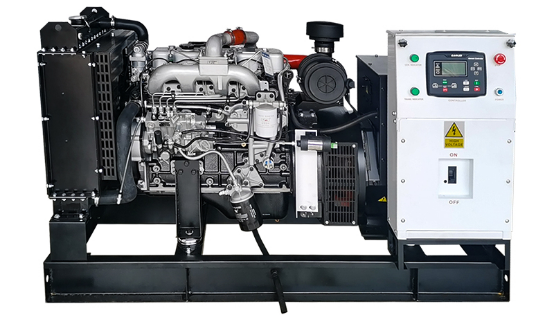
Figure 1: Open frame diesel generator — a rugged workhorse commonly deployed in mining and quarry power houses where the environment is controlled by a dedicated generator room.
Not every generator type is suitable for a quarry. The choice depends on whether the unit is installed permanently, moved between pits, or transported to a remote exploration site.
When the mine already has a dedicated power house with ventilation, an open frame diesel generator set offers the lowest cost per kVA and easiest maintenance access. Longhong Power's 100kW diesel generator set is a typical building block for medium-power open installations, while larger plants combine multiple units for a 500–2000 kVA total capacity.
Mines near towns, tourist areas, or other industrial operations often face strict noise ordinances. A canopy diesel generator with integrated acoustic enclosure reduces noise to 75–85 dB(A) at one meter. The 80kW silent diesel generator and the 64kW automatic generator are popular mid-range choices that combine low noise with automatic start for out-of-hours load.
For exploration sites and short-life quarries, a containerized diesel power plant module arrives pre-assembled and is ready to operate after fuel and cable connections. This reduces civil works and is ideal when the site is far from existing infrastructure.
Open-pit operations frequently relocate drill rigs, pumps, and lighting towers. A mobile trailer diesel generator on a towable chassis with fork pockets, lifting eye, and integrated fuel tank can be moved between locations in minutes. Trailer gensets are covered in more detail in section 5.
Engine selection determines fuel economy, parts availability, and overhaul intervals. Longhong Power partners with all major engine brands to give buyers a balanced range of capabilities and price points.
Cummins is the gold standard for mining gensets worldwide. Its QSK series engines deliver high power density, low fuel consumption, and a global service network. Cummins-powered units dominate Longhong Power's export cases — including a 750KVA unit shipped to Libya and 100KVA units operating in Tanzania.
Weichai and Yuchai engines are widely deployed in Asian, African, and Latin American mines because they combine robust construction with cost-effective spare parts. The Weichai generator operating at 5,300m altitude in a mining area demonstrates the brand's resilience under extreme environmental stress. Yuchai units like the 400KW/500KVA Yuchai silent generator are popular choices for both surface and underground operations.
For high-altitude mines where every liter of diesel must be airlifted, premium engines from Perkins and Volvo offer superior specific fuel consumption and longer overhaul cycles. These engines justify their higher initial cost in remote sites where fuel logistics dominate operating expense.
Yunnei engines are commonly paired with 50–200 kVA gensets used for camp power, lighting towers, and auxiliary systems. They offer a strong value proposition for buyers building out industrial emergency diesel generator fleets on a budget.
Engines lose power as altitude increases because the turbocharger has less air to compress. A standard naturally aspirated engine loses about 1% of its rated power for every 100 m above sea level, and turbocharged engines lose about 2–3%. Mining sites in the Andes, Himalayas, and Tibetan Plateau routinely operate above 4000 m — at the 5,300m mining site served by Longhong Power, the available power is roughly 50% of the sea-level nameplate.
Engines also derate as ambient temperature rises above 25°C. Above 40°C — common in desert and tropical mines — power output drops a further 10–15%. The radiator must be sized for the worst-case ambient, and fuel injection timing should be checked against the engine manufacturer's derating curve for the actual site altitude.
When a diesel power generator is rated "500 kVA standby at sea level," the buyer should re-rate it for the actual site. The general formula multiplies the rated kVA by an altitude factor and a temperature factor. If both are adverse, the available continuous kVA at a 5,000 m high-altitude, 35°C site can be as low as 55–65% of the nameplate.
When pits move faster than the power house can be relocated, a mobile trailer diesel generator is the most practical answer. Trailer gensets combine a canopy or containerized diesel genset with a road-towable chassis, integrated fuel tank, and quick-connect output panel.
Trailer gensets in the 30–200 kVA range are the most common configuration. The 40kW export diesel generator is a typical mid-range mobile unit suitable for camp power and small crusher feeds, while smaller units like the 32kW silent generator or the 30kW silent generator for farms are well-suited for lighting towers, drill support, and small exploration camps. Larger trailer gensets up to 500 kVA serve as mobile prime power for short-life quarries.
For mining use, the trailer must include heavy-duty axles, off-road tires, parking brakes, a height-adjustable tow bar, fork pockets, and a lifting eye for crane handling. Spillage containment under the fuel tank and integrated fire suppression are increasingly required by mining safety codes.
Instead of building a permanent power house for a 2-year quarry, the operator can simply tow the trailer type construction site generator between phases of the operation. When the mine closes, the unit is sold into the secondary market — recovering much of the original capital cost. This portability is one of the strongest economic arguments for trailer gensets in modern aggregate operations.
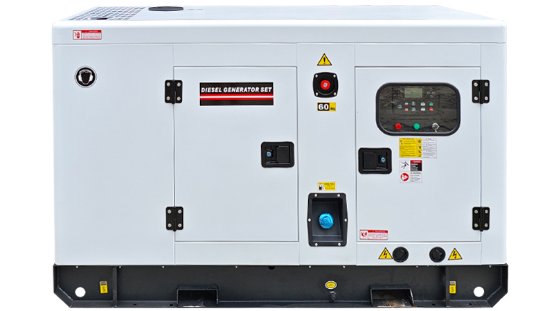
Figure 2: 32kW silent diesel generator — a compact mobile unit frequently integrated into trailer gensets for quarry lighting, drilling support, and remote camp power.
Dust is the single biggest cause of premature generator failure in quarries. Even a small quarry produces airborne silica and mineral dust that clogs air filters, coats radiators, and contaminates lubricants. A robust mining diesel generator specification must address dust from day one.
Two-stage filtration — a cyclonic separator followed by a high-capacity paper element — extends filter change intervals from every 250 hours to every 750 hours or more. Some mine operators add a positive-pressure cabinet that supplies clean air into the enclosure when the doors are closed.
Radiator fins must be cleaned daily in high-dust environments. Automatic dust-removal systems, rotating radiator brushes, and reversible fan cycles all help. The radiator coolant itself should be checked weekly for contamination, and the coolant filter replaced every 500 hours.
Remote mines often receive dirty or contaminated diesel. A China diesel generator supplier with experience in mining will specify bulk filtration, water-separating pre-filters, and on-board polishing systems. Routine oil sampling — every 250 hours — catches wear metals before they cause catastrophic damage.
Buyers should negotiate a recommended spare parts list with the manufacturer at the time of purchase. Critical items — filters, belts, sensors, and control modules — should be on-site before the generator is commissioned. The product catalog covers the full range of open, canopy, and containerized configurations available from Longhong Power, each supported with factory documentation.
Mining operators carry legal and corporate responsibility for worker safety and environmental protection. The generator specification is one part of that obligation.
A modern mining genset must include emergency stop buttons, fire detection and suppression, spill containment bunding, spark arrestors on the exhaust, and lockable isolation breakers. For underground mines, low-temperature exhaust and certified flameproof components may be mandatory.
Buyers should ask for proof of CE and ISO certifications, factory load test reports, and material certificates for the alternator and engine. Longhong Power's CE and ISO certifications are listed on the qualifications page, and every unit is tested at full load before shipment.
Before placing a large mining order, audit the China diesel generator manufacturer on engineering capability, container modification facilities, export experience, and after-sales support. Real-world references are essential — Longhong Power's Libya 750KVA Cummins export and Tanzania 100KVA Cummins export case studies show how the company's gensets perform in harsh, remote regions. The About Longhong Power page provides an overview of the company's history, capacity, and service philosophy.
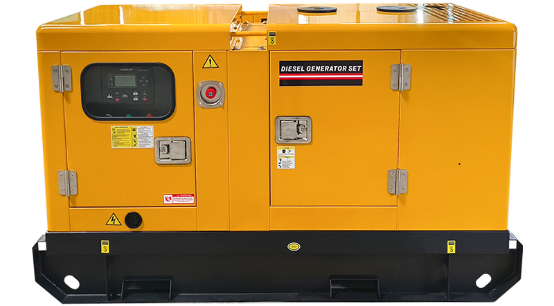
Figure 3: 10-14kW silent diesel generator — a compact auxiliary unit ideal for worker camps, lighting circuits, and small machinery at remote mining and quarry sites.
Mining and quarry operations demand diesel generator sets that are rugged, fuel-efficient, easy to maintain, and proven in extreme environments. Whether the application is a stationary power house feeding a 1000 kVA crusher line, a mobile trailer supporting a drill rig, or an auxiliary unit serving a remote worker camp, the right generator pays for itself through uptime and fuel economy. Longhong Power combines more than two decades of manufacturing experience, 3KVA–3000KVA capacity, multi-brand engine partnerships, CE/ISO certification, and a permanent stock of 200+ units to deliver diesel generators for mining buyers worldwide. For international procurement teams evaluating a China diesel generator supplier, Longhong Power offers a balanced combination of technical capability, export experience, and responsive service — qualities that translate directly into lower total cost of ownership on mining and quarry sites.
Guangdong Longhong Electromechanical Equipment Co., Ltd. is a China diesel generator manufacturer established in 2010 with more than 20 years of industry experience. The company produces diesel generator sets from 3KVA to 3000KVA, powered by Cummins, Weichai, Yuchai, Perkins, Volvo, and Yunnei engines. Products include open-frame, canopy/silent, trailer-mounted, and containerized configurations, all CE and ISO certified. With 200+ units in permanent stock and an active presence in Cambodia, Vietnam, Myanmar, Tanzania, Libya, and other markets, Longhong Power serves industrial, commercial, and infrastructure buyers around the world.


