

 English
 العربية
 Español
 Русский
Industry News
Industry News

A single power outage can cost a manufacturing plant thousands of dollars per minute in lost throughput, scrapped material and missed delivery windows. Unlike a small generator for home or a portable unit on a building site, an industrial emergency diesel generator must start automatically, accept full factory load within seconds, and run reliably for hours or days. This guide explains how plant engineers and procurement managers can size, configure and source the right diesel generator set for manufacturing facilities in 2026. Guangdong Longhong Electromechanical Equipment Co., Ltd., a China diesel generator manufacturer with more than 20 years of experience, supplies industrial standby diesel generator solutions from 3 kVA to 3,000 kVA for factories worldwide.
Manufacturing operations are uniquely vulnerable to grid instability. Conveyor systems, CNC machines, injection molding presses, refrigeration units and paint lines all depend on stable voltage and frequency. A brief dip can trigger safety shutdowns, damage controllers and ruin batches in progress.
An emergency diesel generator serves three critical roles in a factory:
The first step in any industrial standby power project is to classify every load into one of these three buckets. This classification drives generator sizing, switchgear design and the automatic load-shed strategy. A well-designed diesel power generator system does not simply back up the entire plant; it protects the loads that matter most while keeping capital cost under control.
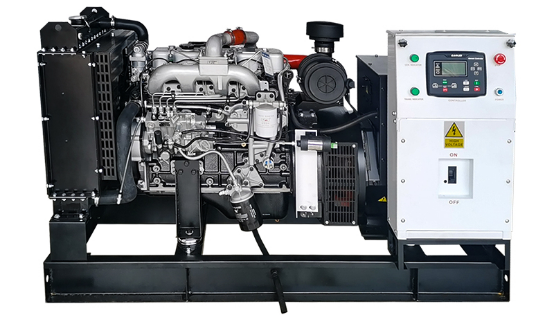
Accurate load assessment separates a reliable standby system from an oversized, fuel-wasting installation. Plant engineers should gather the following data before contacting any diesel generator supplier:
Collect nameplate ratings for motors, drives, heaters, lighting and control systems. Record both active power (kW) and apparent power (kVA) where available. Motor loads are usually the dominant factor in factories because their starting current can be five to seven times the running current.
Direct-on-line (DOL) motors create the highest inrush. Star-delta starters, soft starters and variable frequency drives (VFDs) reduce starting current dramatically. Share the motor starting sequence with your supplier so the generator can be sized for the worst-case staggered start, not the sum of every motor starting simultaneously.
Modern factories use VFDs, servo drives and LED lighting that can distort current waveforms. Poor power factor increases generator kVA requirement, while high harmonic content can cause alternator overheating. In severe cases, an oversized alternator or harmonic filter may be necessary.
Most plants grow. Size the generator for the load expected in five years, or specify a parallel-capable system that allows additional diesel genset units to be added later. Modular designs with paralleling controllers are often more cost-effective than one oversized unit.
Generator sizing is not simply adding up kilowatts. The correct size depends on starting surge, load power factor, altitude derating, ambient temperature and whether the set will run prime or standby duty.
After calculating the total steady-state kW, add at least 20–25% spare capacity. This margin accommodates:
For example, a factory with 280 kW of critical load should consider a 350–400 kW industrial emergency diesel generator. For smaller plants, Longhong offers compact 100 kW silent diesel generators and 80 kW silent diesel generators that fit common machine-shop and assembly-line loads.
Diesel engines lose output as altitude rises and intake air becomes less dense. A common rule of thumb is a 3–4% derating for every 300 meters above 1,000 meters. High ambient temperatures above 40°C also reduce cooling capacity. If your plant is in a hot or high-altitude region, tell the supplier during sizing so the correct engine is selected.
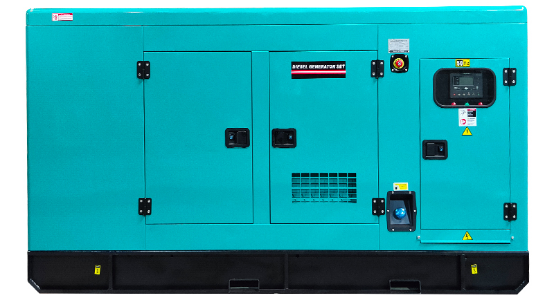
Almost every industrial facility needs a three-phase diesel generator. Three-phase power is more efficient for motors above roughly 5 hp and is the standard for factory distribution boards. However, some plants also need single-phase output for offices, labs or small tools.
If the facility has three-phase motors, pumps, compressors or HVAC equipment, a three-phase generator is mandatory. It delivers balanced power, smaller conductors for the same kW and smoother motor starting. Longhong's industrial range covers three-phase diesel power generator sets from 10 kW up to several megawatts.
A single-phase diesel generator is appropriate for small workshops, site offices, residential backup and light commercial loads. It should not be used to run three-phase motors unless a phase converter is added, which introduces losses and complexity. For mixed sites, specify a three-phase generator and derive single-phase loads through a properly balanced distribution panel.
An auto-start diesel generator is essential for manufacturing standby power. When the grid fails, the controller detects the loss of voltage, starts the engine, reaches rated speed and closes the generator breaker. With an automatic transfer switch (ATS), the transition from mains to generator can happen in 10–15 seconds.
Open-transition ATS briefly disconnects the load before reconnecting it to the generator. This is simple and cost-effective for most factories. Closed-transition ATS makes a make-before-break transfer, eliminating any power interruption. It is used for sensitive continuous processes but requires synchronization equipment and is more expensive.
Modern controllers offer GSM, Ethernet or cloud connectivity. Maintenance teams can receive alerts for low fuel, high coolant temperature, low oil pressure or failed starts. For plants with limited on-site staff, remote monitoring transforms a reactive breakdown into a scheduled maintenance event. When evaluating a diesel generator factory, ask which controller brands and communication modules are offered.
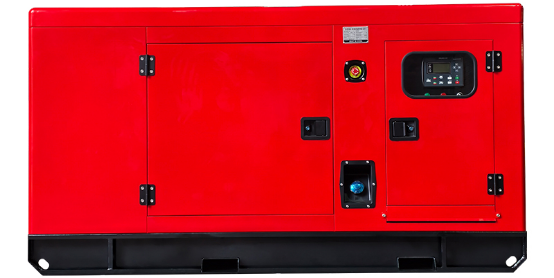
The physical installation of an industrial emergency diesel generator is just as important as the machine itself. Poor ventilation, inadequate fuel storage or the wrong enclosure can cause failures even when the generator is technically correct.
A canopy diesel generator encloses the engine and alternator in a weatherproof, sound-attenuated shell. For factories near residential areas or offices, noise limits often require a canopy rated below 75 dB(A) at 7 meters. Longhong supplies canopy and 32 kW silent diesel generators designed for low-noise operation. Indoor installations may use open-frame sets inside a dedicated plant room with acoustic treatment and forced ventilation.
Fuel autonomy is the number of hours the generator can run at full load without refueling. Common requirements are:
Base fuel tank capacity on full-load consumption, not average load. Undersized tanks force operators to refuel during an outage, increasing risk. Include water and sediment drains, level sensors and leak containment in the design.
Diesel engines need large volumes of combustion and cooling air. A plant room must supply roughly 6–8 cubic meters per minute per 100 kW of generator rating. Exhaust piping should be insulated, routed away from air intakes and fitted with a rain cap. Always comply with local fire and environmental codes.
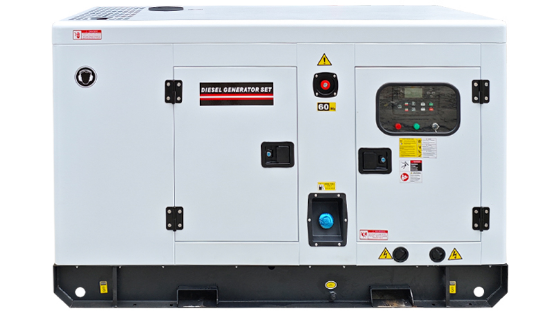
China is one of the world's largest production bases for diesel generator set equipment, offering competitive pricing, flexible configurations and fast lead times. However, not every supplier delivers the same quality. Here is what plant buyers should verify:
Confirm that the Cummins, Weichai, Yuchai, Perkins, Volvo or Yunnei engine is genuine and new, not refurbished or gray-market. Ask for engine serial numbers and factory-issued inspection reports. The alternator brand, winding class and voltage regulation accuracy should also be documented.
Look for ISO 9001 quality management, CE marking for export to Europe or equivalent regional approvals, and factory test certificates. Longhong products carry CE and ISO certifications and are exported to Cambodia, Vietnam, Myanmar, Tanzania, Libya and other markets.
Request a witness or video-recorded FAT before shipment. The test should verify rated output, voltage stability, frequency regulation, protection trips and full-load temperature rise. Reputable factories keep 200+ units in permanent stock and can arrange rapid FAT.
A strong warranty is meaningless without spare parts availability. Ask where filters, belts, injectors and controllers are stocked and how technical support is provided. For international buyers, confirm whether the supplier has local service partners or can train your maintenance team.
For medium-sized plants, models such as the 64 kW automatic diesel generator and 40 kW export diesel generator offer practical starting points. Larger facilities can scale into containerized or parallel diesel power plant configurations.
Choosing an industrial emergency diesel generator for a manufacturing plant requires more than matching a kilowatt rating. Buyers must classify loads, account for motor starting, choose the right voltage and phase, integrate ATS and remote monitoring, and plan fuel and ventilation carefully. Sourcing from an experienced China diesel generator manufacturer reduces technical risk and ensures the system is built for the real operating environment.
Guangdong Longhong Electromechanical Equipment Co., Ltd. designs and builds open frame, silent canopy, trailer and containerized diesel generators from 3 kVA to 3,000 kVA. With CE and ISO certification, 200+ units in permanent stock and export experience across Asia, Africa and the Middle East, Longhong helps factories select, install and maintain dependable standby power. Browse the product catalog or contact the team to discuss your industrial power outage backup power generator requirements.


