

 English
 العربية
 Español
 Русский
Industry News
Industry News

When the lights go out, every second counts. For a hospital operating room, a data center packed with servers, a hotel full of guests, or even a modern family with a refrigerator full of food, an outage is not just inconvenient — it can be costly, dangerous, or even life-threatening. That is exactly why auto-start diesel generators paired with an Automatic Transfer Switch (ATS) have become the gold standard for backup power protection worldwide. As a long-established China diesel generator manufacturer, Longhong Power has equipped thousands of commercial, residential, and industrial sites with these self-starting systems, from small clinics in Cambodia to large hotels in the Middle East. This guide explains how an auto-start system works, why the ATS is the silent hero of the backup chain, and how to specify the right unit for your own facility.
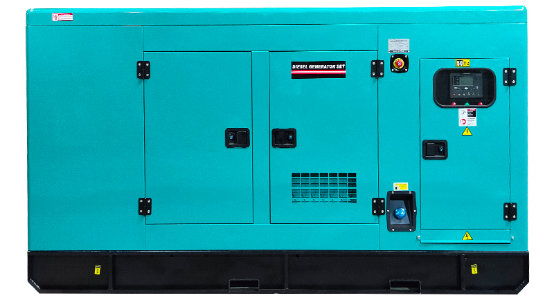
Figure 1: A 100kW silent canopy diesel generator — typical configuration for ATS-controlled standby power at hotels, hospitals, and mid-sized factories.
A traditional diesel generator must be started by an operator — someone turns a key, pushes a button, or cranks the engine manually. That works fine for planned exercises or in situations where staff are physically present. It does not work when an outage happens at 3 a.m., when no one is in the building, or when the operator is busy evacuating patients. An auto-start diesel generator replaces the human with an electronic controller that monitors the incoming utility power and starts the engine automatically the moment that power is lost.
Modern controllers detect failure within a few seconds, send a start signal to the engine, allow it to come up to rated speed and voltage, and command the ATS to switch the load over to the generator. The total interruption is usually between 10 and 30 seconds — short enough that most computers, elevators, and refrigerators ride through it without resetting. For sensitive loads, a UPS can bridge the gap until the diesel unit reaches full output.
Auto-start generators are used wherever an unexpected outage is unacceptable:
Hospitals and clinics — to keep life-support equipment, surgical lights, and refrigeration for medicines running.
Hotels and resorts — to maintain guest comfort, elevators, fire alarms, and kitchen refrigeration during grid failures.
Data centers and server rooms — to prevent the catastrophic data loss and hardware damage that even a brief outage can cause.
Factories and process plants — to avoid spoiled batches, blocked pipelines, and damaged tooling when power dips.
Residential villas and large homes — to keep security systems, sump pumps, and essential appliances operating in areas prone to outages.
The Automatic Transfer Switch is the brain and the brawn of a backup power system. It performs three jobs in rapid succession: detect, decide, and switch. First, voltage sensors on the utility side continuously monitor incoming power. When they detect a drop below an acceptable threshold (typically 80% of nominal voltage) for more than a preset number of cycles, the controller declares a utility failure. It then sends a start signal to the diesel generator.
Once the generator is running and producing stable voltage and frequency, the ATS performs the switch — opening its main breaker on the utility side and closing its breaker on the generator side, so the building's load is now powered by the genset. When utility power eventually returns and stabilizes, the ATS waits through a cool-down period (typically 5 to 30 minutes, configurable), then transfers the load back to the grid and shuts down the generator after another cool-down cycle. The whole sequence is hands-off and repeatable.
There are two principal ATS designs. An open transition switch briefly disconnects the load from both sources during transfer — a "break-before-make" sequence. This is the most common and lowest-cost approach, and the 1-to-2-second gap is short enough to be invisible to most equipment. A closed transition switch briefly parallel the two sources so there is no interruption at all — required by some codes for hospitals and certain critical infrastructure, but more expensive because the switch must be rated to handle paralleled sources.
For most applications, open-transition ATS panels supplied with a properly sized emergency diesel generator from a reputable China diesel generator catalog provide reliable, code-compliant performance at an accessible price.
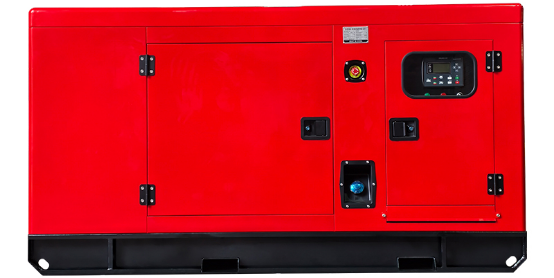
Figure 2: An 80kW silent diesel generator — its integrated controller can receive a start command from any standard ATS panel, making it ready for unattended backup operation.
The cost of an unexpected outage to a commercial business has risen sharply in the past decade. A modern hotel has point-of-sale terminals, electronic door locks, kitchen freezers, guest-room Wi-Fi, and fire-safety systems — all of which fail the instant utility power drops. A 30-minute outage in a mid-sized hotel can mean spoiled food, locked-out guests, missed reservations, and liability exposure. A standby diesel generator with auto-start removes all of this: guests never know the grid failed.
Industrial users face similar but larger figures. A bottling plant where conveyors stop mid-cycle, a plastic extruder that solidifies inside its barrel, or a pharmaceutical cleanroom that loses HEPA filtration — each event can cost thousands of dollars in waste and days of recovery. Auto-start backup eliminates this risk by ensuring that generator power arrives within seconds of the failure.
In many jurisdictions, certain building types must legally have standby power with auto-start capability. Hospitals must keep egress lighting and life-safety systems running for at least 90 minutes. High-rise residential buildings must power fire pumps and elevators during outages. Data centers handling financial transactions must demonstrate continuous availability. Insurance carriers often offer premium reductions to businesses with a properly maintained generator electrico tied to a transfer switch — making auto-start backup both code-compliant and financially sensible.
At the heart of an ATS-equipped system is the genset controller — typically a digital module mounted on the generator itself. It monitors utility voltage and frequency, drives the engine start cycle, governs engine speed, regulates output voltage, and signals the ATS to transfer. Reputable units from Longhong Power use controllers such as the Deepsea DSE 7320, ComAp AMF 25, or equivalents — these are widely supported and offer remote monitoring via Modbus or Ethernet.
The transfer switch is a heavy-duty, electrically operated set of contactors or motorized breakers that physically connect the load to either the utility or the generator. Quality switches are mechanically interlocked so both sources can never be connected at once — protecting the genset from being back-fed by the grid (which is dangerous for utility lineworkers). Common ratings range from 100 A for a small villa up to 3,000 A or more for a large industrial facility.
For larger commercial and industrial installations, a bypass-isolation switch is recommended alongside the ATS. This lets the ATS itself be maintained without interrupting the load — the bypass switch routes power around the ATS during service. Smaller residential installations typically omit this feature to keep cost down, but any facility with a diesel power generator larger than about 100 kW should consider it. See our qualifications and certifications page for the standards our equipment meets.
Many facilities do not need to back up every circuit during an outage — only the essential ones. Lighting, fire alarms, refrigeration, elevators, IT, and critical machinery belong on the essential bus. Air conditioning in unoccupied areas, decorative lighting, and electric vehicle chargers can be shed to reduce the required generator size. Drawing this line carefully often halves the cost of the power outage backup power generator.
Once the essential load list is summed, you must add headroom for motor inrush. Air-conditioning compressors, elevators, and pumps can draw 3 to 7 times their running current at start-up. A generator that has 200 kW of running load but trips every time a 30 kW chiller kicks in is not properly sized. The standard rule: genset standby rating should be at least 1.5 times the running load plus the largest single motor's start-up surge. For a hotel with a chiller, an elevator bank, and a kitchen — often a three-phase diesel generator between 200 and 500 kVA is appropriate. For a small clinic or villa, a single-phase diesel generator of 20 to 50 kVA may suffice.
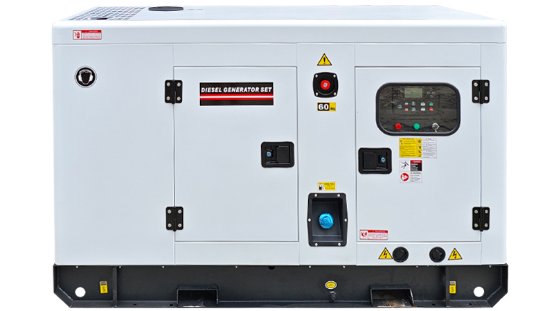
Figure 3: A 32kW silent diesel generator — a typical match for residential estates, small clinics, and convenience-store backup where low noise is essential.
The choice between single-phase and three-phase comes down to the type of load you are backing up. Single-phase 220–240 V generators are appropriate for homes, small shops, and offices where the total essential load is below about 30 kVA. Three-phase 380–415 V generators are required wherever you have three-phase equipment — typically larger motors, commercial elevators, industrial machinery, or any load above about 50 kVA. Most utilities in Southeast Asia, the Middle East, and Africa supply three-phase to commercial premises by default, which makes the three-phase diesel generator the standard choice for backup.
Some hybrid sites use a three-phase generator connected to a step-down transformer for single-phase loads — common at resorts and complexes. Longhong Power supplies both configurations from its diesel power generator product catalog, including ATS-ready units like the 64kW automatic generator for mid-sized commercial sites.
When the auto-start generator must run through the night in a residential neighborhood, hotel garden, or hospital courtyard, a silent canopy is essential. A properly designed canopy diesel generator operates at 65–75 dB at 7 meters — roughly the noise level of a normal conversation at a few paces. By contrast, an open-frame set may exceed 95 dB, which is unacceptable in urban or noise-regulated areas. Most of Longhong Power's ATS-ready product line is available in silent canopy form, including 16 kW to 150 kW units. See, for example, the 80kW silent diesel generator or the 20kW silent diesel generator for typical residential and small-business applications.
Before installing an auto-start generator, conduct a site survey covering exhaust routing, fuel supply, ventilation, foundation, and noise. Exhaust must terminate away from windows and air intakes. The fuel tank — typically a sub-base tank holding 8 to 24 hours of runtime — must be sized for the worst-case outage scenario. The generator needs at least 1 meter of clearance on all sides for cooling airflow and service access. Electrical connections from the generator to the ATS and from the ATS to the building distribution panel must follow local code for cable sizing, overcurrent protection, and grounding.
A generator that never runs under load will fail when needed. Most modern controllers offer programmable self-test routines — for example, run the engine for 15 minutes every Wednesday at 2 a.m., with or without load. A no-load exercise keeps the engine lubricated and the batteries charged, but only a load test verifies that the generator can actually carry the building load. Best practice is a weekly no-load exercise plus a monthly 30-minute loaded test at 50% to 80% of nameplate rating. Longhong Power's controllers support both modes and log every test event for compliance records.
An auto-start industrial emergency diesel generator typically runs only 50 to 200 hours per year, but maintenance still matters. Even short, infrequent operation ages engine oil, weakens starting batteries, and creates condensation in the fuel tank. A disciplined schedule keeps the unit ready to run on a moment's notice:
Weekly: Visual inspection, check coolant and oil levels, verify controller self-test passed.
Monthly: Run under load for 30 minutes, inspect batteries and connections, check fuel system for leaks.
Quarterly: Change oil and filters if running hours exceed 250, inspect belts and hoses, test ATS switching.
Annually: Comprehensive service — oil analysis, valve adjustment if applicable, coolant change, fuel polishing, battery load test, infrared thermography on electrical connections.
Long-term reliability depends on consistent preventive care. A well-maintained Longhong Power generator routinely delivers 20+ years of standby service, with major overhauls typically only at the 20,000-hour mark. The cheapest insurance against failure is a printed maintenance logbook and a service contract — both of which Longhong Power can arrange for international customers through its after-sales team.
An auto-start diesel generator paired with a properly specified ATS is the most reliable, repeatable, and code-compliant solution for backup power available today. Whether you are protecting a family residence, a five-story hotel, a regional hospital, or a busy data center, the combination of a self-monitoring controller, an automatic transfer switch, and a proven diesel engine delivers peace of mind at a manageable cost. The key to success lies in matching the right phase configuration (single-phase for residences, three-phase for most commercial loads), correctly sizing for both running and motor-starting requirements, and committing to a disciplined maintenance schedule.
For buyers evaluating backup power equipment, working with an experienced China diesel generator factory offers access to a full product range — open frame, silent canopy, containerized, and trailer-mounted units from 3 kVA to 3,000 kVA — at competitive direct-from-factory pricing, with worldwide shipping. Real projects such as the school 500 kVA silent standby project and the 400 kW hotel and commercial complex backup show how Longhong Power's ATS-ready sets perform in demanding environments worldwide.
Guangdong Longhong Electromechanical Equipment Co., Ltd. is a trusted China diesel generator manufacturer founded in 2010, with over 20 years of industry experience and more than 200 units in permanent stock for fast delivery. The company produces 3 kVA to 3,000 kVA diesel generator sets powered by world-class engines from Cummins, Weichai, Yuchai, Perkins, Volvo, and Yunnei, in open frame, silent canopy, mobile trailer, and containerized configurations. All units carry CE and ISO certifications, and the company exports to Cambodia, Vietnam, Myanmar, Tanzania, Libya, and many other countries. Browse the complete diesel generator product catalog or contact our team for a tailored ATS-ready backup power quotation.


