

 English
 العربية
 Español
 Русский
Industry News
Industry News

Every kilowatt-hour that keeps a refrigerated warehouse at −18°C is protecting money that is already sitting on your shelves. When the grid fails at a cold storage facility, the clock starts immediately: product temperatures climb, HACCP records show the excursion, and a single prolonged outage can write off an entire chamber of frozen or chilled inventory. A properly specified standby diesel generator turns that emergency into a non-event. This guide explains how cold store operators, third-party logistics providers, food processors and pharmaceutical distributors should select, size and source a diesel generator set in 2026 — from compressor starting loads and ATS integration to fuel autonomy and factory sourcing. Guangdong Longhong Electromechanical Equipment Co., Ltd., a China diesel generator manufacturer with more than 20 years of experience, builds diesel power generator solutions from 3 kVA to 3,000 kVA for cold chain and industrial customers worldwide.
Cold storage is one of the few industries where the inventory itself is perishable capital. Unlike a warehouse of dry goods, a refrigerated facility loses value every minute its refrigeration plant is offline — and the loss is invisible until someone opens the temperature log.
A well-insulated frozen store holds temperature for a few hours with the doors closed, but chilled rooms for fresh produce, dairy, meat and seafood can drift out of safe range far sooner. Once product temperature rises beyond tolerance, the cargo may still look perfect — and still be unsellable. Beyond the product itself, an outage triggers defrost-and-restart cycles that spike energy bills, labor costs for inspection and re-verification, and claims from customers whose goods never arrived in spec. A power outage backup power generator is, in this context, inventory insurance that pays for itself the first time the grid fails.
Food safety systems built on HACCP require continuous, documented temperature control, and cold chain audits increasingly ask what happens when the power fails. Pharmaceutical distribution is stricter still: GDP guidelines expect 2–8°C products to remain within range with a documented contingency plan — which in practice means an industrial emergency diesel generator with automatic starting and temperature monitoring. Retail and food-service customers routinely write cold chain continuity into supply contracts, so the generator you install protects not just today's pallets but next year's contracts.
Sizing a genset for a cold store is not the same as sizing one for an office building. The load is motor-heavy, cycling, and sensitive to starting currents — and every one of those details changes the generator specification.
Refrigeration compressors typically account for 60–70% of a cold store's electricity consumption. They are also the hardest load on a generator: a compressor motor started direct-on-line can draw five to seven times its rated current, dragging voltage and frequency down at the worst possible moment. Ask your refrigeration contractor which compressors use soft starters or variable-speed drives — VSD-driven compressors start at close to rated current and are dramatically easier on a diesel genset. If large motors must start DOL, the generator and alternator must be sized for that transient, not just for running load.
Around the compressors sit evaporator and condenser fans, defrost heaters, dock door motors and air curtains, internal lighting, forklift charging, office and security loads — and, in automated facilities, cranes and shuttle systems that must park safely. Defrost heaters are a hidden trap: they are purely resistive, can be several tens of kilowatts, and are among the first loads you should shed on generator power because defrost can safely wait an hour.
Divide the facility into three tiers before you contact any diesel generator supplier:
This tiering typically reduces the required generator rating by 20–30% compared with backing up everything — a saving that pays for a better enclosure or a larger fuel tank.
With the load classified, sizing follows a disciplined sequence. Getting it right means the generator accepts the block load after a blackout without stalling and runs efficiently for as long as the outage lasts.
First, total the running load of the critical and essential tiers in kW. Second, add starting margin for the largest motor that may restart during generator operation — as a rule of thumb, add 25–30% of that motor's rating if it starts DOL, or 5–10% with a soft starter or VSD. Third, add 20% growth margin for facility expansion. Fourth, convert to kVA at your power factor (typically 0.8) and verify the set's step-load acceptance against your largest single motor. Cold storage facilities almost always need a three-phase diesel generator at 380/400/415 V; only a small retail cold room or a farm dairy chiller justifies a single-phase diesel generator.
Consider a regional distribution cold store: compressors totaling 150 kW running load, fans and controls at 40 kW, lighting and docks at 30 kW — about 220 kW running. The largest compressor (45 kW) starts DOL during transfer, so add roughly 60–80 kW of starting margin, plus 20% growth. The result points to a 350–400 kW class machine — around 500 kVA at 0.8 power factor. That is exactly the rating class of the 400 kW (500 KVA) Yuchai silent generator Longhong supplied for an institutional backup project, and it illustrates why mid-sized cold stores so often land in the 300–500 kVA band.
Smaller facilities scale down cleanly: a 60–90 kW cold store or food processing room is well served by Longhong's 100 kW silent diesel generator or 80 kW silent diesel generator, while compact cold rooms, dairy chillers and retail back-of-house applications suit the 32 kW silent generator and smaller canopy sets.
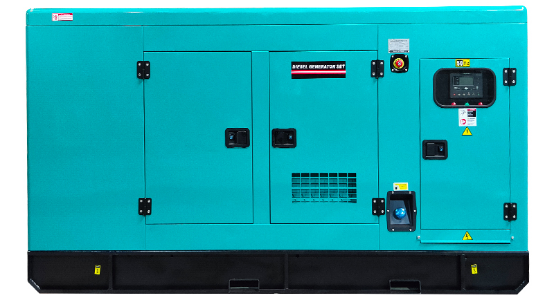
Cold stores themselves are cold, but the generator often sits outdoors in a hot plant yard — and condenser heat rejection raises local ambient temperatures further. Verify that the engine's rating is valid at your site's peak ambient temperature and altitude, and specify a high-temperature canopy rating or oversized radiator where summers are severe. Reputable manufacturers quote derating data openly; treat a supplier who claims "no derating, ever" as a red flag.
In cold chain service, a generator that needs a human to walk over and press start is a generator that arrives too late. The control chain must act on its own: the controller senses the outage, cranks the engine, stabilizes voltage and frequency, and signals the automatic transfer switch to connect the load — typically within 10–15 seconds, well before chamber temperatures begin to move.
A well-designed transfer sequence restores critical refrigeration first and staggers large compressor restarts so the engine is never asked to start two big motors simultaneously. Modern controllers support programmable load-shedding outputs precisely for this purpose. For single-machine facilities, an integrated package such as the 64 kW automatic diesel generator — auto-start diesel generator control with a factory-matched ATS cabinet — removes the integration risk between brands. The same auto-start technology serves facilities of every size, from an engineering emergency diesel generator set on a remote project to the hotel diesel backup power generation equipment class of installations.
Where product value justifies it, two smaller generators in parallel beat one large set: N+1 redundancy keeps the cold chain alive even when one machine is down for service, and part-load efficiency improves because one unit can shut down at night. Modern paralleling controllers synchronize voltage, frequency and phase automatically. Remote monitoring — fuel level, coolant temperature, battery status, load percentage — should report to the facility's temperature monitoring platform so that both product and machine alarms reach the same operators.
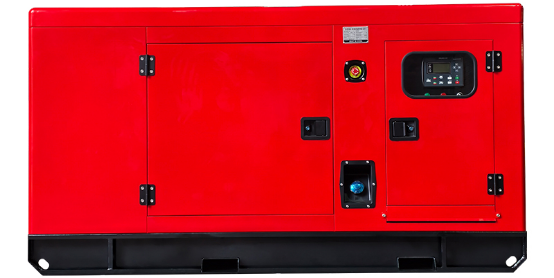
The right enclosure depends on where the generator will live and who lives next door.
Cold stores frequently operate near residential areas, food markets and other noise-sensitive neighbors, and they run at night when compressor cycling makes the genset start without warning. A quality canopy diesel generator holds noise below 75 dB(A) at 7 meters, protects the engine from rain and dust, and can be specified with high-ambient cooling for tropical sites. This is the default choice for most cold chain installations.
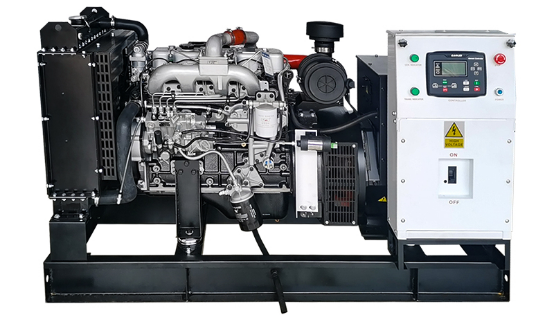
Where the facility has a purpose-built generator room with acoustic treatment and forced ventilation, an open frame set costs less and makes every filter and hose easier to reach. Remember that the room must supply large volumes of cooling air and that exhaust must discharge away from fresh-air intakes and, importantly, away from cold store loading docks.
Large distribution hubs and multi-chamber campuses increasingly standardize on the containerized diesel generator: genset, fuel system, controls and ventilation factory-integrated into an ISO container that cranes into place and scales toward a full diesel power plant with paralleling switchgear. For temporary needs — a chamber under maintenance, seasonal harvest peaks, an event requiring refrigerated containers, or backup power at a construction site canteen — a mobile trailer diesel generator or a standard construction site diesel generator set can carry temporary cold storage the same way it carries site tools, and the same units later serve as a fixed standby diesel generator if the site becomes permanent.
Fuel is what turns a generator into true outage protection, and cold stores — often located far from city centers — must plan refueling deliberately.
A 400 kW set running at 75% load consumes roughly 60–70 litres of diesel per hour, so an 8-hour buffer already means a 500-litre day tank plus bulk storage. For most cold stores we recommend 24 hours of on-site autonomy at critical load, extending to 48 hours where fuel trucks may be delayed by weather or distance. Include fuel level telemetry with low-level alarms, water and sediment drains, and in hot climates biocide dosing or fuel polishing — diesel degrades in storage, and a generator with clean fuel is a reliable generator.
Standby gensets spend most of their lives not running, and when they do run brief no-load tests, unburned fuel and carbon can accumulate in the exhaust system — a condition called wet stacking. Schedule a monthly on-load run of 30–60 minutes at no less than 30% of rating, and an annual full-load test of 2–4 hours. Cold storage operators have an advantage here: transferring the real refrigeration load during a planned monthly test doubles as a full dress rehearsal of the ATS and load-shedding sequence.
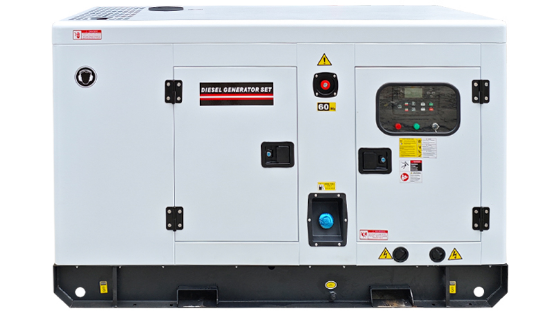
China is the world's largest production base for diesel generator set equipment, offering strong value, flexible configuration and short lead times — a real advantage when a cold store expansion has a fixed commissioning date and every week of delay delays revenue. To buy well from a diesel generator factory, work through the following checkpoints.
State the running and starting loads from your load study, your voltage and frequency, ambient conditions, enclosure preference, autonomy target and controller requirements (including remote monitoring and load-shedding outputs). Insist on genuine, nameplate-verifiable engines — Longhong builds with Cummins, Weichai, Yuchai, Perkins, Volvo and Yunnei engines matched to copper-wound alternators — and ask for the actual alternator brand and winding data, not just "equivalent". A credible diesel generator supplier will return a sizing calculation showing step-load acceptance, not just a price list.
Require a factory acceptance test with videos or third-party inspection: rated-load run, overload check at 110%, voltage and frequency regulation, and ATS function test with your specified controller. Verify CE and ISO certification — Longhong's certificates are published on its qualifications page — and confirm the warranty covers both engine and alternator with spare parts availability stated in writing.
Canopy and containerized sets ship efficiently in standard containers; confirm lifting points, base frame fuel tank capacity and whether the set is factory-prepared for tropical climates. Longhong has exported to Cambodia, Vietnam, Myanmar, Tanzania, Libya and other markets, and supports buyers whether they search for a UK diesel genset for food retail logistics or a "generator electrico" for cold rooms in Latin American distribution centers. Finally, agree on commissioning support and staff training; a cold store's first real outage is the wrong time to discover nobody on site knows the ATS sequence.
Cold chain power protection rewards precision. Classify your loads, size for compressor starting currents rather than nameplate totals, insist on genuine engines with a documented factory test, and specify auto-start control, adequate fuel autonomy and an enclosure that respects your neighbors. Do that, and the next grid failure becomes a line in the temperature log rather than a write-off. For a sizing review or a quotation on emergency diesel generator packages from 3 kVA to 3,000 kVA, contact Longhong Power — our engineers respond with calculations, not catalogs.


