

 English
 العربية
 Español
 Русский
Industry News
Industry News

Power outages are no longer rare exceptions — they are an expected risk of modern life. From aging grid infrastructure and extreme weather events to scheduled load-shedding and unexpected transformer failures, businesses and households worldwide face an increasing need for reliable backup power. A well-planned diesel generator set transforms a crisis into a minor inconvenience, keeping lights on, refrigerators running, elevators moving, and production lines humming.
This 2026 guide from Guangdong Longhong Electromechanical Equipment Co., Ltd., a China diesel generator manufacturer with over 20 years of experience, walks you through every step of power outage preparedness. Whether you are a homeowner protecting your family, a facility manager responsible for a hospital or hotel, or a procurement officer sourcing industrial emergency diesel generators for a remote construction site, the principles below will help you plan, size, install, and maintain a system you can trust when the grid goes down.
Understanding the causes of power outages helps you plan for the right duration, frequency, and severity of backup power needs. The risks vary dramatically by region, season, and local grid maturity.
In many developed economies, transmission and distribution networks were built decades ago and are now operating beyond their original design capacity. During heat waves or cold snaps, air-conditioning and heating loads push transformers and substations to failure. In fast-growing emerging markets, grid expansion simply cannot keep pace with urbanization and industrialization, leading to scheduled rolling blackouts and unplanned overload trips.
Hurricanes, typhoons, ice storms, wildfires, and flooding are becoming more frequent and severe. These events damage overhead lines, flood substations, and delay repair crews for days or even weeks. A standby diesel generator with sufficient fuel autonomy is not just a convenience in these scenarios — it is a survival tool for critical facilities such as hospitals, data centers, and emergency response centers.
In parts of Africa, South Asia, and Southeast Asia, daily power cuts of 4–12 hours are still common. Businesses in these regions treat a diesel power plant as primary power, not backup. For exporters and manufacturers, this reality creates both a challenge and an opportunity: the demand for reliable, cost-effective diesel gensets from China diesel generator manufacturers has never been higher.
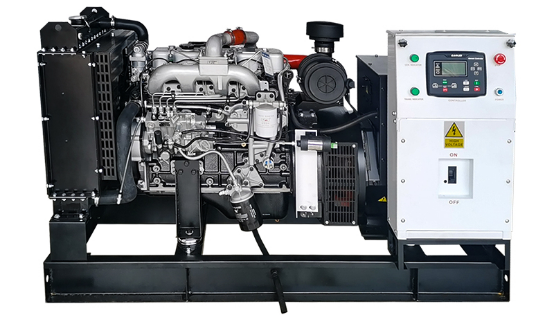
Before you can size a generator, you must understand what you are protecting. A systematic needs assessment prevents both dangerous undersizing and wasteful oversizing.
Divide your electrical loads into three tiers:
A hospital will prioritize life-safety loads. A shopping mall backup diesel genset will balance revenue protection with customer safety. A home generator for home use will focus on refrigeration, lighting, and maybe a single air conditioner.
Motors, compressors, and transformers draw significantly more current during startup than during steady operation. A 5-horsepower air-conditioning compressor might draw 30 amps while running but 90 amps for the first half-second. Your diesel power generator must handle these inrush currents without voltage collapse. This is why professional sizing always includes a diversity factor and a starting-kVA calculation, not just a simple wattage addition.
Homes and small shops typically need single-phase diesel generator output (220–240V). Commercial buildings, industrial plants, and large hotels need three-phase diesel generator output (380–415V) to run motors, elevators, and large HVAC systems. Some facilities need both: a three-phase main supply with single-phase distribution boards. Longhong Power's product catalog includes both configurations from 10kW to 1000kW and beyond.
Generator sizing is part science, part experience. The goal is to cover all critical and essential loads with a reasonable margin for future expansion, without buying capacity you will never use.
Follow this step-by-step process:
| Application | Typical Load Range | Recommended Standby Rating |
|---|---|---|
| Small home (lighting, fridge, TV) | 3–8 kW | 10–14 kW diesel generator |
| Large home or small shop (A/C, pumps) | 10–20 kW | 20–32 kW diesel generator |
| Small hotel or restaurant | 30–60 kW | 64–80 kW diesel generator |
| Medium commercial building | 60–120 kW | 100–150 kW diesel generator |
| Shopping mall or hospital wing | 200–500 kW | 250–600 kW diesel generator |
| Industrial plant or data center | 500 kW+ | Containerized diesel generator or multiple paralleled sets |
Generators are rated for different duty cycles:
Most emergency diesel generator applications use the standby rating. If you live in an area with daily 6-hour blackouts, choose a prime-rated set or de-rate a standby unit by 15–20% to extend engine life.
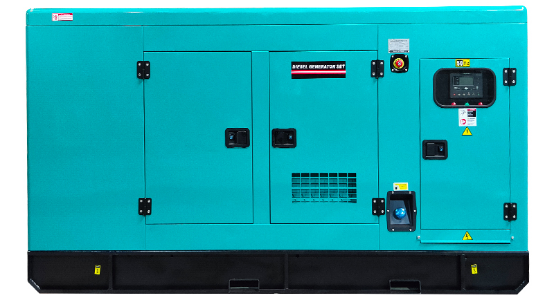
A generator without fuel is just an expensive sculpture. Fuel planning is where many backup power strategies fail.
Diesel consumption varies with load, engine efficiency, and altitude. A practical rule of thumb is 0.2 to 0.25 liters per kWh produced. A 100kW generator at 75% load therefore consumes roughly 15–19 liters per hour. Over a 24-hour outage, that is 360–450 liters. Over a 72-hour hurricane event, it is over 1,000 liters.
Autonomy is how long your generator can run without refueling. Common targets:
Always size your tank for the longest plausible outage, not the average. Remember that fuel delivery trucks may be unable to reach you during the same storm that caused the outage.
Diesel fuel degrades over time. Oxidation forms gums and varnishes; water condensation breeds microbial contamination ("diesel bug"); and biodiesel blends absorb moisture faster than pure diesel. Store fuel in a sealed, vented tank with water drainage at the lowest point. Treat stored fuel with a biocide and stabilizer, and plan to rotate (use and replace) your reserve every 6–12 months. For critical installations, consider a fuel polishing system that continuously filters and conditions the stored diesel.
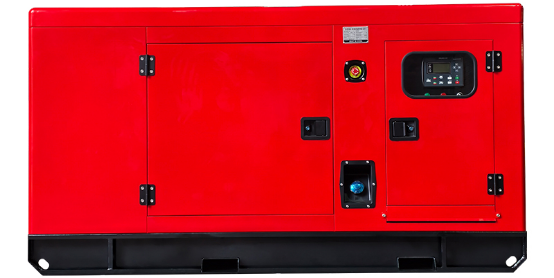
The best generator in the world is useless if it does not start automatically when the grid fails, or if nobody knows it has failed until it is too late.
An auto-start diesel generator paired with an ATS delivers true hands-free backup power. When grid voltage drops or disappears, the ATS signals the generator to start. Once the generator reaches stable voltage and frequency (typically 5–10 seconds), the ATS transfers the load from grid to generator. When grid power returns, the ATS waits for stability, transfers back to grid, and signals the generator to cool down and shut off.
ATS systems come in open-transition (break-before-make, brief interruption), closed-transition (make-before-break, no interruption), and delayed-transition (for large motor loads) variants. For hotel diesel backup power generation equipment and hospitals, closed-transition or delayed-transition ATS units prevent disruptive voltage dips during transfer.
Modern digital controllers offer GSM, 4G, or Ethernet connectivity, sending SMS and email alerts for:
For facilities with multiple sites or unmanned installations, remote monitoring transforms reactive maintenance into proactive management. Our 64kW automatic diesel generator and larger sets include controller options with full remote monitoring capability.
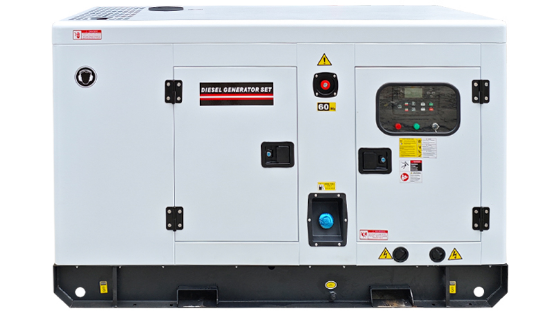
Proper installation is as important as proper sizing. A poorly installed generator will overheat, vibrate excessively, annoy neighbors, and fail prematurely.
Install the generator on a level, vibration-isolated concrete pad with adequate drainage. Indoor installations require a dedicated generator room with fire-rated walls, automatic fire suppression, and emergency ventilation. Outdoor installations need weatherproof enclosures. Maintain clearances on all sides for airflow and maintenance access — consult the manufacturer's manual, but typically 1.0–1.5 meters minimum.
Diesel exhaust contains carbon monoxide, nitrogen oxides, and particulates. It must be piped outside through insulated, flex-jointed exhaust piping with a rain cap. Engine radiator discharge air must be ducted away from intake louvers to prevent hot-air recirculation. For indoor installations, calculate airflow requirements carefully: a 100kW generator can require 10,000+ cubic meters per hour of ventilation air.
Standard open-frame generators produce 95–105 dB(A) at 1 meter — unacceptable near homes, schools, or offices. A canopy diesel generator enclosure with acoustic insulation, baffles, and exhaust silencers reduces this to 65–75 dB(A) at 7 meters, comparable to normal conversation. For noise-sensitive environments such as residential neighborhoods, hospitals, and hotels, always specify a silent canopy. View Longhong Power's certifications and noise-test reports to confirm compliance with local ordinances.
A backup generator is a "sleeping" asset — it may sit idle for months, then be expected to start perfectly in a crisis. Preventive maintenance is what bridges that gap.
Run your standby diesel generator under load at least monthly. A no-load run does not prove the alternator, voltage regulator, or cooling system. A 30-minute run at 30–50% rated load burns off carbon deposits, lubricates seals, and dries moisture from the windings. Log every exercise run: date, duration, load level, oil pressure, coolant temperature, and any alarms.
Battery failure is the single most common cause of a failed emergency start. Test battery voltage monthly, clean terminals quarterly, and replace batteries every 2–3 years regardless of apparent condition. For critical applications, install a dual-battery system or a battery-monitoring alarm.
Check fuel levels weekly, especially before storm seasons. Verify coolant level and condition monthly — contaminated coolant causes cylinder-head corrosion and overheating. Change engine oil and filters per the manufacturer's hour-based or calendar-based schedule, whichever comes first.
China is the world's largest producer of diesel generators, offering exceptional value when you know how to evaluate suppliers. Here is what experienced buyers look for.
Verify that the engine is genuine, not a clone or refurbished unit. Reputable China diesel generator manufacturers source directly from Cummins, Weichai, Yuchai, Perkins, Volvo, or Yunnei and provide serial-number traceability. Each engine brand has strengths: Cummins for global parts availability, Weichai for value and altitude performance, Yuchai for cost-sensitive projects, Perkins for low noise, Volvo for fuel efficiency, and Yunnei for compact light-duty sets.
The alternator is as important as the engine. Look for copper-wound (not aluminum) alternators from brands like Stamford, Leroy-Somer, or Marathon, with a digital automatic voltage regulator (AVR). Brushless designs reduce maintenance. Ask for the alternator's temperature-rise class (Class H is preferred for tropical climates) and voltage waveform THD (under 5% for sensitive electronics).
Demand CE marking for European markets, ISO 9001 for quality management, and ISO 14001 for environmental compliance. A responsible manufacturer will offer Factory Acceptance Testing (FAT) with load-bank verification, witness inspection, or video documentation. Learn more about Longhong Power's quality standards and 20+ years of manufacturing history in Guangdong, China.
A generator's total cost of ownership includes parts and service over 10–20 years. Confirm that the manufacturer stocks common wear parts (filters, belts, hoses, controllers) and can ship within 48 hours. Ask about warranty terms: typically 12 months or 1,000 running hours for the full set, with longer coverage available for the engine through the engine OEM. For export markets, check whether the manufacturer has local service partners or can train your technicians.
"We have exported diesel generator sets to Cambodia, Vietnam, Myanmar, Tanzania, Libya, and many other markets. Every unit leaves our factory with a full test report, operation manual, and a recommended spare-parts list for the first 2,000 hours." — Longhong Power Engineering Team
Power outage preparedness is not about paranoia — it is about resilience. A properly sized, installed, and maintained diesel generator set gives you the confidence to weather any grid disruption, from a brief afternoon blackout to a week-long storm recovery. The key steps are simple: assess your loads honestly, size with margin, plan fuel for the worst-case scenario, automate with ATS, control noise for your neighbors, and maintain the unit as if your business depends on it — because someday, it will.
Whether you need a compact generator for home use, a construction site diesel generator set for remote projects, or a containerized diesel generator for an industrial power plant, Guangdong Longhong Electromechanical Equipment Co., Ltd. offers proven solutions from 3kVA to 3000kVA. With CE and ISO certification, 200+ units in permanent stock, and export experience across Asia, Africa, and the Middle East, we are ready to help you build a backup power plan that works when it matters most.
Contact Longhong Power today to discuss your power outage preparedness project, request a quotation, or schedule a virtual factory tour. Your next outage is not a question of "if" — it is a question of "when." Be ready.


