

 English
 العربية
 Español
 Русский
Industry News
Industry News

Published: September 16, 2026 | By Guangdong Longhong Electromechanical Equipment Co., Ltd.
A diesel generator set is one of those assets that is easy to forget about—until the day you need it. Whether your diesel genset provides standby power for a hotel, prime power for a construction site, or emergency backup for a shopping mall, its reliability during a real outage depends almost entirely on one factor: disciplined preventive maintenance. Industry service data consistently shows that the majority of failed emergency starts trace back to preventable issues—dead batteries, stale fuel, and skipped inspections—rather than genuine engine defects. This guide from Longhong Power, a China diesel generator manufacturer with 20+ years of hands-on experience, gives you a complete, practical maintenance checklist you can apply to any diesel power generator, from a 10kW single-phase unit to a 1000kVA industrial set.
Preventive maintenance is the cheapest insurance you will ever buy for a diesel generator set. A structured program costs a small fraction of a single emergency repair—or a single night of lost business.
For a hotel diesel backup power generation system or a shopping mall backup diesel genset, one failed start during a grid outage can mean closed elevators, spoiled refrigerated stock, canceled bookings, and safety risks in darkened stairwells. For a construction site diesel generator set, every idle hour pushes the project schedule back and idles crews and cranes. A standby diesel generator that starts within 10 seconds as designed protects all of that—but only if its battery is charged, its fuel is clean, and its coolant is topped up. Preventive maintenance is what converts a rated reliability figure into real-world reliability.
Every reputable engine manufacturer—Cummins, Weichai, Yuchai, Perkins, Volvo, Yunnei—conditions its warranty on documented servicing at specified intervals. Skipping an oil change interval can void coverage precisely when you need it. Additionally, facilities such as hospitals and data centers are often audited for backup power readiness; a written maintenance logbook is part of that compliance package. When you buy from a factory like Longhong Power, established in 2010 in Guangdong, China, you receive a full service manual and maintenance schedule tailored to your engine model—keep it with the unit and follow it.
Daily checks are quick visual and operational inspections, ideal for sites with an operator or facility technician on staff. For unattended installations, many of these readings can be captured automatically by a modern digital controller with remote monitoring.
Walk around the generator and look for: oil, coolant, or fuel leaks under the set; loose or chafed wiring; corrosion on terminals; blocked air inlets and louvers (especially on a canopy diesel generator, where leaves and dust can restrict ventilation); and unusual exhaust smoke if the unit is running. Catching a small weeping seal on Monday prevents a seized engine in March.
Check three levels every day on duty-critical units: engine oil (dipstick between MIN and MAX, engine level and off for accurate reading), coolant in the expansion tank (top up only with the same coolant type and demineralized water), and fuel (verify enough reserve for your designed autonomy—typically 8 hours standby minimum). Drain any accumulated water from the fuel water separator daily in humid climates.
Record battery voltage (12V or 24V system should read fully charged at rest), hour meter reading, and any alarms in the controller history. A battery that reads 12.2V instead of 12.7V at rest is telling you the charger is failing—fix it now, not during the next blackout. A simple logbook, kept consistently, is the single most valuable maintenance document you can own.
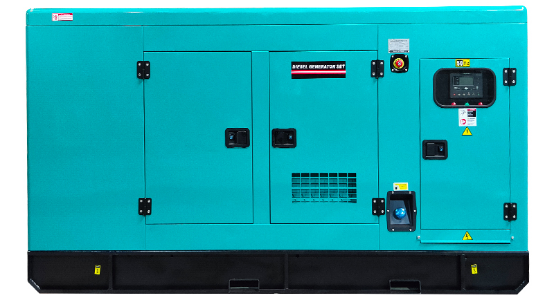
100kW silent diesel generator: the digital controller logs hours, voltage, and alarms automatically, simplifying daily checks.
Weekly and monthly tasks go deeper than visual checks and directly target the two systems that cause most emergency-start failures: batteries and fuel.
Battery failure is the number-one cause of a standby diesel generator refusing to start. Monthly: clean terminals and apply petroleum jelly or anti-corrosion spray; check the electrolyte level on wet-cell batteries (top up with distilled water only); verify the charger output; and test-crank the engine briefly with the fuel shut off to confirm cranking speed. For critical sites, a battery conductance test every quarter gives an early warning of capacity loss long before the failure.
Diesel is not immortal. Stored fuel begins oxidizing within months, forming gums and sediments that clog injectors, while humid air in partially filled tanks condenses into free water—a breeding ground for microbial "diesel bug." Monthly: inspect fuel filters for water and debris; check tank vents and seals; and for an emergency diesel generator holding a large reserve, schedule fuel sampling and polishing annually. Always buy fuel from reputable suppliers and treat long-stored fuel with a biocide and stabilizer.
A standby genset must be run regularly—ideally weekly for 15–30 minutes under real load, and monthly under at least 30–50% of rated load. Running only at no load causes wet stacking (see section 6). Monthly load tests verify the full power path: engine, alternator, breaker, and—for auto-start diesel generator installations—the automatic transfer switch, which should be exercised so the changeover is proven, not assumed. If your facility cannot provide real load, rent or own a load bank and test at least quarterly. Our 64kW automatic diesel generator and other ATS-equipped sets include controller-based test modes that make this routine straightforward.
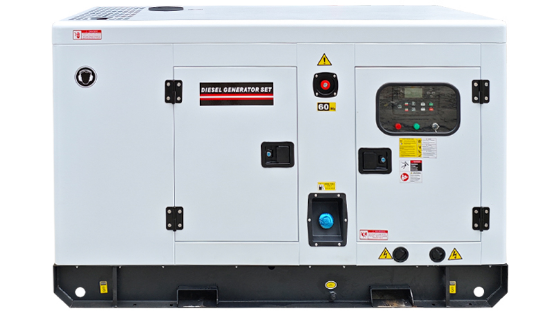
32kW silent generator: even compact backup units for shops and homes need a weekly exercise run under load.
These are the heavier service jobs, typically performed by a qualified technician following the engine manufacturer's interval schedule. As a rule of thumb: service by whichever comes first—running hours or calendar time.
Most industrial diesel engines specify oil and filter changes every 250–500 running hours or at least once a year, whichever comes first. Always use the oil grade specified by the engine maker (viscosity and API class matter for turbocharged engines) and replace the oil filter, fuel filter, and air filter according to schedule rather than by appearance. On critical units, annual oil analysis (checking wear metals, soot, and coolant contamination) is inexpensive diagnostics that can predict bearing or liner problems years in advance.
Annually: test coolant strength and freeze protection, replace coolant per the manufacturer's interval (typically every two years), inspect and squeeze hoses, check belt tension and condition, and blow out the radiator core. In hot climates and dusty environments—quarries, construction sites, tropical export markets—radiator blockage is a leading cause of high-temperature shutdowns. A clean radiator and correct coolant mix protect the single most heat-sensitive investment in your genset: the engine itself.
Annually: measure alternator insulation resistance (megger test), torque power-cable connections to specification, inspect breakers, and function-test all safety shutdowns (over-speed, low oil pressure, high coolant temperature, over-voltage). Test the ATS end-to-end: simulate a mains failure and confirm the auto-start diesel generator sequence—start, transfer, run, retransfer, cool-down—executes correctly. One open-frame advantage: units like our open-frame diesel generator range expose all service points in seconds, which is why maintenance-heavy industrial users often choose them for power houses.
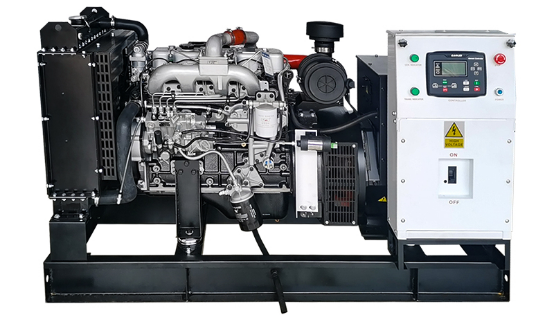
Open frame diesel generator: unobstructed access to engine, alternator, and wiring makes annual service faster and cheaper.
Use this table as a starting template; always defer to your engine's service manual for exact intervals. You can request the matching schedule for any Longhong model from our full diesel generator catalog.
| Interval | Key Tasks | Why It Matters |
|---|---|---|
| Daily | Visual inspection, oil/coolant/fuel levels, water separator drain, panel readings and log | Catches leaks and low fluids before they become failures |
| Weekly | Exercise run 15–30 min under load, check battery charge, belt and hose glance | Proves start-readiness; prevents wet stacking |
| Monthly | Battery terminal care, fuel filter/water check, load test ≥30–50%, ATS exercise, air filter inspect | Targets the top two failure causes: batteries and fuel |
| Quarterly | Battery conductance test, load bank test (if no real load), radiator core cleaning in dusty sites | Validates full rated output, not just starting |
| Annually | Oil + oil/fuel/air filters, coolant service, megger test, torque connections, safety shutdown tests, oil analysis | Maintains warranty, efficiency, and 15,000+ hour engine life |
Almost every generator failure we see in the field falls into one of these four categories—all preventable with the checklist above.
When a diesel runs for long periods at low load or no load, unburned fuel and carbon accumulate in the exhaust system and cylinders—known as wet stacking. Symptoms include black exhaust smoke, oil dilution, and reduced power. The cure is preventive: run the unit under sufficient load regularly, and perform periodic load bank tests to burn out deposits. Longhong Power sizes every genset against the customer's real load profile precisely to avoid chronic light-load operation.
Diesel stored in a partially filled tank degrades through oxidation and microbial growth within 6–12 months in warm, humid climates. Degraded fuel clogs filters, scores injectors, and can shut down an emergency diesel generator mid-outage—the worst possible timing. Countermeasures: keep tanks full to reduce condensation, use biocide and stabilizer in stored fuel, drain water separators, and polish fuel annually for large reserves.
Flat or sulfated batteries, failed trickle chargers, and corroded terminals account for the largest share of failed auto-starts across the industry. The fix is cheap and routine: monthly terminal cleaning, charger verification, and quarterly capacity testing. Any installation relying on an auto-start diesel generator for power outage backup should treat battery health as mission-critical.
Dust-clogged radiators, torn belts, and debris-packed canopy louvers quietly erode the cooling margin until a hot day triggers a high-temperature shutdown. Monthly louver and radiator checks—plus annual coolant service—keep the engine inside its temperature window even in 45°C ambient conditions like those our export units face across Africa and Southeast Asia.
Maintenance effort is largely designed in—or out—at the factory. Buyers who evaluate maintainability before purchase save labor costs for the next 15,000 hours.
Look for: wide canopy doors with tool-free access panels; filters and drain points reachable without removing other parts; a large base fuel tank with easy drain; a genuine digital controller (hours, alarms, remote monitoring via GSM/4G); and lifted eye points plus mounting rails that make removal easy for major overhauls. Our 80kW silent diesel generator is a good example: full-height canopy doors give a technician access to every daily and weekly check point in under a minute.
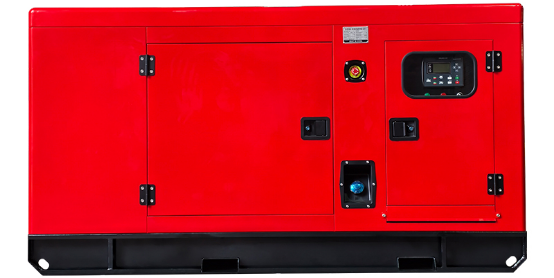
80kW silent diesel generator: service-friendly canopy design keeps maintenance time and cost low across its service life.
A professional China diesel generator supplier ships more than hardware: operation and maintenance manuals in your language, a model-specific service interval chart, spare parts kits (oil, fuel, and air filters for the first 1,000 hours), genuine engine documentation with serial numbers, and responsive technical support by email or video call. Verify CE and ISO certification on the manufacturer's qualification page—these confirm the design and factory processes behind the maintenance schedule you will be following. Longhong Power provides all of the above as standard, keeps 200+ units in permanent stock for fast delivery, and has exported to Cambodia, Vietnam, Myanmar, Tanzania, Libya, and beyond. Buyers of industrial emergency diesel generator sets can see this end-to-end support in our Tanzania 100KVA Cummins export project.
Be honest about who will service the unit. A hotel or hospital with in-house technicians can manage a large three-phase set with an ATS and monthly load tests. A farm, shop, or home using a generator for home backup is better served by a compact single-phase diesel generator with simple controls—such as our 32kW silent generator or smaller 10–14kW models—and a local service partner. Institutional buyers can benchmark real installations in our school 500KVA silent generator case study, which shows how a well-specified standby set is maintained over years of duty.
Diesel generator maintenance is not complicated—but it must be consistent. Daily visual checks, weekly exercise runs, monthly battery and fuel care, and an annual full service will take virtually any quality diesel power generator comfortably past 15,000 operating hours, while cutting the risk of a failed emergency start to near zero. Buy from a manufacturer that designs for serviceability, supplies genuine engine documentation, and stands behind its units with parts and technical support. If you are selecting a new standby diesel generator or upgrading an aging fleet, our team at Longhong Power will help you size the unit, specify the controller and ATS, and build a maintenance plan matched to your site—contact us through the website for a factory-direct quotation.
Established in 2010 in Guangdong, China, Longhong Power is a professional diesel generator manufacturer with 20+ years of industry experience. We produce 3KVA–3000KVA diesel generator sets with genuine Cummins, Weichai, Yuchai, Perkins, Volvo, and Yunnei engines, available in open frame, silent/canopy, trailer, and containerized configurations. All products are CE and ISO certified, backed by 200+ units in permanent stock and exports to Cambodia, Vietnam, Myanmar, Tanzania, Libya, and other markets. Visit www.longhongpower.com to explore our products or request a quote.


