

 English
 العربية
 Español
 Русский
Industry News
Industry News

Published: September 15, 2026 | By Guangdong Longhong Electromechanical Equipment Co., Ltd.
When industrial buyers evaluate backup and prime power solutions, the diesel vs gasoline generator debate is often the first decision point. Diesel generator sets dominate commercial, construction, mining, and facility applications for good reason: superior fuel efficiency, longer engine life, and lower total cost of ownership (TCO) over 10,000+ operating hours. This guide breaks down the real numbers, use-case fit, and why sourcing from a China diesel generator manufacturer like Longhong Power delivers measurable ROI for international buyers.
Fuel efficiency is where diesel power generators separate themselves from gasoline units. Diesel engines operate on compression ignition, which produces a higher thermal efficiency than the spark-ignition cycle used in gasoline engines.
Modern diesel generator sets achieve BSFC figures of 190–220 g/kWh, while comparable gasoline generators typically run 270–320 g/kWh. Translated into liters per kilowatt-hour, a diesel genset consumes roughly 0.22–0.28 L/kWh, whereas a gasoline unit burns 0.30–0.40 L/kWh under the same load profile. Over a year of 2,000 runtime hours at 75% load, that gap becomes thousands of liters—and thousands of dollars.
Diesel fuel contains approximately 35.8 MJ/L; gasoline delivers about 34.2 MJ/L. The 4.7% energy-density edge, combined with the diesel engine's higher compression ratio (16:1 to 22:1 versus 8:1 to 12:1 for gasoline), means more mechanical work per liter of fuel. For a 100 kW prime-rated diesel generator set, the annual fuel savings versus a gasoline equivalent can exceed $8,000–$12,000 at current global diesel pricing.
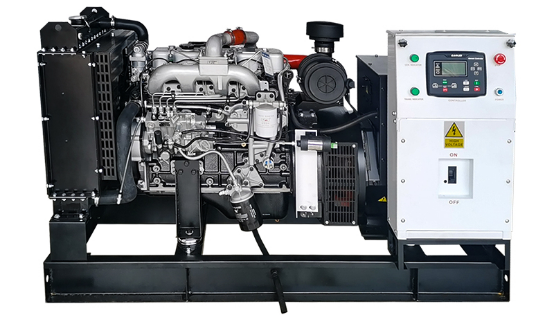
Open frame diesel generator engineered for maximum fuel efficiency in continuous-duty industrial applications.
Diesel engines are built to withstand higher cylinder pressures and operate at lower RPMs for the same power output. The result is measurably longer service life.
A well-maintained diesel power generator from a reputable China diesel generator factory can reach 15,000–30,000 hours before a major overhaul. Gasoline generators typically require major service at 3,000–6,000 hours. For mining, quarry, or remote construction sites where downtime is measured in lost revenue, this longevity gap is decisive.
Diesel fuel has natural lubricating properties that reduce wear on fuel-injection components. Gasoline, especially low-sulfur blends, offers less internal lubrication. Additionally, diesel engines run cooler exhaust gas temperatures under part load, reducing thermal stress on pistons, rings, and valve trains. Maintenance intervals for oil changes on industrial diesel gensets are typically 250–500 hours, versus 100–150 hours for gasoline units.
Diesel engines have no spark plugs, ignition coils, or distributor caps. The elimination of these components removes a common failure mode and reduces parts inventory for remote operations. A silent diesel generator deployed at a hotel or hospital benefits from this simplicity—fewer parts mean fewer emergency service calls.
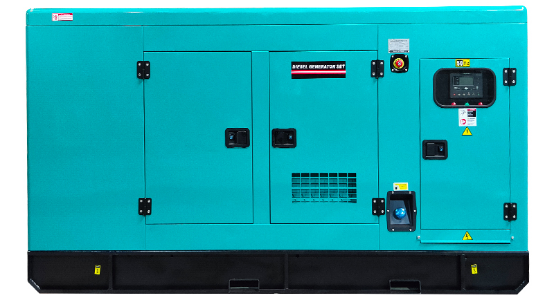
100kW silent diesel generator with extended-service engine designed for 15,000+ hours between overhauls.
TCO is the metric that matters for procurement teams. It folds together capital cost, fuel, maintenance, downtime, and residual value.
Gasoline generators have a lower upfront purchase price—often 30–50% less per kilowatt than a comparable industrial diesel generator. However, the lifecycle equation flips quickly. Consider a 100 kW unit running 2,000 hours per year for five years:
The $20,000 fuel savings plus $10,000 maintenance savings more than offset the higher initial capital outlay for the diesel unit. For buyers sourcing from a diesel generator supplier in China, the capital gap narrows further due to competitive factory-direct pricing.
Diesel gensets retain 40–60% of their original value at 10,000 hours if maintained properly. Gasoline generators often fall below 20% residual value at the same hour count. For fleet operators and rental companies, this difference directly impacts balance-sheet asset values.
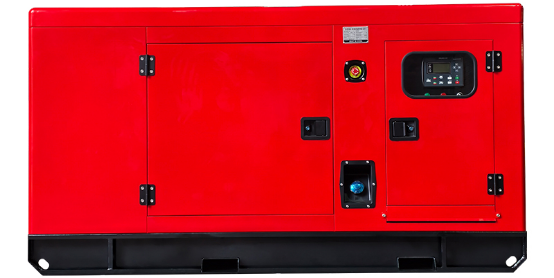
80kW silent diesel generator—engineered for low total cost of ownership across 10,000+ operating hours.
Not every application demands diesel. But for the scenarios below, a diesel generator set is the clear engineering and economic choice.
Construction site diesel generator sets run 8–16 hours daily under variable load. Fuel efficiency, durability, and tolerance of dusty environments favor diesel. A 40kW export diesel generator or larger unit provides the torque response needed for motor starting (cranes, concrete pumps, welders) without the throttle lag common in gasoline engines.
Mining and quarry diesel backup power supply units operate in remote locations with limited fuel logistics. The 30–40% fuel efficiency advantage of diesel means fewer fuel convoys, smaller storage tanks, and lower transport risk. See how Longhong Power supports extreme environments in our Weichai generator at 5,300m altitude case study.
Emergency diesel generators for hotels and hospitals must start within 10 seconds and run for days during grid outages. Diesel's reliability, auto-start compatibility, and fire-safety profile (diesel flash point ~52°C vs gasoline ~-43°C) make it the regulated standard. Our school 500KVA silent generator case study demonstrates the same principles applied to institutional backup power.
Factories and processing plants without grid access need prime-rated diesel power generators running 24/7. Only diesel engines offer the duty-cycle ratings (prime, continuous, limited-time prime) certified to ISO 8528. A 64kW automatic diesel generator with ATS integration ensures seamless transitions between mains and generator power.
China is the world's largest producer of diesel generator sets, with manufacturing clusters in Guangdong, Jiangsu, and Shandong. Buyers who understand how to evaluate certifications and qualifications can access Tier-1 quality at significantly lower TCO.
Reputable China diesel generator manufacturers source genuine Cummins, Weichai, Yuchai, Perkins, Volvo, and Yunnei engines—with serial numbers traceable to the engine maker. Longhong Power, established in 2010 in Guangdong, China, builds every 32kW silent diesel generator and larger unit with factory-authorized engines and alternators.
Look for CE marking (EU machinery and emissions compliance), ISO 9001 quality management, and ISO 8528 power-rating certification. These are not paperwork exercises—they confirm that the standby diesel generator you receive will perform at rated kVA under declared ambient and altitude conditions.
Before shipment, demand a witnessed FAT: 110% overload for 1 hour, voltage regulation within ±1%, frequency stability within ±0.5%, and full-load transient response testing. Longhong Power conducts FAT on every export batch, documented with test reports and photos. Our Tanzania 100KVA Cummins export case study shows what proper FAT looks like in practice.
Experienced China diesel generator suppliers handle sea freight (FCL/LCL), customs clearance, and destination-port documentation. Longhong Power has exported to Cambodia, Vietnam, Myanmar, Tanzania, Libya, and beyond. We provide packing lists, commercial invoices, certificates of origin, and engine factory release letters as standard.
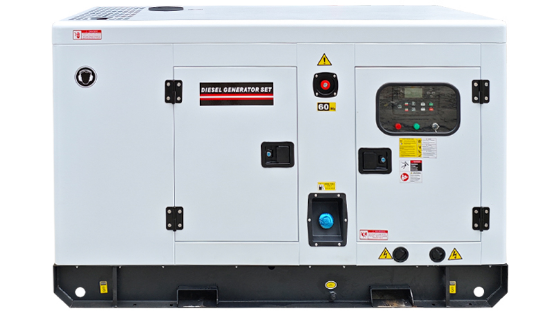
32kW silent diesel generator—compact, CE-certified, and export-ready from Guangdong, China.
Guangdong Longhong Electromechanical Equipment Co., Ltd. manufactures diesel generator sets from 3KVA to 3000KVA. Below is a quick-reference matching guide based on the diesel vs gasoline analysis above.
| Application | Recommended kVA Range | Longhong Product Link |
|---|---|---|
| Small farm / residential backup | 10–24 kVA | 10-14kW silent generator, 24kW silent diesel generator |
| Construction site / small commercial | 30–64 kVA | 30kW silent generator for farms, 64kW automatic generator |
| Hotel / hospital / shopping mall | 80–100 kVA | 80kW silent diesel generator, 100kW diesel generator |
| Mining / quarry / remote prime power | 100–500 kVA | 100kW diesel generator, 400KW/500KVA Yuchai silent generator |
| Large industrial / export projects | 500–3000 kVA | Libya 750KVA Cummins export, custom containerized solutions |
All units are available as open frame, canopy diesel generator, containerized diesel generator, or mobile trailer diesel generator configurations. Auto-start and ATS panels are optional across the range.
For industrial buyers, the diesel vs gasoline generator decision is not about brand preference—it is about physics and economics. Diesel generator sets deliver 30–40% better fuel efficiency, 3–5× longer engine life, and lower total cost of ownership across any meaningful runtime threshold. When combined with the value proposition of sourcing from an experienced China diesel generator manufacturer, the business case becomes undeniable.
Guangdong Longhong Electromechanical Equipment Co., Ltd. has spent 20+ years refining diesel power solutions for export markets. From 10-14kW silent generators for small facilities to 3000KVA containerized power plants for industrial complexes, our product range covers every application where reliability and efficiency matter. Contact us today for a tailored quotation, factory tour video, or virtual FAT witness.
About Guangdong Longhong Electromechanical Equipment Co., Ltd.
Established in 2010 in Guangdong, China, Longhong Power is a leading diesel generator manufacturer with 20+ years of industry experience. We produce diesel generator sets from 3KVA to 3000KVA, featuring Cummins, Weichai, Yuchai, Perkins, Volvo, and Yunnei engines. Our products carry CE and ISO certifications and are exported to Cambodia, Vietnam, Myanmar, Tanzania, Libya, and beyond. With 200+ units in permanent stock and full factory acceptance testing, we deliver reliable power solutions to buyers worldwide.


