

 English
 العربية
 Español
 Русский
Industry News
Industry News

Published November 5, 2026 | Industry News | Guangdong Longhong Electromechanical Equipment Co., Ltd.
Across Sub-Saharan Africa and North Africa, unreliable grid supply is not an occasional inconvenience — it is a structural condition that businesses plan around. Factories in Nigeria schedule production shifts around outages, hotels in Tanzania keep guests comfortable through evening blackouts, mines in West Africa run entire processing plants on self-generated electricity, and telecom operators power thousands of off-grid base stations with diesel. For importers, EPC contractors and project developers buying from a China diesel generator manufacturer, Africa remains one of the largest and most demanding genset markets in the world.
This guide is written for buyers sourcing diesel generator sets for African projects in 2026. It covers how to classify your power need correctly, how to size and specify equipment for tropical and high-altitude conditions, which machine formats suit which applications, how engine brand choice affects service life, what importing from China actually involves, and how to plan spare parts and after-sales support so your diesel genset still runs reliably in year five, not just on commissioning day.
In Europe or North America, a standby diesel generator waits in a plant room for an outage that may occur a few times a year. In much of Africa the calculation is inverted: the genset is often the primary source of electricity, and the grid — where it exists at all — is the backup. This single fact changes every purchasing decision that follows.
A generator that runs eight to sixteen hours per day, every day, must be specified on a prime rating, not a standby rating. Prime-rated units derate roughly 10–20% from the same engine's standby figure, which means a machine marketed as "100 kVA standby" may deliver only around 90 kVA prime. Importers who ignore this end up with overloaded engines, excessive fuel consumption and shortened overhaul intervals. As a rule, budget for prime rating first and treat any headroom as your reserve.
A backup genset in a Lagos office tower might accumulate 100 hours a year. A prime power unit on a mine site or an off-grid hotel can accumulate 4,000–6,000 hours a year — the equivalent of a truck's engine. Oil change intervals, filter stocks, coolant management and eventually top-end overhauls all become line items in your operating budget from day one. Specify engines with long service intervals and globally available parts, and read the warranty terms for hour-based exclusions before you sign.
At prime duty, a diesel power generator consumes roughly 0.25–0.30 litres per kWh produced. Over a five-year life, fuel typically costs several times the purchase price of the machine. This is why efficient engine technology, correct sizing (running a genset at 30% load wastes fuel and harms the engine), and honest fuel-consumption data from your supplier matter more to African buyers than a marginal difference in unit price.
Most bad genset purchases fail at the specification stage, not the manufacturing stage. Before requesting quotations, nail down these parameters.
List every load the generator must carry, split into resistive loads (lighting, heaters, office equipment) and motor loads (pumps, compressors, air conditioners, mills, crushers). Motors draw three to six times their running current at startup, so a single large motor can dominate your sizing. A soft-starter or star-delta starter on a 45 kW pump may save you from buying a 150 kVA genset instead of a 100 kVA one. Sum the loads, apply a diversity factor, add 20–25% reserve, and you have your target rating.
Nearly all of Africa runs on 50Hz, with 230V single-phase and 400V three-phase distribution (some older installations retain 220/380V). Confirm this in writing with your supplier — a 60Hz machine ordered by mistake cannot simply be "adjusted". Most Chinese gensets for export are built 50Hz as standard, but verification costs one email and saves one very expensive mistake. For homes, shops and small workshops, a single-phase-capable 32 kW silent diesel generator is usually correct; for anything with motors above roughly 5 kW or a mixed load, three-phase is the practical choice.
Ambient temperatures of 40–45°C are routine across the Sahel, East Africa and much of the continent's interior. Engines and alternators are rated at reference conditions (typically 25–27°C); above roughly 40°C, expect a derate of 1–3% per additional degree unless the manufacturer confirms otherwise. For mining projects at elevation, the derate is steeper: our Weichai-powered installation operating at 5,300 metres altitude demonstrates the kind of site-specific engineering that high-altitude projects require. Dust is the third enemy — demand heavy-duty air filtration and confirm the radiator and alternator cooling paths are designed for dusty sites, not clean European plant rooms.
Chinese manufacturers offer four main formats, and choosing the right one is as important as choosing the right rating.
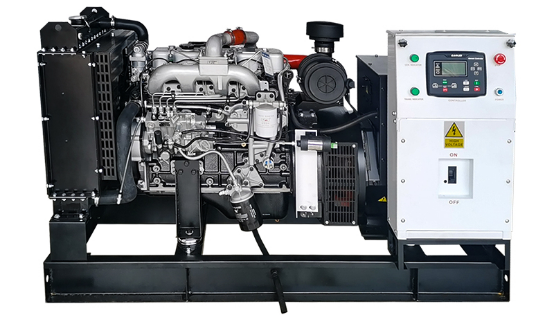
Figure 1: An open frame diesel generator set — the most economical format for plant rooms, workshops and protected installation sites.
Open frame units are the lowest-cost format and the easiest to service, because everything is exposed. They suit installations under a roof: factory plant rooms, hospital generator houses, telecom shelters with dedicated genset bays. They are the wrong choice for outdoor duty in African rainy seasons unless you build an enclosing structure yourself — by which time a factory-built canopy is usually cheaper and better ventilated.
The canopy diesel generator (weatherproof, sound-attenuated enclosure) is Africa's workhorse format. A well-built canopy delivers 65–75 dB(A) at 7 metres, survives rain and dust, and needs no site construction — offload it, connect fuel and cable, and start. This suits hotels, shops, schools, farms, clinics and construction camps. Typical exports in this class include the 100 kW silent diesel generator for medium industrial loads and the 40 kW export diesel generator widely used on farms and smaller sites. Buyers should check canopy sheet thickness (1.5–2 mm steel outlasts thin aluminium panels), powder-coating quality, and whether the exhaust outlet is rain-louvred.
For large prime power plants — mining camps, factory islands, utility-scale installations — the containerized diesel generator is the standard. A 20ft or 40ft container houses the genset, fuel day-tank, switchgear and sometimes a second standby unit, with built-in ventilation, lighting and access. Containers also ship as standard ocean freight, which simplifies logistics for remote inland sites reached through multiple transport legs.
A mobile trailer diesel generator suits contractors, rental fleets and projects that move between locations — road building, geophysical surveys, event power. Confirm the trailer's braking system, axle rating and road-legal lighting for the destination country before ordering.
A diesel genset is an engine, an alternator and a controller mounted on a base frame. The engine decision dominates reliability and parts availability; the alternator decision dominates power quality.
Cummins, Perkins and Volvo engines have the widest African parts and service networks — distributors exist in Nigeria, Kenya, Ghana, Tanzania, Egypt, South Africa and most other major markets. For buyers who will operate in remote regions without strong local technical capacity, a globally recognized engine brand shortens downtime because filters, injectors and gaskets can be sourced regionally. Our 100KVA Cummins genset delivered to Tanzania and our 750KVA Cummins unit exported to Libya are representative of this segment: proven engines in sound-attenuated or industrial packages for long-running duty.
China's Weichai and Yuchai engines have earned their place in African markets on value and durability. Yuchai engines power large-capacity sets economically — see our 400KW/500KVA Yuchai silent genset delivered for heavy-duty standby — while Weichai's record in mining and high-altitude applications is well established. Parts availability has improved dramatically, and for buyers managing total cost of ownership rather than brand prestige alone, these engines deliver strong value.
For the 10–32 kW class that serves homes, shops and small businesses, engines such as Yunnei and similar compact platforms keep cost down while remaining serviceable. A 10–14kW silent generator with a proven compact engine covers a household or small retail load for years when maintained on schedule. Match the engine class to the duty: do not buy a light-duty engine for a 4,000-hour-per-year application, whatever the discount.
Insist on a copper-wound alternator from a recognized maker (Stamford, Leroy-Somer or an established Chinese brand such as Stanford-licensed factories) with a quality AVR — voltage stability matters for air conditioners, medical equipment and IT loads. For the controller, Deepsea (DSE) or ComAp modules are the export standard and are familiar to African technicians, which directly reduces commissioning friction. If your installation requires automatic transfer on grid failure, specify AMF/ATS control at order time — see our guide to automatic diesel generators with AMF/ATS.
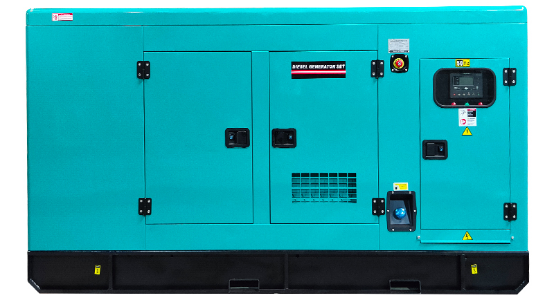
Figure 2: A 100kW silent generator — a common rating for hotels, factories and construction camps across African markets.
A household with lights, fans, a refrigerator, a television and a small water pump manages on 10–16 kW, provided the pump starting surge is handled. A retail shop or small restaurant with air conditioning needs 20–32 kW. In this band, silent operation matters as much as power: units sit beside living and trading spaces, and neighbours in dense urban districts will not tolerate an open frame machine running every evening.
Irrigation pumps, grain mills, cold rooms, welding workshops and small construction crews cluster in the 40–80 kW band. Here three-phase supply becomes the sensible default, and fuel autonomy starts to matter: size the base fuel tank or add an external day-tank for at least 8–12 running hours so a refill miss does not stop production. An 80 kW silent diesel generator covers a mid-size farm or a 30–50 worker construction camp with comfort.
A 40–80 room hotel with air conditioning, kitchens, laundry and water systems typically needs 150–300 kVA. A mid-size factory may need 200–500 kVA depending on its process. At these ratings, buyers should consider two smaller paralleled units instead of one large machine — it provides redundancy and better fuel efficiency at partial load. Verify the installation has an engineered changeover scheme (ATS panel sized for the full current, correct neutral earthing, and protection against paralleling with the grid).
Importing is a routine, well-trodden path — but one where preparation separates smooth projects from costly delays.
Most gensets ship in standard 20ft or 40ft containers; open frame units are often flat-packed or skidded, while canopies ship as-is. Typical transit from Chinese ports to Mombasa, Dar es Salaam, Lagos, Tema or Durban runs 25–40 days, plus inland legs. Confirm whether your quotation is FOB, CIF or DAP, and who clears customs at destination. For large containerized sets, verify that destination port cranes can handle the weight or plan ro-ro discharge.
Standard export documents include the commercial invoice, packing list, bill of lading, certificate of origin and, where required, a pre-shipment inspection certificate (for example, PVoC/CoC schemes in Kenya, Tanzania and Nigeria). Ask your supplier for the engine and alternator certificates as well — customs valuation and any duty-exemption applications (common for donor-funded and mining projects) go faster with complete documentation. Our company qualifications and certifications page lists the CE and ISO credentials export buyers typically request.
Insist on a factory load test with video evidence or third-party inspection (SGS, Bureau Veritas, TÜV) before the container closes. A genuine source factory will test every genset at 50%, 75% and 100% load and share the test report, controller screenshots and nameplate photos. Buying from a manufacturer with two decades of production experience and permanent stock of 200+ units shortens lead time and gives you a factory that can demonstrate a live test at order stage, not just promised specifications.
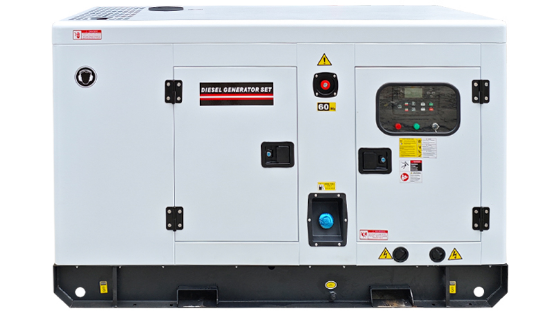
Figure 3: A 32kW silent generator — the volume segment of African genset demand for small commercial and residential users.
The cheapest reliability upgrade available is a parts kit shipped inside the genset container: oil filters, fuel filters, air filters, belts, coolant, spare controller battery and two litres of matching engine oil. Downtime in remote regions is usually caused by a missing 15-dollar filter, not a failed engine. For fleets of ten units or more, negotiate a consolidated annual parts package.
Request operation and maintenance documentation in clear English (or French for francophone markets), and ask the factory for commissioning guidance covering first oil change hours, coolant specification for tropical climates, and battery maintenance in high heat. A technician who understands daily checks — coolant level, battery terminals, fuel-water separator draining, air filter condition — will prevent the majority of field failures.
Log running hours, fuel used and every service event. A genset chronically run below 30% load accumulates carbon and wet stacking; one chronically above 80% of prime rating overheats in tropical conditions. Aim to operate between 50% and 80% of prime rating and re-visit your sizing if the load profile drifts. Machines treated this way routinely reach major overhaul hours with compression still healthy.
For African buyers, the best diesel generator is not the cheapest one that meets the peak load on paper. It is the machine whose prime rating matches your real duty, whose engine brand has parts within reach of your site, whose canopy or container survives your climate, and whose supplier stood behind the load test before the container was sealed. Get the specification discipline right — duty class, load audit, 50Hz verification, site derates — and the purchase price becomes a small fraction of a dependable decade of power. Whether you need a compact single-phase unit for a shop, a 100 kW canopy set for a factory, or containerized prime power for a mining camp, contact us at Longhong Power for a quotation engineered around your actual site conditions and duty profile.
Founded in 2010 in Guangdong, China, Guangdong Longhong Electromechanical Equipment Co., Ltd. is a professional diesel generator manufacturer with more than 20 years of industry experience. The company produces diesel generator sets from 3KVA to 3000KVA in open frame, silent/canopy, trailer and containerized configurations, powered by Cummins, Weichai, Yuchai, Perkins, Volvo and Yunnei engines. All products are CE and ISO certified, with 200+ units in permanent stock for fast delivery. Longhong generators have been exported to Cambodia, Vietnam, Myanmar, Tanzania, Libya and many other markets. Browse the full range on the product catalog or visit the official website to request a quotation.


