

 English
 العربية
 Español
 Русский
Industry News
Industry News

Published November 4, 2026 | Industry News | Guangdong Longhong Electromechanical Equipment Co., Ltd.
Running a generator rental business is a different game from owning one standby unit for your own facility. A rental fleet must survive multiple sites, multiple operators and multiple handling crews every month, earn revenue every day it is not in the workshop, and still hold resale value after years of hard duty. Choosing the wrong specification for a rental diesel generator fleet is the single fastest way to destroy margin: units that are difficult to transport sit idle, units that break down cost double in truck rolls and refunds, and units that cannot be serviced quickly miss the next booking.
This guide is written for rental company owners and fleet managers in Africa, Southeast Asia, the Middle East and Latin America who are planning a new fleet or expanding an existing one with equipment from a China diesel generator manufacturer. It covers demand segmentation, transport formats, durability specification, telematics, utilization economics and a practical sourcing checklist.
A standby unit installed in a hotel basement lives a gentle life: one operator, a clean plant room, a controlled load and a service contract. A rental unit lives the opposite life. It is loaded by forklift with fork-tips that have seen better days, driven over plantation roads, connected by whoever is on site, and run for days at a load the renter never told you about.
Three consequences follow for fleet buyers:
Rental profitability is a fleet-level calculation, not a unit-level one. A cheap open frame unit that books only half the year may earn less per invested dollar than a slightly more expensive canopy unit that rents year-round for events, construction and small factory cover. Spec every purchase against the booking pattern you actually receive, not against the lowest unit price.
Rental units are operated by customers. The controller must be simple enough for a site foreman, with clear push-button start, unambiguous alarm text and protected parameter menus so a curious operator cannot change engine settings. An automatic diesel generator with AMF/ATS control is the standard rental specification: it starts itself when the site power fails, which reduces your call-out volume dramatically.
Most rental jobs are prime power jobs: the genset is the only source of electricity on site for days or weeks. That means fleet units should be specified on prime ratings, not standby ratings, or you will be chronicling overloads and shortened engine life. If you are unsure how standby, prime and continuous ratings differ in contract terms, read our explanation of ISO 8528 duty ratings before signing any purchase order.
The most common fleet planning mistake is buying around a single memorable job instead of around the demand curve. In practice, rental demand clusters into three bands, and a balanced fleet covers all three.
| Demand Band | Typical Customers | Fleet Ratings That Fit |
|---|---|---|
| Small events, homes, shops, telecom sites | Wedding planners, small contractors, households, kiosk chains | 10–32 kW class |
| Construction sites, farms, small factories | Builders, irrigation projects, workshops | 40–80 kW class |
| Industrial prime power, mining camps, large events | Quarries, camps, manufacturers, festival organizers | 100 kW class and above, or parallel sets |
This is your volume band, and it rewards quiet, compact, single-phase-capable units. A 16 kW compact silent diesel generator lifts onto a pickup truck and books for homes, shops and small functions. A 32 kW silent generator covers larger functions and small construction crews. Because these units move constantly, low weight and a compact footprint matter as much as price — every extra 100 kg is a handling cost you pay on every single job.
Mid-band units are the workhorses of a diesel generator set fleet. A 64 kW auto-start unit covers most construction site loads including pumps and small tower cranes; an 80 kW silent diesel generator handles bigger site camps and factory cover. This band also produces the steadiest long-term rentals — multi-month construction and agricultural contracts — which is where fleet utilization is genuinely won.
Large units rent less often but at premium day rates. A 100 kW diesel generator serves mining support camps, mid-size factories and concerts. For very large prime jobs, experienced rental houses run multiple units in parallel rather than holding one oversized machine, which keeps individual units bookable and gives customers built-in redundancy. Our guide to parallel diesel generators explains the synchronization requirements if you plan to offer that capability.
Format choice determines how often a unit can physically reach a booking. Get this wrong and the fleet carries dead weight.
A mobile trailer diesel generator is the format rental customers ask for most on construction and roadwork jobs, because it moves between sites with a light vehicle and needs no crane. For a trailer type construction site generator specification, check the axle rating against the fully fuelled weight (fuel adds roughly 0.85 kg per litre), braking type, and whether the trailer frame is hot-dip galvanized rather than painted — rental trailers live outdoors permanently. Our buyer's guide to canopy diesel generators for urban construction covers the noise side of the same question.
Canopy units are the rental all-rounders. They can sit beside a wedding tent, outside a hotel, or on a residential street without complaints, and they survive outdoor storage between bookings. For rental duty, insist on a steel canopy of at least 2 mm thickness, sound-absorbing rockwool lining held by metal retainers (not adhesive that peels after the first pressure wash), and lift eyes rated for the wet weight. A useful benchmark: our 80 kW silent genset and the smaller 32 kW silent canopy unit are specified exactly for this kind of mixed rental duty.
Open frames are the cheapest per kilowatt and the easiest to inspect and service, which is why some rental houses keep a small open-frame sub-fleet for industrial customers who provide their own shelter or sound attenuation. They are the wrong choice for events and residential bookings — a typical open frame runs around 95–105 dB(A) at 7 metres against roughly 68–75 dB(A) for a good canopy. A balanced rental fleet is therefore canopy-weighted, with trailer units for construction demand and only a few open frames for sheltered industrial jobs. For the engineering details of why, see our generator noise levels guide.
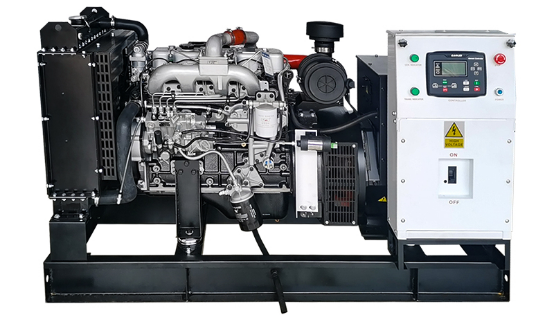
Open frame diesel gensets: cheapest per kW and easiest to service, best for sheltered industrial rental jobs.
Rental hardening is mostly a short list of options that cost little at the factory and a fortune in the field if omitted:
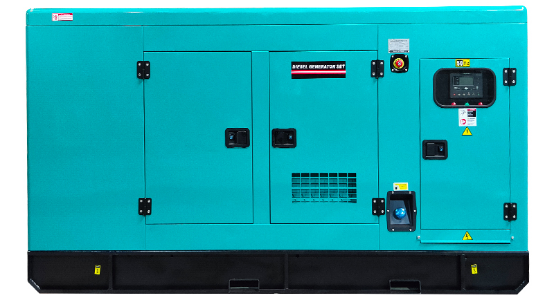
A 100 kW silent canopy unit: the premium large-band rental asset for camps, factories and concerts.
Telematics has moved from nice-to-have to standard for rental fleets above roughly 20 units. A GPS/GSM module reporting from the genset controller gives you four business-critical data streams: location (theft recovery and dispute evidence), running hours (billing accuracy — hours-based rental disputes end the day the controller can be trusted), fuel level (theft detection and refuelling dispatch), and alarms (you call the customer before they call you).
When buying from a China factory, confirm three things about telematics: the controller brand supports your chosen tracking platform (most mainstream deep-sea-type controllers do), the modem is specified for the mobile networks in your market, and the factory will pre-install and test the hardware so units arrive fleet-ready rather than arriving as an integration project. Fleet owners who skip this step routinely discover that a quarter of their fleet is earning nothing but depreciation — units parked somewhere no one remembers, with no data to find them.
The rental discipline is simple: every returned unit gets checked before it leaves again — oil and coolant levels, battery voltage, air filter, leak walk-around, controller event log review, and a five-minute test run under load. Catching a failing battery or a clogged filter at the depot costs minutes; catching it on site costs a truck roll and a refund. Units in the 10–32 kW band should be turned around in under an hour; the 10–14 kW silent genset class exists precisely because small units are quick to service and quick to re-book.
Fleet economics live and die on utilization — the share of days a unit earns revenue. Three levers move it: balanced ratings matched to demand (Section 2), formats that can physically reach bookings (Section 3), and hour-based billing supported by telematics that captures every running hour instead of only the days the customer reports. Rental houses that track utilization per unit and per rating class make rational fleet expansion decisions; those that do not simply buy another unit of whatever worked last month.
A well-maintained used rental genset with a genuine-brand engine, documented service history and verifiable hours holds meaningful resale value — often 30–45% of purchase price after five years in markets with active second-hand demand. That resale line is a real part of total cost of ownership, and it is why generic-brand units with untraceable engines are a poor rental investment even when their purchase price is attractive. If a used unit ever enters your fleet from outside, our new vs used diesel generator inspection guide lists the deal-breaker checks.
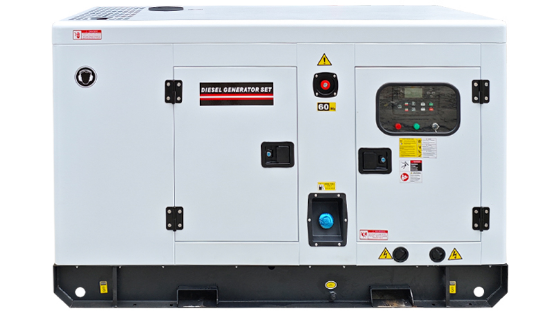
Small-band silent units in the 16–32 kW class: the volume segment of every rental fleet.
China remains the best sourcing base for rental fleets because the factory-to-fleet cost advantage compounds across dozens of units. But fleet buying is batch buying, and batch buying deserves a tighter process than a single-unit purchase:
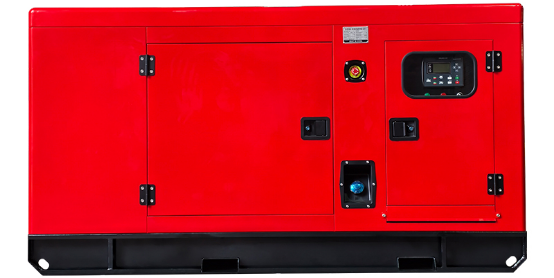
Mid-band 80 kW silent units earn the steadiest long-term rental revenue on multi-month contracts.
A profitable rental fleet is not a pile of the cheapest gensets available; it is a deliberately structured set of assets matched to real demand bands, built in formats that can reach every booking, hardened for multi-operator abuse, instrumented so every running hour is billed, and sourced from a manufacturer whose engines, parts support and stock position protect your utilization. Get those five things right and the fleet compounds; miss any one of them and the gap shows up month after month as idle days, truck rolls and disputes.
Start with a single verified unit per rating class, let real bookings tune your rating mix, and scale with a factory partner who treats fleet orders with the same seriousness as the first unit. That is how rental businesses in Tanzania, Cambodia, Libya and beyond have built genset fleets that still earn, and still resell, years down the line.
About Guangdong Longhong Electromechanical Equipment Co., Ltd.
Established in 2010 and based in Guangdong, China, Longhong is a professional diesel generator manufacturer with more than 20 years of engineering experience and over 200 units in permanent stock. The company supplies diesel gensets from 3 KVA to 3000 KVA — open frame, silent canopy, trailer and containerized — powered by Cummins, Weichai, Yuchai, Perkins, Volvo and Yunnei engines, all CE and ISO certified, with exports to Cambodia, Vietnam, Myanmar, Tanzania, Libya and other markets. Browse the full diesel generator product catalog or contact the factory for a fleet quotation.


