

 English
 العربية
 Español
 Русский
Industry News
Industry News

Ten years ago, emissions were a footnote in a generator quotation. Today they decide whether a diesel generator set can be registered, imported or operated in your market — and they change the engine, the enclosure dimensions, the fuel you must buy and the maintenance your team must follow. Buyers who treat emissions as last-minute paperwork end up with equipment they cannot legally run, or aftertreatment destroyed by high-sulphur fuel within a few hundred hours. This guide explains the four regulatory families and how to specify a compliant unit from a China diesel generator manufacturer.
Table of contents
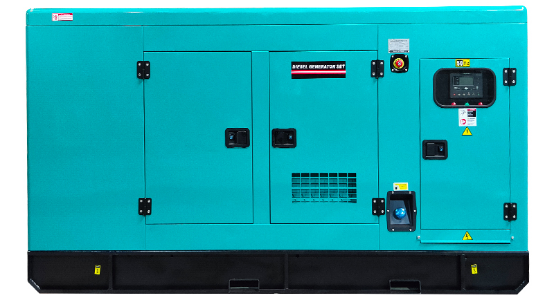
Emissions regulation for generator engines has moved from voluntary to conditional on import. The EU, the United States, China and India all set mandatory limits on nitrogen oxides (NOx), particulate matter, carbon monoxide and hydrocarbons from non-road diesel engines, and enforce them at the border and at registration. A standby diesel generator that meets no recognised standard cannot be commissioned, insured or resold in those markets.
Where no generator-specific law exists — much of Africa, the Middle East and parts of Southeast Asia — three constraints still apply. Ports, mines and industrial estates impose contractor rules that mirror Stage V or Tier 4. Donor-funded projects write a recognised tier into the tender regardless of local law. And fuel quality decides whether advanced aftertreatment survives: a Tier 4 Final engine fed 5,000 ppm sulphur diesel clogs its filter and derates within weeks.
Almost every tender references one of four frameworks: EU Stage V (Regulation 2016/1628), US EPA Tier 4 Final (40 CFR Part 1039), China Stage IV (GB 20891-2014), or India CPCB IV+. All four rest on lean-burn combustion plus aftertreatment, but differ in test cycles, power thresholds and enforcement, and a certificate for one is never valid in another.
A widespread assumption holds that standby generators are exempt because they run only during outages. That is partly true. Some jurisdictions carve out emergency engines with capped annual running hours — the United States is the clearest example — but the exemption depends on how the engine is used and logged, not on how it was sold. An emergency diesel generator that quietly accumulates 400 hours a year as prime power on a construction site loses any emergency status it claimed. Treat the annual hour log as a compliance record.
Stage V, in force since 2019 across the non-road power bands, is the strictest widely applied standard for generator engines. For the 56–560 kW band that covers most industrial emergency diesel generator demand, Stage V sets a NOx limit of 0.40 g/kWh alongside tight PM and particle-number caps. The particle-number limit is what forces a diesel particulate filter onto the machine — and that single component reshapes the whole installation.
A Stage V engine is not a Stage IIIA engine with a different sticker. It uses common-rail or unit-injector fuelling at higher pressure, cooled exhaust gas recirculation or SCR, a DOC plus DPF for particulates, and closed-loop electronic control. The control unit manages regeneration, DEF dosing and derate strategies, and refuses full power if sensors report a fault. That is good for air quality and it demands more technician competence than a mechanical governor ever did.
A permanently installed generator — a basement plant room, a hospital standby set, a rooftop unit — can also fall under the Medium Combustion Plant Directive (2015/2193), which regulates stationary combustion plant from 1 MW thermal input upwards on stack emissions. A 100kW diesel generator buyer is therefore assessed twice: on engine type-approval and on the installed stack. Chimney height, sampling ports and monitoring belong in the project plan, not the supplier's default scope.
Tier 4 Final, mandatory for most non-road diesel power bands since 2014–2015, sets NOx at 0.40 g/kWh and PM at 0.02 g/kWh for the 56–560 kW range — effectively the same engineering outcome as Stage V through a different test cycle and certification route. A Tier 4 Final engine is not automatically Stage V compliant, and the reverse is also true. When a tender names one, supply that one.
US rules for emergency stationary engines allow a defined annual window — commonly 100 hours per year for testing, maintenance and emergency demand response, plus a smaller additional allowance. Units inside that window carry lighter obligations than prime-power engines. Once a facility uses its standby diesel generator for peak shaving beyond the allowance, it changes category and the burden changes with it.
Tier 4 Final has become the de facto reference in tenders from the Gulf, Southeast Asia and Latin America because international consultancies know it and it is easy to verify on a nameplate. Specifying it for 3,000–5,000 ppm sulphur diesel is a technical error, though: the DPF loads with sulphated ash far faster than the service interval assumes. Where fuel quality cannot be guaranteed, choose either a lower-tier engine with no DPF, or a fuel polishing regime that genuinely delivers low-sulphur diesel.
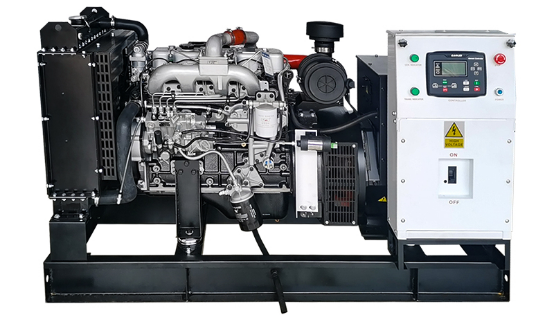
China's non-road standard, GB 20891-2014 and its amendments, moved to China Stage IV for new non-road diesel engines from December 2022. This matters to international buyers because it is why the Chinese supply chain now builds aftertreatment-capable engines at volumes and prices unimaginable a decade ago.
Because Weichai, Yuchai, Yunnei and their licensees must supply Stage IV-compliant engines into their home market, the same platforms reach export customers with genuine documentation rather than a retrofit kit. A canopy diesel generator buyer in Africa or Southeast Asia can therefore be offered a properly engineered DPF-equipped unit where the project demands it, or a simpler mechanical-engine unit where it does not. The supplier must state clearly which tier it is quoting, and why.
Chinese emissions compliance lives in documents: the engine type-approval certificate, the manufacturer's declaration and the machine-level conformity statement. A quotation that names an engine model but cannot produce the certificate is quoting hope. Ask for the certificate number before you sign, and check that its rating matches the nameplate — a common mismatch when a 100 kW set is built from an engine certified at a lower output.
India runs its own generator-specific regime through the Central Pollution Control Board, stricter than the non-road standards it resembles because it applies to generating sets rather than engines in mobile machinery. CPCB IV+ took effect for sets up to 800 kW in July 2024, with larger units following a year later, and it couples tighter NOx and PM limits with acoustic requirements and mandatory type-approval. The enclosure is therefore not a separate purchasing decision: a silent 80kW diesel generator built for India must satisfy the aftertreatment and the acoustic certificate at once, with the canopy sized around a DPF, an SCR module and their extra heat rejection.
Most markets here have no generator-specific emissions statute, only a hierarchy of project requirements: environmental permits for large installations, client specifications in mining, oil and gas, and hospitality, and financier requirements where a development bank is involved. A 40kW export diesel generator bound for a Tanzanian site may be legal as a mechanical unit, while an identical rating for a World Bank-funded hospital must meet a named tier. Confirm the requirement from the project documents, never from the country alone.
Aftertreatment is where compliance becomes an installation and operating cost for any diesel genset. The three components you will meet are the diesel oxidation catalyst (DOC), the diesel particulate filter (DPF) and selective catalytic reduction (SCR), and each imposes its own demands.
The DOC oxidises carbon monoxide and hydrocarbons and raises exhaust temperature for regeneration. The DPF traps soot and burns it off, passively at high exhaust temperature or actively using a burner or post-injection. The SCR injects diesel exhaust fluid to convert NOx into nitrogen and water. Together they add 15–25% to the exhaust train length, several hundred kilograms on larger sets, and heat that must be ventilated out of the canopy.
A standby diesel generator by definition runs lightly loaded and infrequently — the two conditions a DPF handles worst. Soot accumulates during short low-load runs and never reaches the temperature needed to burn off passively, while aborted regenerations dilute the lubricating oil with fuel. Compliance therefore forces a discipline older units never needed: run the set at 60–80% load during every test, complete regeneration cycles rather than interrupting them, and log DEF consumption so a failing dosing system is caught before it triggers a derate.
| Component | Function | Buyer impact |
|---|---|---|
| DOC | Oxidises CO and hydrocarbons, supports regeneration | Low maintenance; sensitive to lube-oil ash and sulphur |
| DPF | Traps and burns soot | Needs load-based regeneration; cleaning or replacement at interval; extra weight and back pressure |
| SCR + DEF tank | Converts NOx using diesel exhaust fluid | Consumable cost, tank space, freeze protection, quality-critical fluid supply |
| Electronic control | Manages dosing, regeneration and derate | Diagnostic tools and trained technicians required; fault codes stop the set |
Budget a meaningful premium for a compliant set over an equivalent mechanical unit: engine platform, aftertreatment hardware and certification work. Then budget for the site — a longer base frame or a larger 64kW automatic generator enclosure for the exhaust train, more ventilation for the extra heat, and DEF storage that does not freeze in winter. Commit to ultra-low-sulphur diesel too: Stage V and Tier 4 Final aftertreatment assumes fuel at or below 15 ppm sulphur, and anything higher poisons the catalyst.
Compliance is won or lost in the specification and the paperwork, long before the container is loaded. These are the points that separate a supplier who understands emissions from one who is relabelling a stock unit.
Write the requirement as three facts: the standard and tier (for example EU Stage V), the destination market and its registration authority, and the sulphur content of the fuel that will actually be delivered to site. A supplier given all three can select the correct engine platform. A supplier given only a power rating will ship whatever is in stock — which is exactly how non-compliant units end up at the wrong project.
Cummins, Perkins and Volvo publish global certification for their platforms and can document Stage V and Tier 4 Final directly. Weichai and Yuchai hold China Stage IV certification and offer export configurations with recognised documentation; Yunnei covers the smaller ratings. The question is never which brand is best in the abstract, but which platform carries a certificate valid in your market at your power rating. Our qualifications page lists the certifications behind our builds, and we match the engine certificate number to the ordered rating on every export order.
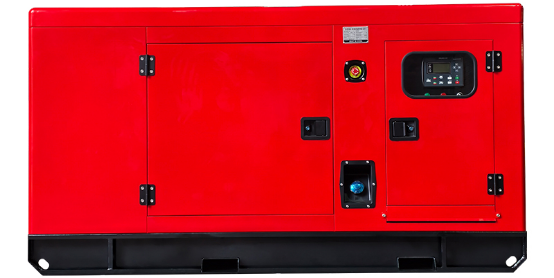
Ask for reference installations of the same platform in a comparable market. Our export record includes a 100KVA Cummins generator supplied to Tanzania, a 750KVA Cummins set delivered to Libya, and a Weichai generator running in a mining area at 5,300m altitude — three different fuel, altitude and service realities, each of which changes how an emissions package must be specified. A supplier who can explain why those projects were configured differently understands the subject.
Emissions compliance is now a design input for a diesel power generator, not an administrative detail. Decide the standard and tier from the destination market and its project documents; check that the engine certificate matches the rating you are buying; plan enclosure, ventilation, DEF storage and service access around the aftertreatment; and secure fuel the system can tolerate. Do those four things and the unit passes inspection, runs its rated hours and holds its resale value. To discuss a compliant configuration, start from the Longhong Power homepage, review the diesel generator product catalog, or read about our manufacturing base in Guangdong.
About Guangdong Longhong Electromechanical Equipment Co., Ltd.
Established in 2010 in Guangdong, China, with more than 20 years of engineering experience, Longhong manufactures diesel generator sets from 3KVA to 3000KVA in open frame, silent/canopy, trailer and containerized diesel generator configurations. Powered by Cummins, Weichai, Yuchai, Perkins, Volvo and Yunnei engines and certified to CE and ISO standards, our gensets are exported to Cambodia, Vietnam, Myanmar, Tanzania, Libya and other markets, with 200+ units in permanent stock. Browse the full range at the product catalog or check our certifications.


