

 English
 العربية
 Español
 Русский
Industry News
Industry News

Published November 6, 2026 | Industry News | Guangdong Longhong Electromechanical Equipment Co., Ltd.
When a project needs 800 kW of standby power, most buyers face the same fork in the road: buy one large generator, or buy two smaller units running in parallel. The answer is rarely obvious from a price list. Paralleling — connecting multiple diesel generator sets to a common electrical bus so they share the load as one virtual machine — adds control complexity and upfront cost, but in the right application it delivers redundancy, fuel savings and future scalability that a single genset can never match. For buyers sourcing from a China diesel generator manufacturer, understanding how parallel systems work is the difference between a smooth commissioning and an expensive retrofit.
This guide explains what paralleling actually involves, when it makes commercial sense, which hardware and controls it requires, how to size a multi-unit system, and what to check when purchasing parallel-ready gensets from a factory. It is written for plant engineers, EPC contractors, importers and facility managers planning industrial emergency diesel generator installations, prime power plants and large backup systems in 2026.
Paralleling means operating two or more generators with their outputs connected to the same busbar, so the total load is divided between them. Because AC power has both frequency and phase as well as voltage, you cannot simply cable two gensets together — the systems must be synchronized first, and then continuously controlled so they share the load proportionally.
Before a breaker closes and connects an incoming genset to a live bus, its controller must match three parameters with the bus: voltage (typically within ±1–2%), frequency (within about 0.2–0.5%), and phase angle (within roughly 5–10 electrical degrees). Modern digital controllers measure these values automatically, adjust the engine speed and alternator excitation, and close the breaker at the exact moment the waveforms align. Manual synchronization with sync lamps and an operator watching the phase meter still exists, but 2026-grade systems do this in seconds without human input.
Once connected, the units must divide real power (kW) and reactive power (kVAr) proportionally. Engine governors share kW by droop or isochronous load-sharing lines; alternator AVRs share kVAr the same way. When sharing works correctly, each engine runs at the same percentage of its rating, fuel burn is balanced, and no unit is pushed toward overload while another idles. When sharing is misconfigured, you get circulating currents, reverse power trips and hunting engines — symptoms that usually trace back to governor or AVR settings rather than hardware faults.
Paralleling is a tool, not a status symbol. Some projects should absolutely buy one large machine; others genuinely need two or more. The decision comes down to four commercial factors.
The strongest reason to parallel is uptime. With a single 500 kW genset, any engine fault — a fuel pump failure, a coolant leak, a starter problem — takes your entire standby diesel generator capacity offline. With two 300 kW units in parallel, the failure of one leaves you with 300 kW, often enough to keep critical loads alive until the failed unit is repaired. Hospitals, data rooms, airports, banks and cold-chain warehouses treat this N+1 redundancy as non-negotiable, and their insurers increasingly agree. If your operation loses more money in one hour of full outage than the extra genset costs, redundancy pays for itself the first time it is needed.
Diesel engines hate light loads. A genset rated 500 kW running at 80 kW consumes disproportionate fuel per kWh, glazes cylinder liners, and cokes the exhaust and turbocharger. A parallel system solves this with load-dependent start/stop: the controllers bring units online only as demand rises and shut them down as it falls, keeping every running engine in its efficient 50–80% load band. For prime-power sites with variable demand — quarry crushing plants, cold stores, irrigation schemes, island resorts — the fuel savings over five years frequently exceed the extra cost of the second machine.
Loads grow. A factory that starts with 300 kW of demand may need 600 kW by year three. Buying one oversized genset wastes capital and fuel for years; buying a parallel-ready 150 kW or 200 kW unit now and adding identical units later matches spending to need. Logistics matter too: a 2,000 kW genset in a container is a heavy, awkward single shipment requiring cranes at both ends, while four 500 kW containerized units can be offloaded with more modest equipment and carried on weaker roads — a genuine advantage in parts of Africa, Southeast Asia and island destinations where our export 750 kVA Cummins genset shipped to Libya and similar projects are delivered through constrained ports and highways.
Paralleling is not always worth it. If your load is stable, your redundancy requirement is low, and you have budget for exactly one machine, a single genset is simpler: fewer controllers, fewer breakers, fewer things to commission and fewer failure modes in the control system itself. A single machine also occupies less plant-room space. As a rule of thumb, choose paralleling when redundancy, part-load efficiency or staged growth genuinely applies to your project — not because it looks advanced.
A parallel system is more than two gensets and a cable. Understanding the components helps you compare quotations intelligently, because this is where cheap offers quietly cut scope.
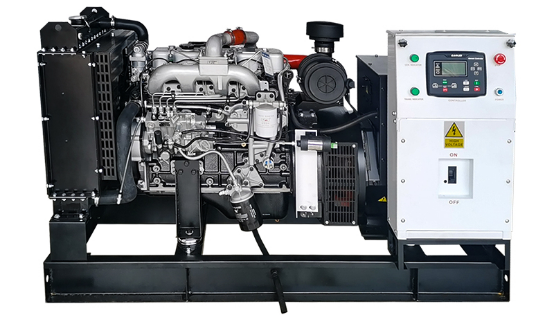
Figure 1: Open frame diesel generator sets — the most serviceable format for plant-room parallel installations under a roof.
Every genset in a parallel system needs a controller that supports synchronization and load sharing — industry-standard modules such as Deep Sea, ComAp or SmartGen are common on Chinese-built gensets and are safe choices because spare parts and programming software are available worldwide. The engine must have an electronic governor (not a mechanical one) for isochronous load sharing, and the alternator an AVR that supports reactive droop or cross-current compensation. When requesting quotations, state the controller brand you want explicitly; a factory will otherwise fit whatever is on the shelf.
Each genset connects to the common bus through a motorized or electrically operated circuit breaker, and the bus feeds the load through an outgoing breaker. These breakers, their busbars, cabling and protection relays constitute the synchronizing panel or paralleling switchgear. On smaller systems (two to four units up to a few hundred kW), a factory-built wall-mounted sync panel is the economical route; on larger plants, floor-standing switchgear in its own room is standard. The panel must include reverse-power protection, over/under voltage and frequency protection, and per-unit metering — these are the functions that protect your engines from the failure modes listed earlier.
In backup applications, the parallel system connects to the loads through an automatic transfer switch. When the mains fails, the controllers start all available units, synchronize them onto the bus in sequence, close the load breaker, and the 64 kW automatic diesel generator class of equipment shows how integrated auto-start control has become even on compact machines — the same logic scales up to multi-unit industrial systems. When mains returns, the controllers shed load, open the bus, cool the engines down and return to standby. Confirm with your supplier how the auto-start diesel generator sequence interacts with your ATS: who provides the mains-failure signal, and who owns the return-to-mains logic.
Parallel sizing follows the same load-audit discipline as single-genset sizing, with one extra step: deciding the unit size and count.
List every load, separating resistive loads (lighting, heaters, office equipment) from motor loads (pumps, compressors, crushers, chillers). Motors draw three to six times their running current at start, so sum the starting surges as well as the running load. Apply a diversity factor, then add 20–25% reserve. This gives your total installed requirement.
For redundancy, ask what the system must carry after losing one unit. If a hospital's critical tier is 180 kW, then with N+1 across two units, each machine must be rated at least 180 kW on its standby (or appropriate prime) rating — two 200 kW units, not two 110 kW units. This single question, "what must survive a single failure?", usually determines unit size.
Balance three constraints: unit count (more units means finer load-matching but more switchgear), per-unit size (larger units mean fewer paralleling events), and part-load efficiency (each running unit should sit in its 50–80% sweet spot most of the time). Worked example: a cold-chain warehouse with 350 kW running load and modest motor surges could use two 200 kW units (one carries 175 kW with margin; both run parallel at peak) or three 150 kW units (finer steps, better fuel matching at night loads). Both work; the three-unit scheme costs more in switchgear and saves fuel at part load. Your supplier should model both options against your load profile rather than defaulting to whichever machine they have in stock.
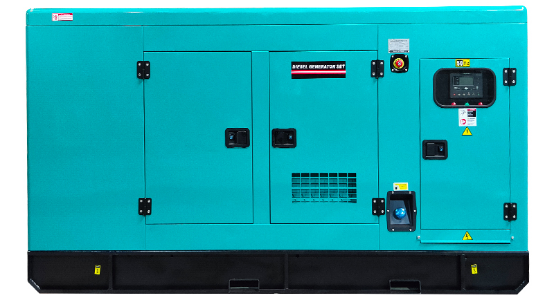
Figure 2: A 100 kW silent diesel generator — units of this class are commonly paralleled in pairs or triples for commercial and light-industrial plants.
Parallel systems are almost always three-phase; confirm 230/400V 50Hz or your local standard in writing. For export projects, also confirm which standards the switchgear and protection must meet in the destination market, and whether the utility or consultant demands type-test certificates for the breakers. A reputable factory will provide these documents; see our certifications and qualifications page for the CE and ISO credentials we supply with every shipment.
China is the world's largest source of mid-range gensets, and parallel capability is now standard equipment from established factories. Here is how to buy well.
The single most common sourcing mistake is buying two "parallel-ready" gensets from a factory and the synchronizing panel from someone else. Controls, governor characteristic and AVR settings must be configured as one system. Order gensets and sync panel from one supplier, and require a factory witness test: both units started, synchronized onto the bus, load-bank tested at 25%, 50%, 75% and 100%, with load-sharing recorded and shown stable. Insist on seeing kW and kVAr sharing within a few percent of proportional — a short video of the test data is a reasonable request, and a factory confident in its work will provide it. Our 400 kW Yuchai silent genset project is an example of the kind of application-level testing and documentation buyers should expect.
Identical units (same engine, alternator, controller firmware and rating) parallel most predictably and simplify spare parts. If you will expand later, order the same model again rather than the closest available — mixed fleets work, but each mix adds commissioning time. Buy the shared spares list with the system: controller modules, governor actuators, AVR cards, breakers and sensors. One spare of each control-level item turns a field fault from a week of downtime into an afternoon.
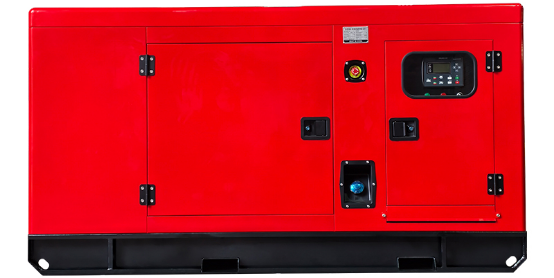
Figure 3: An 80 kW silent canopy diesel generator — weatherproof canopies allow outdoor paralleling without site-built enclosures.
For plant rooms, open frame units are easiest to service. For outdoor installations, canopy gensets parallel exactly like open frames while providing weather protection and noise control — our 100 kW silent diesel generator and 80 kW silent diesel generator are typical parallel building blocks for hotels, factories and commercial buildings. For very large prime-power plants and remote sites, containerized units with integral switchgear compartments ship and stack efficiently. As a Guangdong-based manufacturer with more than 20 years of experience across open frame, canopy, trailer and containerized formats, we match the format to the site rather than to the showroom photo.
Parallel systems fail in the controls far more often than in the engines. Budget for professional commissioning by someone who understands the specific controller family, and keep the commissioning engineer's configuration files — they are worth more than any manual when something drifts two years later.
In backup mode, units start and synchronize in sequence, and the ATS closes onto the bus only after synchronization is stable. If your process cannot tolerate the total transfer time (typically 10–30 seconds for a full parallel sequence), you need an uninterruptible supply for critical circuits — the gensets handle the building, a UPS handles the servers. Discovering this during the first real blackout is an expensive lesson.
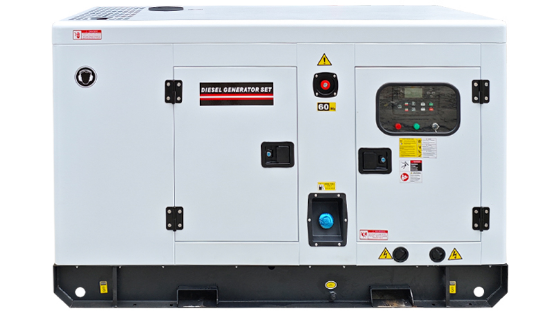
Figure 4: A 32 kW silent diesel generator — even compact gensets now carry the auto-start and remote-start logic used in larger parallel schemes.
Two gensets need a fuel supply sized for both running together, and the ventilation and heat rejection of the plant room must handle their combined output. A common retrofit error is adding a second genset to a room whose radiator ducting was designed for one. Review airflow, fuel day-tank capacity and exhaust routing as part of the parallel design, not after delivery.
Two quotations can carry the same genset model yet differ by thousands of dollars in controller specification, breaker quality, panel build and test scope. Compare quotations line by line on the parallel-specific items — controller brand and version, governor type, AVR and reactive-sharing method, breaker brand, witness test scope — before comparing prices. The cheapest parallel system is usually the one you commission twice.
Paralleling turns several ordinary diesel gensets into one disciplined power plant — but only if the system is designed as a system. Decide redundancy and growth requirements first, size the units around what must survive a single failure, order gensets and switchgear from one supplier, and buy the witness test, the commissioning and the spares kit along with the machines. Done this way, a parallel installation gives you uptime, fuel efficiency and room to grow that no single machine can offer; done casually, it gives you the failure modes of two systems instead of one.
If you are evaluating a multi-genset project in 2026, talk to the factory before you finalize the single-line diagram. Our engineers at Longhong Power size parallel systems daily, from paired 80 kW canopy units to containerized prime-power plants, and we ship parallel-ready diesel generator sets to projects across Southeast Asia, Africa and the Middle East with CE and ISO documentation as standard. Get the bus design right, and the gensets will do the rest for decades.
Guangdong Longhong Electromechanical Equipment Co., Ltd. is a diesel generator manufacturer and source factory based in Guangdong, China, with more than 20 years of industry experience since its establishment in 2010. The company produces diesel generator sets from 3 KVA to 3000 KVA in open frame, silent canopy, mobile trailer and containerized formats, powered by Cummins, Weichai, Yuchai, Perkins, Volvo and Yunnei engines, with CE and ISO certification and more than 200 units in permanent stock. Longhong gensets are exported to Cambodia, Vietnam, Myanmar, Tanzania, Libya and other markets, supporting customers with standby, prime and parallel power solutions. Learn more at www.longhongpower.com.


