

 English
 العربية
 Español
 Русский
Industry News
Industry News

By Guangdong Longhong Electromechanical Equipment Co., Ltd. | Updated October 2026
Every buyer of a diesel generator set eventually faces the same fork in the road: pay less for a used diesel generator, or invest in a new unit backed by a factory warranty. The used market is genuinely attractive in some situations — but it is also where the most expensive mistakes in the power industry happen. A second-hand genset with undisclosed high engine hours, a worn-out AVR, or a rebuilt engine sold as original can cost more in downtime and repairs than the money you saved. This guide compares new and used diesel power generators across price, lifespan, warranty, risk and application fit, and gives you a practical inspection checklist if you do go the used route. As a China diesel generator manufacturer with 20+ years of production experience, we sell new units every day — but our goal here is to help you decide honestly, because the right answer depends on your budget, criticality and risk tolerance.
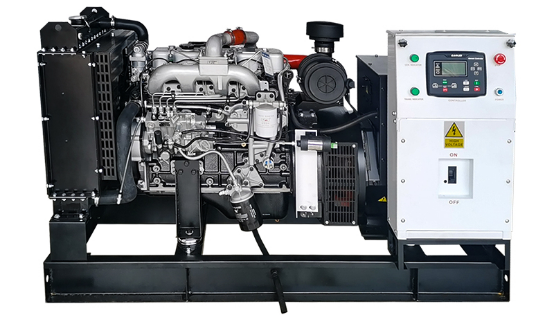
The global market for standby and prime power has expanded fast since 2023, and so has the trade in second-hand gensets. Data centers, construction contractors and farm operators in Africa, Southeast Asia, the Middle East and South America are all shopping for capacity — and when lead times on new units stretch, buyers look at the used market. That is rational. But the used diesel genset market is almost entirely caveat emptor: there is no universal odometer standard, service records are easy to lose or fake, and "refurbished" can mean anything from a fresh paint job to a full engine overhaul.
At the same time, new generators from a capable diesel generator factory in China have become dramatically more competitive. A new Cummins, Weichai, Yuchai, Perkins, Volvo or Yunnei powered genset from an established manufacturer now costs a fraction of what an equivalent European-built unit did a decade ago, ships with CE and ISO certification, and arrives with zero engine hours. The price gap between a good new China-built genset and a risky used one has narrowed to the point where, for many buyers, new is simply the smarter risk.
Before comparing numbers, answer three questions about your application:
Used gensets typically sell for 40–60% of the new price, and that headline saving is why the market exists. But the purchase price is only the first line of a much longer bill. Compare the two paths across the full ownership cycle:
| Cost factor | New diesel generator | Used diesel generator |
|---|---|---|
| Purchase price | 100% (baseline) | 40–60% of new |
| Remaining engine life | 100% — typically 10,000–30,000+ hours depending on engine class | Unknown; often 30–60% consumed |
| Warranty | 1–2 years factory warranty, spares support | Usually none, or short dealer warranty |
| Commissioning risk | Factory load-tested before shipment | Must be load-tested on site, at your cost |
| Early-life repairs | Rare; covered by warranty | Fuel pump, turbo, AVR, starter battery are common first-year failures |
| Fuel efficiency | Current-generation injection and combustion design | Older engines can burn 5–15% more fuel per kWh |
| Emissions compliance | Meets current standards | May fail local emissions rules; some regions restrict imports of old engines |
| Resale value | Depreciates predictably | Limited, and depends on verifiable history |
The honest comparison metric is cost per operating hour over the years you will own the machine. Example: a used 80kW genset at half the new price that needs a US$2,500 fuel injection overhaul in year two, burns 10% extra fuel at 1,000 hours per year, and dies at hour 9,000 instead of hour 20,000 frequently ends up more expensive per delivered kWh than a new unit. Fuel alone often closes half the price gap over a five-year life — older engines were simply not designed to today's efficiency standards.
We are a generator manufacturer, and even we will tell you: there are situations where used is a legitimate choice.
A construction site that needs power for six months, a film production, a seasonal irrigation campaign — if the machine will run for a bounded period and then be sold again, a verified low-hours used unit can be economical. Just make sure the operating hours it will accumulate during your project fit within the engine's remaining life.
Water pumping, battery charging, workshop lighting in a remote camp — loads where a breakdown is annoying but not catastrophic. If you (or a local mechanic) can service a mechanical engine cheaply, an older but simple genset can be a workhorse.
The best used deals are not "old generators" at all — they are surplus machines: a data center that decommissioned an entire fleet after a lease change, a rental company liquidating stock, a cancelled project. These units often have low genuine hours, full service records and a known brand. They exist, they are worth hunting for, and they usually sell fast because professional buyers recognize them.
If budget is the binding constraint and there is genuinely no way to finance a new unit, a carefully inspected used machine beats no machine. But then inspection discipline (Section 5) is not optional — it is the whole game.
For most permanent installations — and for essentially all critical ones — new wins. Here is why the calculus has shifted in recent years.
A new 80kW silent diesel generator from an established Chinese source factory costs little more than a documented, low-hour used equivalent once you add freight, commissioning and the risk premium of no warranty. At the small end of the range the gap is even smaller: a new 32kW silent generator or a compact 10-14kW unit is inexpensive enough that buying used saves money that matters less than the reliability it buys.
A new genset from a proper manufacturer ships with a written warranty, load-test reports, wiring diagrams, and a parts channel. When an AVR or starter fails in year one, the supplier ships a replacement — not a lecture about "as-is, where-is." For buyers sourcing from overseas, this support structure matters more than almost any other factor. Our own certifications and qualifications — CE and ISO — are part of that assurance, and we keep 200+ units in permanent stock so lead time is measured in days, not months.
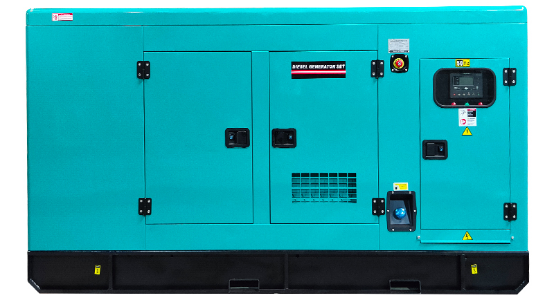
A new build is configured to your actual requirement: 50Hz or 60Hz, single-phase or three-phase, canopy or open frame, AMF auto-start panel or manual. Used buyers take whatever configuration the previous owner needed. We regularly hear from buyers who purchased a used genset cheaply, then spent the savings converting its voltage, replacing the panel and hunting for a matching alternator — at which point "cheap" stopped being cheap.
An increasing number of countries restrict the import of used engines or set emissions floors that older engines cannot meet. A used import that gets stuck at customs, or fails an environmental inspection after installation, is the single most expensive way to save money. New units built for your destination market avoid the problem entirely — a topic we cover in detail in our 50Hz vs 60Hz export configuration guide.
If you do pursue a used unit, treat the inspection as a formal process. Here is the checklist our own engineers use when customers ask us to evaluate trade-in machines.
A used genset that only idles is a used genset you know nothing about. Insist on running it at 50–75% load for at least one hour: check voltage stability under load, frequency response to load steps, exhaust color (black = fuel/air problems, blue = burning oil, white = coolant), and coolant temperature. Any seller who resists a load test is telling you something. This is exactly what we do at our own factory before any new unit ships — load testing is the only honest handshake in the generator business.
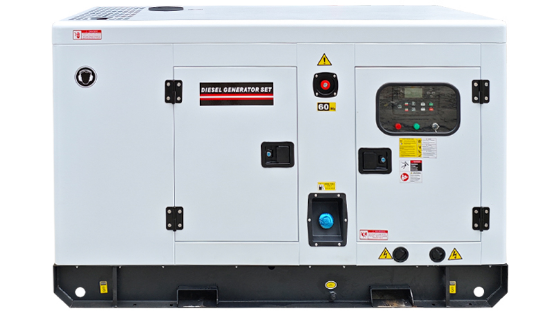
Some findings end the negotiation regardless of price:
If you have decided on new — which, for a permanent standby or prime installation, is where this guide lands — here is how to buy well from a China manufacturer:
Our export track record — units shipped to Cambodia, Vietnam, Myanmar, Tanzania, Libya and beyond — reflects exactly this process, from the full product catalog (3KVA to 3000KVA) through factory testing to container loading. A recent example is our 100KVA Cummins generator exported to Tanzania, delivered as a new, fully tested silent unit with export documentation.
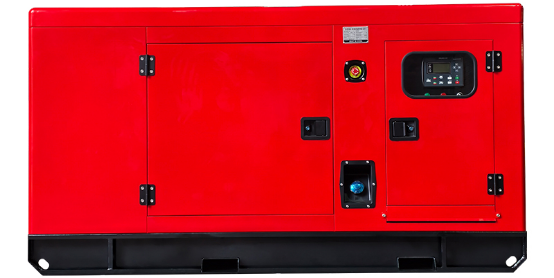
The new-vs-used decision is not ideological — it is arithmetic plus risk. Used makes sense for temporary, non-critical, short-duty applications, and for genuinely documented low-hour surplus. New wins everywhere else, and the price gap that once justified the used route has narrowed sharply as China-based manufacturing has matured. Whatever you choose, let three principles govern: verify hours from documents, not dashboard claims; demand a load test before money changes hands; and never buy critical standby capacity from a machine whose history you cannot read.
If your application calls for a new diesel generator set — from a compact 10kW home backup unit to a multi-megawatt industrial installation — contact Longhong Power for a specification matched to your load, your grid and your market.


