

 English
 العربية
 Español
 Русский
Industry News
Industry News

By Guangdong Longhong Electromechanical Equipment Co., Ltd. | Updated October 2026
When a port goes dark, the cost is measured by the minute. Reefer containers holding fruit, meat and medicine start climbing toward unsafe temperatures, quay cranes freeze mid-lift, gate systems lock out waiting trucks, and ships at berth burn money waiting to discharge. Coastal power grids are exposed to typhoons, salt-fog flashovers, transformer failures and rolling blackouts, which is why terminals from Southeast Asia to West Africa treat on-site generation as core infrastructure rather than an optional backup. This guide explains how buyers should specify a diesel generator set for port and container terminal duty — from reefer and crane load profiling through duty ratings, enclosure choice, fuel autonomy and coastal corrosion protection. As a China diesel generator manufacturer with 20+ years of experience and units exported to Cambodia, Vietnam, Myanmar, Tanzania and Libya, we have supplied gensets into exactly these harsh coastal and export environments.
Terminals concentrate four categories of equipment that all depend on electricity, and each one fails differently:
Because the failure modes differ, no single generator answers every need. Ports typically run a layered architecture: large prime-power gensets or grid substations for continuous load, standby diesel generators on automatic transfer for critical loads, and smaller dedicated units for gate complexes, pilot buildings and remote berths.
Before any sizing conversation, classify the loads. A practical four-tier model works well for terminals:
| Load tier | Typical equipment | Power character | Generator requirement |
|---|---|---|---|
| Critical / cold chain | Reefer stacks, cold storage annexes | Compressor motors, cyclic start-stop, running 24/7 | Prime-rated capacity, tight voltage/frequency regulation |
| Operational | Crane auxiliaries, gate systems, TOS servers, workshops | Mixed motor + IT loads, daytime peaks | Standby or prime rating with motor-start margin |
| Life safety | Fire pumps, emergency lighting, storm pumps | Short-duration, high-inrush starts | Auto-start within seconds, oversized for pump inrush |
| Sheddable | Office HVAC, canteen, general lighting | Deferrable | Load-shed via ATS priority stages |
Reefer units are the defining load of a container terminal. Each 40-foot reefer draws roughly 4–6 kW running, but its compressor can demand two to three times that at start-up, and units restart in scattered groups after any outage. A stack of 200 plugged-in reefers is not a flat 1 MW — it is a cyclic load with frequent step changes. This is why reefer generators are usually sized in prime power class and why soft-start or inverter-driven reefer units are worth every cent of their premium: they cut starting surge and let one generator serve more boxes.
Fire pumps, storm-water pumps, workshop compressors and gate barriers add direct-on-line (DOL) motor starts. A DOL start can pull six to eight times rated current for a second or two, dragging voltage down. The generator must either be sized for the largest inrush, or the motor must use a soft starter or variable frequency drive (VFD). As a rule of thumb, allow a starting multiplier of 2.0–2.5× on DOL motor loads, 1.5× with soft starters, and near 1.0× with VFDs.
Work the numbers load tier by load tier, then apply motor-start margins and derating. A worked example makes the method concrete.
Sum: 400 + 40 + 30 + 20 = 490 kW running. Add pump-start headroom and 10% growth allowance and the design point lands near 550–600 kW — an 800–850 kVA class genset at 0.8 power factor, or two units of 400–450 kVA run in parallel for N+1 redundancy. For smaller berths, pilot stations and gate complexes alone, a 60–130 kVA machine is often the right class: an 80kW silent diesel generator or a 64kW automatic generator with AMF control covers most gate-and-office scenarios, while compact terminals use a 32kW silent generator for pilot buildings and equipment stores.
This is the single most expensive specification mistake at ports. If the genset only bridges grid outages, a standby (LTP) rating is correct and cheaper. If the terminal lives with an unstable grid and the generator runs five to ten hours daily, or if reefer stacks are permanently fed from gensets, the machine must be prime (PRP) rated — ISO 8528 prime power allows unlimited-hour operation at variable load with a 10% overload allowance for one hour in twelve. Buying a standby-rated set for prime duty voids warranties and cooks engines. State your expected annual running hours explicitly when you request quotations; a serious manufacturer will push back if the duty and the rating do not match.
For the main generating plant, a containerized diesel generator is usually the best fit. A 20- or 40-foot ISO container with integral weatherproofing, acoustic lining, fuel day-tank and access doors can sit directly on a dockside slab, survives salt air far better than a sheet-metal canopy, stacks for compact footprint, and lifts with standard port cranes for easy relocation as the terminal grows. Large plants use two or more 40-foot units paralleled for redundancy. This is also the configuration most requested by our export customers in Tanzania and Libya, where the genset ships as ordinary container freight.
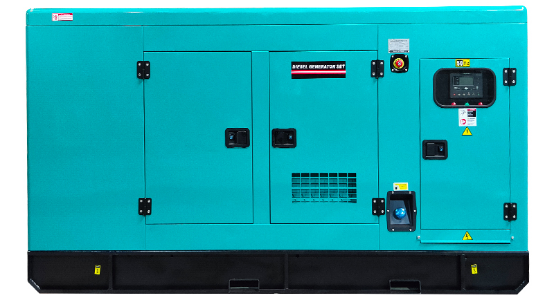
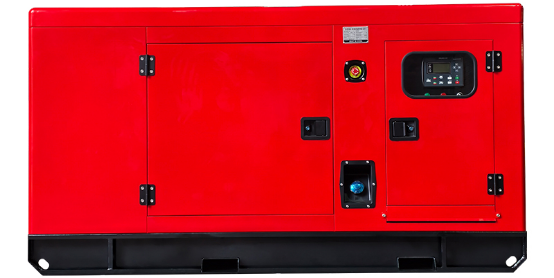
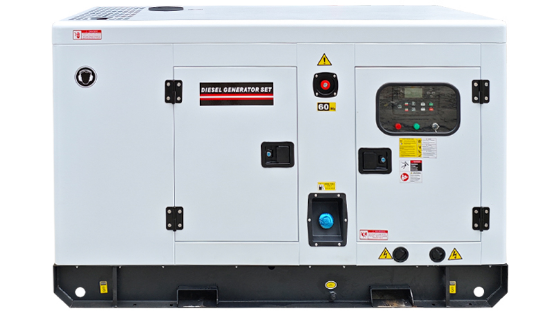
For gates, offices, pilot stations and smaller berths, a canopy diesel generator in a super-silent enclosure is easier to place near people: 65–75 dB(A) at 7 meters allows installation beside administration buildings without complaints. An 80kW silent diesel generator or a compact 16kW silent diesel generator can sit on a simple concrete pad close to the load it protects, keeping cable runs short.
Terminals never stop changing: a berth goes into dredging, a new reefer yard opens, a cruise ship calls with shore-power needs. A mobile trailer diesel generator answers all of these — towed to position, plugged into a temporary distribution board, running within the hour. Fleets typically hold a couple of trailer units (60–200 kVA) as rotating reserve, which often eliminates the need to oversize every fixed installation.
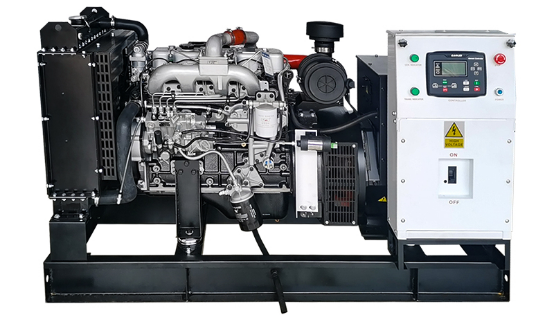
Inside an equipment hall, pump house or generator building, an open frame genset costs less, sheds heat better and is easier to service. A purpose-built generator room with proper ventilation and an attenuated exhaust gives the lowest total cost per installed kilowatt for the main plant.
Every fixed genset in a terminal should have AMF (automatic mains failure) control: detect grid loss, start, settle, and close onto the emergency board without an operator. Stage the ATS so cold-chain and life-safety loads transfer first, operational loads second, and sheddable loads stay off until the grid returns. For the main plant, a synchronizing controller that parallels multiple gensets lets you run one unit at night and bring others online as the morning reefer load builds — cutting fuel burn dramatically compared with running a big engine lightly loaded all day.
Terminals are large; walking to six generator locations to read a panel wastes technician hours. Specify controllers with Ethernet/GSM connectivity feeding fuel level, coolant temperature, battery voltage, load and running hours to a central dashboard. Modern controllers also log every start and alarm, which simplifies both maintenance planning and insurance documentation after an event.
After a typhoon, refueling trucks may not reach the port for days. Budget fuel for a realistic worst case: at typical part-load figures of 0.25–0.30 liters per kWh generated, a 500 kW plant running 12 hours consumes roughly 1,500–1,800 liters per day. A 48–72 hour autonomy for critical reefer and safety loads — via bulk tanks with bunding, plus contractual priority refueling — is the standard we recommend to terminal operators. Include fuel polishing or biocide dosing, because diesel that sits for months in a coastal tank grows algae.
Salt air is quietly brutal on generating plant. Specify the following as standard for port installations:
Ports buy on lifecycle cost, and that is where an established China diesel generator factory wins: Cummins, Weichai, Yuchai, Perkins, Volvo and Yunnei engine options at every class, genuine copper-wound alternators, containerized or canopy enclosures built to order, and pricing that leaves budget for redundancy. Our exports to Cambodia, Vietnam, Myanmar, Tanzania and Libya are overwhelmingly prime-duty units for exactly these grid-weak, high-temperature markets. Before you place an order, put these points on the table:
You can review our full product catalog from 10kW to 3000KVA, confirm our CE and ISO qualifications, and read the company background on our about us page. Real export deliveries say more than specification sheets: our 750KVA Cummins genset shipped to Libya and the 100KVA Cummins unit delivered to Tanzania both went into markets where the grid could not be trusted and the generator had to work from day one.
A port generator is not one machine but a small power system: prime-rated capacity behind the reefer stacks, standby auto-start units on gates and safety loads, trailer reserve for shifting berths, and fuel and telemetry that assume the grid may stay down for days. Size from the load profile, buy the correct duty rating, specify against salt air, and hold your supplier to a witnessed factory test. Do those four things and the genset will be the least of your worries the next time a typhoon crosses the coast. If you are planning a terminal power project and want a quotation from a source factory with 200+ units in permanent stock, the team at Longhong Power will size it with you — the contact paths are on our homepage.


