

 English
 العربية
 Español
 Русский
Industry News
Industry News

Published November 7, 2026 | Industry News | Guangdong Longhong Electromechanical Equipment Co., Ltd.
No facility on earth is less tolerant of a power cut than a hospital. An operating theatre in the middle of a procedure, a ventilator in an intensive care unit, a cold store holding blood products or vaccines — these loads cannot wait for a utility crew to restore the grid. Yet in many of the markets where reliable grid supply is hardest to guarantee, hospitals are also the buildings expanding fastest. That combination makes the hospital diesel generator one of the most demanding — and most important — purchases a healthcare administrator or hospital project engineer will ever specify. For buyers sourcing from a China diesel generator manufacturer, the stakes of getting the specification right are measured in patient safety, not just money.
This guide walks through how healthcare backup power actually works: which loads must ride through an outage, how fast the transfer must happen, how to size the plant, how much fuel to store, which enclosure suits a building full of sleeping patients, and what to verify when purchasing emergency diesel generator equipment from an overseas factory. It is written for hospital engineers, healthcare project consultants, government health departments and contractors building clinics and district hospitals in 2026.
Most commercial buyers judge a standby diesel generator by one question: how much money does an hour of outage cost? A warehouse loses cold-chain stock; a bank loses transactions. A hospital's answer is different in kind, not just degree: an hour of outage can cost lives, and the equipment involved — ventilators, infusion pumps, patient monitors, anaesthesia machines — is itself sensitive to the quality of the supply that backs it up.
First, availability: hospital standby systems are expected to start and carry load on essentially every outage, decade after decade, because there is no acceptable "we will fix it next time." Second, transfer speed: critical care equipment has limited battery ride-through, so the gap between mains failure and generator supply must be measured in seconds. Third, power quality: modern medical devices with switch-mode power supplies are tolerant, but imaging equipment such as CT and MRI scanners is not — voltage dips and frequency excursions during transfer and load steps can abort scans or damage equipment worth more than the generator itself.
A hospital genset is therefore not a bigger version of a shop generator. It is a system: the engine and alternator, the auto-start diesel generator controls, the transfer switchgear, the UPS layers above it, the fuel system, and the ventilation and acoustic treatment around it. Buyers who purchase only the box and leave the system design to chance routinely spend more on remediation than they saved on the purchase.
The first step in any hospital power study is dividing the electrical load into tiers, because each tier dictates a different backup strategy.
Operating theatres, ICU and CCU wards, emergency departments, neonatal units, laboratory blood banks, fire alarm systems, emergency lighting and escape routes form the top tier. These circuits are usually backed by the generator and local UPS units or battery packs, so the generator provides sustained supply while the UPS bridges the seconds during transfer. Internationally, standards such as NFPA 110 (Type 10, Class 12/48/72 hour ratings) and IEC 60364-7-710 shape how these systems are specified; many national health ministries publish their own variants. Even where local codes are loose, the engineering logic is universal: the top tier must transfer within roughly 10–15 seconds and carry for the full design outage.
General ward lighting, nurse stations, pharmacy refrigeration (where duplicate fridges exist), kitchen equipment and lifts typically transfer on the same generator but can be shed in an extreme emergency to protect the top tier. A load-shedding scheme — often just a priority-ordered set of contactors controlled by the genset controller — lets a modestly sized diesel genset protect critical circuits instead of being forced to carry the whole building.
Administrative offices, staff amenities, car-park lighting and laundry equipment should stay on the mains side of the transfer scheme entirely. Every kilowatt excluded from the essential bus directly reduces the required generator size, and therefore the budget, the fuel tank and the plant room. A disciplined load classification exercise is the single most cost-effective step in the whole project.
The generator cannot help anyone if it is still cranking when the ventilator batteries die. Transfer speed is governed by three elements working together.
The genset controller must detect mains failure within a cycle or two of the supply collapsing, verify that the failure is real (using a programmable delay to ignore momentary dips), signal the starter, ramp the engine to rated speed, and close the output breaker. Modern controllers from Deep Sea, ComAp or SmartGen — the standard fitment on quality Chinese-built gensets — complete the start sequence in roughly 5–10 seconds on a healthy engine. Starting reliability depends on the details: two batteries with an independent charger, a block heater in cold climates, and regular cranking tests. Our 64 kW automatic diesel generator illustrates how auto-start control is now integrated even on compact machines; the same control logic scales up to hospital-class plants.
The ATS is the switch that moves the essential bus from mains to generator and back. For hospital use, specify a four-pole ATS with a positive mechanical interlock, a transfer time that suits your UPS ride-through (typically 100 milliseconds to a few seconds of switching contact time once the generator is ready), and a return-to-mains sequence with an adjustable retransfer delay — usually 5–30 minutes — so the generator is not hammered by repeated mains flicker during a storm. Confirm who supplies and commissions the ATS: some factories ship gensets only, leaving the buyer to integrate switchgear on site, which is where schedule and responsibility gaps appear.
Even a fast transfer is not instant. Operating theatres and imaging suites therefore sit on UPS systems sized for 30 seconds to several minutes, bridging the transfer window and providing clean power to sensitive scanners. The generator and the UPS must be matched: gensets that are badly sized for the UPS's nonlinear rectifier loads can oscillate or oversize unnecessarily. This is a standard design conversation with a competent manufacturer — raise it before you order, not after commissioning.
Hospital sizing follows the same load-audit discipline as any industrial emergency diesel generator project, with the tier classification applied first.
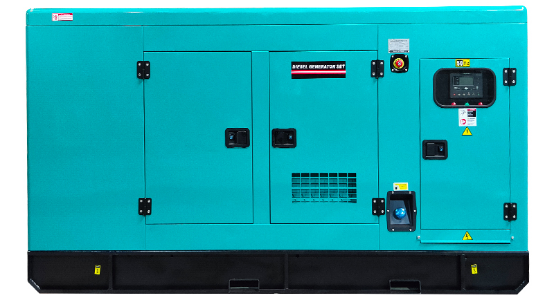
Figure 1: A 100 kW silent diesel generator set — a typical single-unit size for clinics, health centres and small hospital essential buses.
List every circuit on the essential bus with its running kW and, for motor loads, its starting surge. Motors dominate: HVAC fans, chilled-water pumps, medical air compressors and lift motors can each draw six to eight times their running current at start. The generator must either start the largest motor with the rest of the load already running, or the design must stagger motor starts through soft starters or VFDs — usually the cheaper route.
Consider an 80-bed district hospital with one operating theatre, a four-bed ICU, an emergency department and a pharmacy. A realistic essential-bus audit looks like this: theatre and ICU equipment 15 kW, general ward lighting and sockets 25 kW, HVAC fans and pumps 45 kW (with soft starters limiting surge), medical air and vacuum plant 12 kW, lifts 11 kW, kitchen cold storage 8 kW, emergency lighting and fire systems 6 kW — a running total near 122 kW. Applying a 0.85 diversity factor and reserving 20% headroom for growth gives a required rating of roughly 125 kW, which sizes to a 150–160 kVA class genset. Many district hospitals install two such units in parallel (or one plus a portable backup) for redundancy; our 400 kW Yuchai silent generator installation shows the scale typical of larger regional hospitals, while a clinic or health post can be served comfortably by the 100 kW diesel generator class or below.
Almost every hospital plant is a three-phase diesel generator application, because HVAC motors, lifts and distribution boards run on three-phase supply while ward sockets take single-phase from the same distribution. Small rural clinics with only lighting and vaccine refrigeration may genuinely need a single-phase diesel generator — confirm the site's distribution before ordering, because converting after delivery is expensive.
A hospital that starts perfectly and then runs out of fuel at hour nine has failed the same test as one that never started. Fuel autonomy is a design decision, not an afterthought.
A diesel genset at 50–80% load burns roughly 0.25–0.30 litres per kWh produced. Our 125 kW example plant, running at about 100 kW average, consumes approximately 25–30 litres per hour. Standards that influence hospital design (NFPA 110's Class 12/48/72 ratings are the common reference) point to 48–72 hours of on-site fuel where refuelling during a regional emergency cannot be guaranteed — and in a disaster, fuel supply chains fail exactly when hospitals are busiest. Seventy-two hours at 27 L/h means a 2,000-litre tank plus reserve. The tank needs containment (a bunded base or double-wall construction), a water and sediment separator, and a policy of polishing or replacing fuel annually, because diesel degrades in storage.
Chronic light loading below roughly 30% of rating wastes fuel, glazes cylinder liners and cokes exhaust systems — on a hospital standby set that mostly idles between outages, this is the main long-term health risk. Load-bank testing (section 7) and sensible sizing are the cure: a genset chosen to carry the true essential bus, not the entire building, runs closer to its efficient band when it does run.
Hospitals run their generators at night, during storms, next to buildings full of people trying to sleep. Noise is therefore a procurement criterion, not a nicety.
A quality canopy diesel generator — a sound-attenuated steel enclosure with rockwool or foam insulation, residential-grade exhaust silencer and lockable service doors — typically achieves 65–75 dB(A) at 7 metres, and premium designs reach the high 50s. Our 80 kW silent diesel generator and 32 kW silent generator represent this class: weatherproof, secure and quiet enough for locations within tens of metres of wards. Position the enclosure with exhaust directed away from windows and air intakes, and verify the site's actual noise ordinance, which in dense urban districts can be stricter than the canopy's rating.
Larger hospitals often choose a containerized diesel generator: a 20-foot ISO container housing the genset, fuel day tank, switchgear room and even staff access, factory-wired and tested before shipment. It is the tidy solution for campus plants of several hundred kVA and simplifies both craneage and security. Indoor plant-room installations with an open-frame set suit hospitals with a basement power house, but demand a proper ventilation and acoustic treatment design — an open 10–14 kW silent-class compact unit or its larger open-frame cousins in an untreated room will transmit noise and vibration through the structure into wards above.
Hospital standby systems earn their reliability between outages, on a schedule. Three practices separate plants that start every time from those that do not.
Weekly no-load or light-load checks — battery voltage, coolant and oil levels, heater operation, controller in AUTO — catch the mundane failures (flat battery, closed fuel valve, controller left in manual) that cause most failed starts. Monthly on-load testing runs the set against a building load or load bank for 30–60 minutes, proving the ATS transfer end-to-end, exercising the engine under real temperature, and burning off accumulated moisture and carbon; monthly tests should reach at least 30% of nameplate rating, with an annual load-bank test to 100% for sets that rarely see real load. Planned servicing follows the engine manufacturer's hour-based schedule — oil and filters typically every 250 running hours or annually, coolant replacement on a two-to-three-year cycle — and should be contracted before commissioning, with a spares kit (filters, belts, coolant, batteries) held on site. For buyers importing gensets, specifying the parts kit with the original order is far cheaper than air-freighting a filter element mid-outage.
China supplies a large share of the world's hospital-class gensets, and the price advantage is real — but healthcare buyers should qualify suppliers more carefully than any other sector.
Check the company's history and certifications directly: Guangdong Longhong Electromechanical Equipment Co., Ltd., established in 2010 with two decades of generator experience, builds sets from 3 kVA to 3,000 kVA with engines from Cummins, Weichai, Yuchai, Perkins, Volvo and Yunnei, holds CE and ISO certification (see our certificates page), and maintains 200+ units in permanent stock for fast delivery — the kind of profile to look for on any supplier's product catalog and company credentials, whatever the brand.
Your purchase contract should state: engine and alternator brands and models; controller brand (name Deep Sea, ComAp or SmartGen explicitly); ATS rating, poles and transfer time (if factory-supplied); canopy noise target in dB(A) at 7 metres; three-phase 50 Hz or 60 Hz voltage to match your grid; tank capacity or external tank connection; and the commissioning spares kit. Ask for the factory test report — every set should be run at full load before shipment, and reputable factories invite buyers to witness testing or provide video evidence. For hospital tenders, add the generator's compliance documents (CE, ISO 8528 performance class, engine certification) to the tender file from day one.
Manufacturers who have supplied schools, hospitals and public institutions can sanity-check your load list and flag design issues — our 500 kVA silent generator installation for a school is one example of institutional project delivery in this class. Reference projects matter more than catalogue claims: ask what the factory has shipped to hospitals or institutions in your region, and how the service questions were resolved afterward.
A hospital diesel generator is judged on the worst night of its life — the storm that takes the grid down while the operating theatre is busy. Get the specification right and the purchase disappears into the background of daily healthcare for a decade: tiered loads, a 15-second transfer with UPS bridging, correctly sized kW with motor-start headroom, 48–72 hours of fuel, a canopy or container quiet enough for the ward next door, and a testing regime that proves the system monthly. Get it wrong and no amount of medical equipment matters. Buyers who treat the generator as a system — and who qualify their supplier on certifications, factory testing and project references — consistently end up with plants that start on demand, year after year. If you are planning a hospital, clinic or institutional backup project, the team at Longhong Power can review your load list and propose a correctly sized, factory-tested solution.
About Guangdong Longhong Electromechanical Equipment Co., Ltd.
Founded in 2010 and backed by more than 20 years of generator industry experience, Longhong is a Guangdong-based China diesel generator manufacturer producing sets from 3 kVA to 3,000 kVA with Cummins, Weichai, Yuchai, Perkins, Volvo and Yunnei engines. The company offers open frame, silent/canopy, trailer and containerized generator types, holds CE and ISO certifications, keeps 200+ units in permanent stock, and has exported to Cambodia, Vietnam, Myanmar, Tanzania, Libya and other markets. Browse the full diesel generator product range or contact Longhong Power for a quotation.


