

 English
 العربية
 Español
 Русский
Industry News
Industry News

Most standby diesel generator failures are not caused by the engine, the alternator or the controller. They are caused by the fuel sitting in the tank. Diesel stored for eighteen months, contaminated with water and microbial growth, will block filters within minutes of a start signal — at exactly the moment the building has lost grid power. Buyers spend weeks comparing engine brands and kVA ratings, then accept whatever tank the supplier includes. This guide explains how to size fuel storage for a diesel generator set, how diesel degrades in storage, which polishing and filtration systems work, and how to write fuel requirements into an order with a China diesel generator manufacturer.
Guangdong Longhong Electromechanical Equipment Co., Ltd. has built power generator packages for industrial, commercial and export projects since 2010, configuring base tanks, day tanks and fuel systems alongside generator sets from 3KVA to 3000KVA.
An emergency diesel generator may sit idle for eleven months and then be asked to carry full load within fifteen seconds. Everything in that sequence depends on fuel that has been deteriorating the whole time. Four failure modes account for most no-start and shutdown events in the field.
Water in diesel creates an interface layer where bacteria and fungi thrive. The resulting biomass — diesel bug — forms a dark sludge that coats tank walls and migrates to the fuel line, blinding primary filters. A genset that tested perfectly at commissioning can fail to hold load a year later because the filters loaded up in the first four minutes of running.
Every temperature cycle pulls moist air into a partly filled tank through the vent, and the moisture condenses on cold steel above the fuel line. A full tank has little air space and therefore little condensation; a half-empty tank is a water generator. This single habit explains most contamination complaints that reach generator manufacturers.
Diesel oxidises slowly in storage. Gum and varnish precursors form, colour darkens and ignition quality drops. Modern ultra-low-sulphur diesel is less stable in long storage than the high-sulphur fuel of twenty years ago, so rotation matters more now than it did for the previous generation of facility managers.
At low temperatures the paraffin in diesel crystallises and blocks filters before the engine fires. Sites that specify a summer fuel grade and then meet a cold snap discover this the hard way. Fuel grade must match the coldest expected site temperature, not the temperature on commissioning day.
Autonomy — the hours a generator can run without refuelling — is a design decision, not a by-product of the tank the factory offers.
As a planning rule, a maintained diesel genset consumes roughly 0.25 to 0.30 litres per kWh delivered, with smaller sets at the upper end. A 100kW diesel generator at 80% load therefore burns about 20 to 24 litres per hour; a 32kW unit burns roughly 7 to 8 litres per hour. Catalogue figures usually assume full load, so buyers who size tanks from them underestimate consumption at partial load.
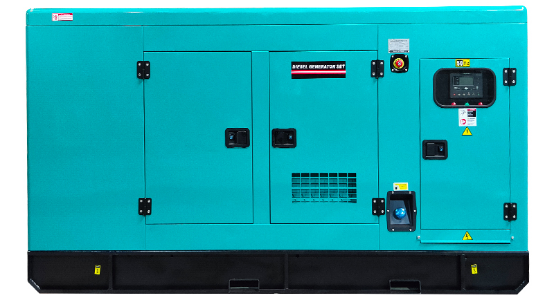
100kW silent diesel generator set — base-tank versions of this size typically carry 8 to 12 hours of autonomy at 80% load.
Different facilities justify very different reserves. A supermarket protecting refrigeration until stock is moved may accept six hours; a hospital, data centre or city water pumping station needs days. The table below gives reasonable starting points for a standby diesel generator, before local code or insurer requirements are applied.
| Application | Typical autonomy target | Practical fuel storage |
|---|---|---|
| Retail, office, small workshop | 4–8 hours | Base tank on the genset |
| Hotel, restaurant, cold store | 12–24 hours | Oversized base tank or small bulk tank |
| Hospital, water utility, telecom hub | 48–72 hours | Bulk tank plus day tank |
| Remote or island prime power | 7–30 days | Multiple bulk tanks with rotation plan |
Assume a 150kVA / 120kW standby set carrying 70% load at 0.28 L/kWh. Hourly consumption is about 23.5 litres, so a 48-hour target needs roughly 1,130 litres: a 1,000-litre bulk tank plus a 200-litre day tank, with a refuelling plan beyond that. Buyers who compute this before ordering avoid the common outcome of a 200-litre base tank and a two-hour runtime.
Tank makers quote nominal volume. A safe fill level, a suction point 50 to 80mm above the floor to avoid drawing water and sludge, and dead volume all cut usable fuel by 5 to 10%. Size to usable litres, and never let a tank sit below about 20% for long periods.
A base tank is integrated into the skid and is simplest up to about 8 hours of runtime. A day tank of 200 to 1,000 litres sits near the engine, gravity- or pump-feeding the injection system from bulk storage — the standard layout for multi-generator plants, hospitals and utilities. Bulk tanks of 5,000 to 50,000 litres connect through a transfer pump with filtration. Each layer adds a control point and needs its own level indication.
Bunded tanks with 110% containment are the norm in most jurisdictions, and insurers increasingly insist on them. Filling points should be lockable and labelled with fuel grade, vents sized for the fill rate to avoid pressurisation and screened against insects and rain, and every tank outlet fitted with an isolation valve.
Keep bulk fuel outside the generator room wherever codes permit, and hold the required separation from the set, switchgear and building openings. Where a base tank sits indoors, the room needs its own bunding, drainage and fire rating. These are cheap decisions at design stage and expensive retrofits later.
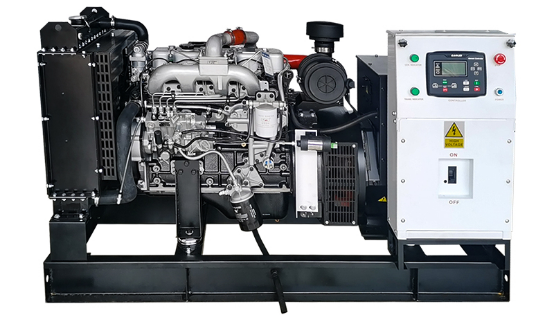
Open frame diesel generator set — where a plant room exists, external bulk fuel with a day tank is usually the cleanest layout.
Standby fuel is stored, not used. The degradation timeline tells you how often to rotate, test and polish.
With a clean tank, minimal water, stable temperature and low air space, diesel stays serviceable for twelve months and often longer. Beyond that, oxidation products accumulate and filter-plugging risk rises sharply. Consume and replace standby fuel at least once a year — ideally by running the generator under load rather than pumping the tank out.
Water is heavier than diesel, so it collects at the bottom with rust, sand and organic sludge. That is why suction never draws from the lowest point and why tanks need periodic bottom draining and inspection. A tank unopened for ten years holds a sediment layer that no filter will remove without physical cleaning.
B7 and B20 blends are increasingly common in public supply and behave differently in storage: they absorb water more readily, favour microbial growth and have shorter shelf life. If your site is filled from a station selling blended diesel, shorten the rotation interval and tighten water monitoring, and confirm the blend ratio is acceptable for the injection system.
Engines with aftertreatment for Stage V or Tier 4 Final require ultra-low-sulphur diesel; high-sulphur fuel damages catalysts and invalidates warranties. Older mechanical engines in some export markets run on higher-sulphur fuel with better lubricity. Confirm the fuel specification against the engine certificate and emissions configuration ordered — the documents on the qualifications page are the reference, not the sales brochure.
Every diesel genset should run a primary filter with water separator ahead of a secondary fine filter, plus a final filter at the injection pump on common-rail engines. The primary filter catches bulk water and coarse debris; the secondary protects the injection system. One filter, or a finer filter without a water trap, simply moves the failure downstream.
A fuel polishing system circulates tank contents through filters on a timer, independent of generator operation. It removes suspended water and particulate, keeps fuel moving and lets the operator clean fuel without running the engine. Above roughly 2,000 litres, or for any tank not consumed annually, polishing is the cheapest protection available for a generator that must start on demand. Specify pump capacity, filter rating (typically 10 micron absolute with a water-absorbing element) and cycle frequency in the order.
Physical tank cleaning every three to five years, or immediately after any microbial event, is the only way to remove the sediment layer. Pair it with a fuel test covering water content, particulate count, microbial culture, cetane index, cloud point and sulphur. Testing turns fuel management into a documented programme — exactly what insurers and auditors ask for after an outage.
Biocides kill microbes but leave the dead biomass in the tank, so treatment without subsequent polishing makes plugging worse before it gets better. Cold-flow improvers lower the pour point but not the cloud point, and must be added before waxing starts. Use additives inside a programme, never as a substitute for water removal.
The cloud point is where wax crystals first appear; the cold filter plugging point is where filters block. Both must sit below the coldest expected site temperature with margin. Order a winter-grade fuel, heat-trace exposed lines, keep tanks full to limit condensation, and drain water traps daily in cold snaps. At altitude or in continental climates this is a design input, not a seasonal afterthought — Longhong's experience with a Weichai generator in a mining area at 5,300m altitude is a useful reference for combined cold and altitude derating.
In hot climates fuel expands, so tanks need correct ullage and vents sized for thermal breathing. High ambient temperatures accelerate oxidation and raise vapour-lock risk on suction lines near hot components. Shade the tank, and never route the fuel line against the exhaust.
Coastal sites combine humidity with salt air, which attacks tank exteriors, filler caps and control wiring. Specify galvanised tanks and stainless or coated fittings, and inspect the tank top — where condensation collects — at every service visit.
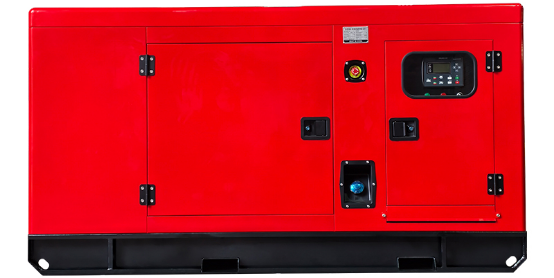
80kW silent diesel generator — a canopy shields the fuel system from rain, dust and sun, but storage still needs venting and bunding.
Specify at minimum a mechanical level gauge, an electronic level sensor wired to the controller, low and high level alarms, and a water-in-fuel sensor at the primary filter. On unattended sites add remote monitoring so fuel level, runtime and alarms reach a phone. Fuel theft is a real risk in some markets; lockable fills and consumption reconciled against runtime catch most losses.
Log every delivery: date, volume, supplier, grade, tank before and after, and any water drained. Reconcile fuel consumed against hours run each quarter. A site that cannot explain a 15% discrepancy has a leak, a theft problem or a metering error — all cheaper to fix early.
When buying a standby diesel generator or a diesel genset package from China, put the fuel system in the same order as the generator so interfaces are the factory's responsibility. Specify tank type and usable capacity, bunding, fill and vent arrangement, day tank if required, transfer pump and polishing system, filter rating, level and water sensors, controller integration, and the fuel grade the engine is set up for. Ask for a piping and instrumentation drawing before shipment and check it against the site layout.
Longhong configures base tanks, day tanks and fuel packages on the same engine platform, which keeps warranty responsibility in one place. Buyers comparing options in the product catalog can match tank size to a rating — a 100kW diesel generator for a mid-size facility, an 80kW silent diesel generator for a hotel or cold store, a 64kW automatic generator with ATS for a clinic or booster station, a 40kW export diesel generator for a project site, or a 32kW silent generator for a remote pumping or telecom installation.
Ask for the tank drawing and material thickness, the bunding calculation, filter and water-separator model numbers, polishing flow rate, the controller's fuel-alarm list, and a factory acceptance test run on the actual fuel configuration. A manufacturer already supplying tropical and cold-climate markets — such as the 100KVA Cummins genset delivered to Tanzania — will have answers to fuel questions first-time buyers have not yet thought to ask. To discuss a fuel and generator package, contact the team through the company profile page.
Fuel storage is the part of a standby power system nobody inspects until it fails. Size the tank from real consumption and a stated autonomy target, keep it full and bunded, rotate the fuel annually, polish on a schedule, match the grade to the climate, and instrument it so problems surface before the next outage. Do those things and the generator you bought for emergencies will be there when the grid goes down — the only performance metric that matters.
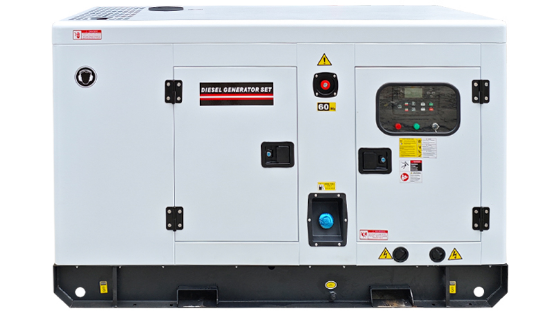
32kW silent diesel generator — compact sets at remote sites benefit most from a documented fuel rotation and polishing routine.
About Guangdong Longhong Electromechanical Equipment Co., Ltd. — Founded in 2010 in Guangdong, China, Longhong is a diesel generator manufacturer with 20+ years of engineering experience, offering generator sets from 3KVA to 3000KVA powered by Cummins, Weichai, Yuchai, Perkins, Volvo and Yunnei engines. Products include open frame, silent/canopy, trailer and containerized types, CE and ISO certified, with 200+ units in permanent stock and exports to Cambodia, Vietnam, Myanmar, Tanzania, Libya and beyond. Visit https://www.longhongpower.com/ for the full range and quotations.


