

 English
 العربية
 Español
 Русский
Industry News
Industry News

No industry loses money faster in a power outage than the cold chain. A warehouse full of frozen goods can absorb a two-hour interruption; a chilled produce store, a bakery's proofing room or a meat processing line cannot. Beyond the value of the stock itself sit the penalties nobody prices until they arrive: a rejected shipment, a failed customer audit, a written-off batch, or a tenant's claim for a container of spoiled seafood.
Cold storage is also one of the most technically demanding loads a standby diesel generator can face. Refrigeration compressors start hard, run around the clock, and punish a generator that is undersized or poorly controlled. This guide explains what an outage actually costs a cold facility, how to size a diesel generator set around compressor loads, which duty rating and controls the application needs, and what to specify when buying from a China diesel generator manufacturer.
Guangdong Longhong Electromechanical Equipment Co., Ltd. has built power generator packages for food, industrial and export customers since 2010, supplying generator sets from 3KVA to 3000KVA with CE and ISO certification.
The thermal mass of a cold store buys time, and buyers routinely mistake that time buffer for safety. It is a countdown, and its length depends on temperature class.
A sealed freezer store at −18°C holding frozen blocks can hold temperature for many hours with the doors shut — the stock is already frozen and the envelope is well insulated. A chilled store at 0 to +4°C loses its margin far faster, because fresh produce, dairy and meat both warm quickly and spoil earlier. A blast freezer or processing line in active operation is worse still: it depends on continuous refrigeration, ventilation and, in many plants, steam or hot water systems that stop with the power. And doors keep opening in real operations, which shrinks every theoretical buffer.
Spoiled inventory is the visible loss. The invisible ones are larger: contractual penalties for missed delivery windows, food-safety documentation gaps that fail a customer's next audit, defrost-and-sanitise downtime before the facility can restart, and insurance premiums recalculated after a claim. For a distribution hub serving retail chains, a single day's outage can outweigh the entire cost of the standby diesel generator that would have prevented it. That is the correct way to frame the purchase: the generator is not plant equipment; it is stock insurance with an engine attached.
In a cold facility, refrigeration typically takes 60–80% of the electrical load, with the remainder split among lighting, dock equipment, office HVAC and process loads. This concentration simplifies one decision and complicates another: a standby set sized mainly for refrigeration covers nearly everything, but it must be built for exactly the load type that compressors present.
A reciprocating or screw compressor started direct-on-line draws six to eight times its running current and demands two to three times its running power for a second or more. On a generator, that surge appears as a voltage and frequency dip; if the dip is deep enough, contactors drop out, the control system resets, and the compressor that just started knocks the others offline. This single phenomenon is the most common cause of failed generator start-ups in cold stores.
Worse than normal starting is the post-outage restart. Compressors that have sat during a blackout have equalised pressures, and some refrigeration controls impose a random or sequenced restart delay to avoid exactly that. If the generator and the refrigeration controls are not coordinated, the plant comes back in a synchronized surge that no reasonably sized set can carry. The fix is procedural, not mechanical: stagger compressor starts through the plant controller or the generator's load acceptance plan.
Refrigeration runs all night, all weekend, and through seasons. Load swings with defrost cycles, door traffic and ambient temperature, so the generator sees a rolling profile from perhaps 30% to 90% of plant load. A set chosen only for peak will idle lightly for long stretches and slowly accumulate the light-load damage known as wet stacking; a set chosen for average load will trip on the evening peak. The honest answer sits between, sized on a measured load profile rather than the electrical schedule's headline figure.
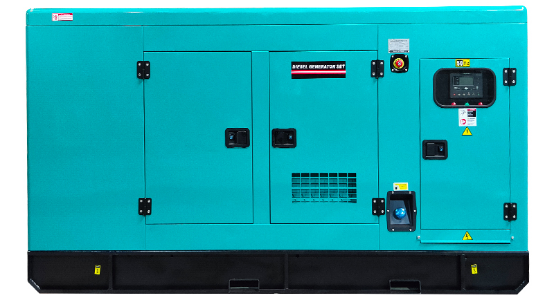
A 100kW silent diesel generator — a common class for mid-size cold rooms and food processing plants running three-phase compressor banks.
Take a 4,000 m² chilled distribution store: three 30 kW screw compressors, four 5.5 kW evaporator fan groups, dock doors and lighting at 10 kW, offices at 8 kW. Running total: 90 + 22 + 18 = roughly 130 kW of connected load. Note the power factor — refrigeration plants commonly run 0.8 lagging, which conveniently matches standard generator ratings expressed in kVA.
Not every compressor starts at once after an outage — and it must not. With sequenced starting, the set needs to carry the full running load plus one compressor's starting surge: 130 kW running plus roughly 45–60 kW of starting demand, managed over a few seconds. In kVA at 0.8 power factor, that lands near 230–250 kVA. Without sequencing — every compressor restarting simultaneously — the same plant would demand 500 kVA or more, doubling the capital cost for no operational benefit.
A plant of this profile buys into the 250–300 kVA class. Smaller cold rooms and single-compressor facilities follow the same method at smaller scale: a 10–20 kW cold room for a restaurant or farm shop maps to a 10-14kW silent generator or a 20kW silent diesel generator; a mid-size processing plant with two compressors and a packaging line fits a 80kW silent diesel generator or a 100kW diesel generator; larger distribution and production sites step up through the full product catalog toward containerized multiples. Whichever class the arithmetic lands in, insist on a generator rated for 100% block load acceptance and verify the compressor starting behaviour during commissioning — on the plant, with the real compressors, not with a resistive test bank alone.
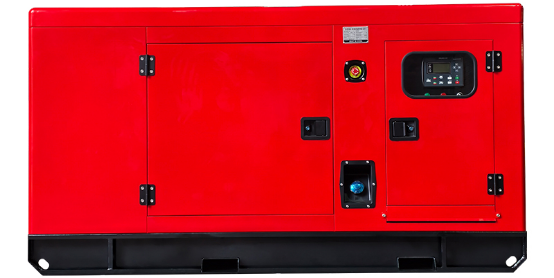
An 80kW silent diesel generator sized for a mid-size processing plant — enough headroom to start a second compressor while carrying the running load.
Facilities with a dependable grid buy a standby-rated set and rarely think about it again. Facilities in regions with daily load shedding — where the cold store runs on the generator for four to eight hours every day — must buy a prime-rated diesel power generator, because standby ratings assume limited annual hours and light average load. The price difference is real; the difference in engine life between the two ratings under daily cycling is measured in years. State the duty honestly in the order, and let the manufacturer rate the set for the life the site will actually demand.
An auto-start diesel generator with an automatic transfer switch must take the plant within the window the refrigeration controls allow, then bring compressors back in stages. Specify: total transfer time under 30 seconds for chilled stock protection, a load-acceptance sequence (fan groups first, compressors staggered at 10–30 second intervals), and coordination with the plant's own restart-delay settings so the two systems do not fight. On facilities where a process cannot tolerate even the transfer gap — blast freezing lines, for example — pair the generator with a UPS bridge for controls and instrumentation, sized for the minutes the mechanical plant needs, not the hours the stock needs.
At 0.25–0.30 litres per kWh, a 250 kVA set carrying 160 kW of average load burns roughly 1,000–1,150 litres per day. That number dictates the fuel strategy: a base tank covers 8–24 hours comfortably, but a facility that means to ride out a multi-day regional outage needs an external bulk tank, a refuelling contract with priority terms, and level telemetry. Cold facilities should treat fuel like inventory — measured, budgeted and insured.
A canopy diesel generator suits most single-set installations: weatherproof, sound-attenuated, serviceable from all sides. Larger plants and sites that expect to grow do better with a containerized diesel generator — a proper plant room with lighting, outlets, day tank and room for a second unit, installable in a day on a prepared pad. Open frame sets make sense only indoors in a dedicated, ventilated plant room; they cost less on paper and then cost the difference in acoustic treatment.
Keep the generator clear of dock doors and loading areas — exhaust and compressor air intakes must not share space, and delivery trucks need the apron. Maintain airflow around the set: a canopy starved of cooling air derates in summer exactly when refrigeration load peaks. In food-adjacent zones, plan the exhaust away from air intakes and vents, and keep refuelling off the hygiene-critical side of the site. Noise limits near residential boundaries are solved with a genuinely silent enclosure, not with distance alone.
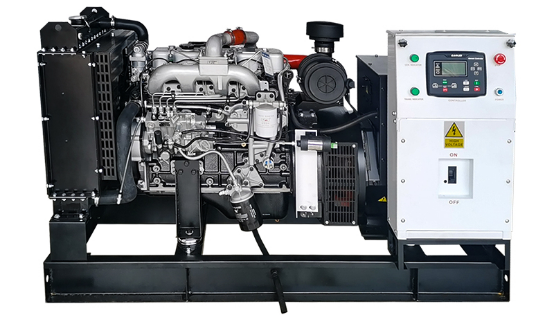
An open frame diesel generator set — economical indoors in a dedicated, ventilated plant room with acoustic treatment, where a canopy is unnecessary.
A weekly no-load run proves the engine starts; only a monthly on-load transfer test proves the system works. Once a month, open the mains breaker and let the generator carry the plant — compressors, fans and all — for 30 minutes under supervision, and record voltage, frequency and the sequencing behaviour. For a facility whose stock value runs into seven figures, quarterly full-duration tests are a cheap policy premium.
Change oil and filters by hours run, not by calendar. A standby set that runs twelve hours a year can wait; a set in a load-shedding region running 2,000 hours annually cannot — its service intervals arrive every six weeks, and skipping them converts a maintained asset into a breakdown waiting for a deadline. Keep first-line spares on site: filters, belts, coolant, and the starter battery, which fails more often than any engine component.
Food-safety audits increasingly ask for cold-chain continuity evidence. Keep the commissioning test record, the monthly transfer test log, service records and fuel delivery receipts together. When an auditor or insurer asks how the facility protects product temperature, a documented generator programme is the answer that closes the question.
China remains the value centre of the global generator market, and the gap between a good order and a bad one is specification discipline, not geography.
Attend or video a factory acceptance test: cold start, stepped loading to 100%, protection shutdowns, and a fuel consumption reading. Longhong's 400KW/500KVA Yuchai silent generator installation illustrates the class of documented, tested project that large food and industrial buyers should expect as the norm. Check the details that predict field behaviour: paint finish, door seals, wiring loom dressing, battery terminals, and whether the nameplate matches the order.
Buy the first-line spares kit with the set, book commissioning support, and confirm the warranty terms in the destination country — not just the factory. A manufacturer with twenty years of build history and routine exports to Southeast Asia, the Middle East and Africa, such as the team behind Longhong's company profile, will have answered the shipping, support and documentation questions before you ask them.
Cold-chain power protection is arithmetic and discipline: measure the load, respect compressor starting, sequence the restart, size the fuel to the outage you are actually insuring against, and test the whole system monthly. A correctly specified industrial emergency diesel generator turns a facility's most dangerous hour into a fifteen-second flicker — and pays for itself the first time the grid fails on a delivery day.
Founded in 2010 in Guangdong, China, Guangdong Longhong Electromechanical Equipment Co., Ltd. manufactures open frame, silent canopy, trailer and containerized diesel generator sets from 3KVA to 3000KVA with Cummins, Weichai, Yuchai, Perkins, Volvo and Yunnei engines. CE and ISO certified, with 200+ units in permanent stock and exports to Cambodia, Vietnam, Myanmar, Tanzania, Libya and more. Browse the product range to match a generator to your cold-chain or processing facility.


